
The U.S. House of Representatives’ special committee on China released a major investigation report on Tuesday, May 19, exposing a transnational criminal ecosystem linked to the Chinese Communist Party that is operating on an “industrial scale” in Southeast Asia. The report revealed that these fraud networks annually result in losses of at least $10 billion for American citizens and have evolved into a serious national security challenge.
Chairman of the committee, John Moolenaar, pointed out during the hearing that this is not a centralized conspiracy directed from Beijing, but rather a “decentralized ecosystem composed of fraud, human trafficking, cybercrime, and illegal finance.”
The investigation found that Beijing’s crackdown on gambling and fraud within China has instead pushed criminals to countries with weak regulation such as Cambodia and Myanmar, allowing them to continue expanding under local corruption, weak governance, and political protection.
“It cannot be simplified as a single category issue,” Moolenaar said. “Random arrests and sanctions alone cannot solve this problem. Congress must urgently respond.”
The committee’s chief Democratic member, Ro Khanna, stated that “this investigation is to speak out for the millions of Americans who have lost billions of dollars due to these frauds.”
The report revealed concrete evidence confirming the direct involvement of Chinese state-owned enterprises in the construction of fraud infrastructure. It pointed out that a core subsidiary of China State Construction Engineering Corporation (CSCEC) – China Construction Fourth Engineering Bureau (China Construction Fourth Bureau) – directly signed contracts to build large assets for the transnational crime organization “Prince Group” in Cambodia.
Projects constructed by China Construction Fourth Bureau include the Prince Group’s headquarters building in Phnom Penh and the “Prince IT Tower” in Sihanoukville.
The investigation confirmed that this “IT Tower” was subsequently transformed into an industrial-scale fraud base, specializing in telecom fraud against Americans, with widespread forced labor practices.
Moolenaar emphasized that the report exposed for the first time “how a Chinese state-owned enterprise directly signed contracts with a criminal organization to build a large fraud center in Southeast Asia.”
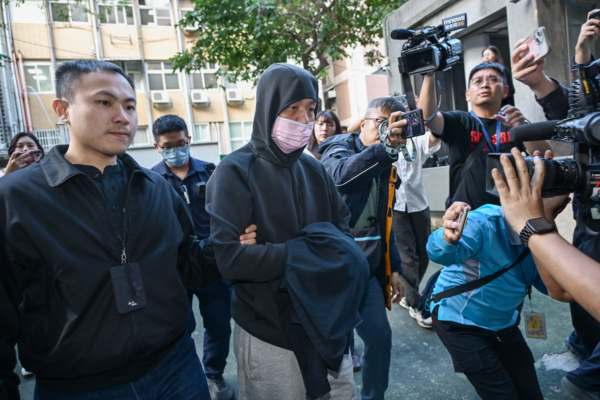
The report indicated that Prince Group chairman Chen Zhi was previously involved in online gaming and cyber fraud in China, generating significant criminal proceeds and legal risks. Despite multiple civil and commercial disputes in the mid-2010s, including contract, debt, and liability litigation, China Construction Fourth Bureau still signed with them in 2018.
Ironically, these projects constructed by state-owned enterprises for criminal groups were once considered achievements of the Chinese government’s “Belt and Road Initiative” and “Maritime Silk Road,” even receiving recognition with China’s highest construction award, the “Luban Prize.”
The report suggested that this cooperation model provides legitimacy cover for a high-risk criminal ecosystem, evading early scrutiny.
Prince Group is accused of operating the world’s largest fraud, human trafficking, and money laundering network. U.S. and British authorities have identified Prince Group as a transnational criminal organization, running at least 10 fraud centers in Cambodia.
Moolenaar stated unequivocally, “There is no doubt that the Chinese side has the ability to bring the operators of these fraud centers to justice, but it chooses not to do so.”
At the hearing, Operation Shamrock founder and former prosecutor Erin West described this transnational criminal crisis as a “scamdemic.” She warned that a large-scale financial looting crisis is spreading among American families, destroying savings and retirement security.
“This is not a series of isolated fraud cases, but an industrialized global criminal economy,” she said.
West has previously warned publicly that “criminal organizations originating from China are stealing an entire generation’s wealth from the American people.”
She emphasized that this crisis involves dual victims: Americans whose deposits have been plundered and workers from various countries who are lured into centers and forced to engage in crime under violent threats.
West described the plight of victims in her testimony. For example, a Massachusetts Army veteran named Chris was defrauded of 90% of his retirement savings.
She also criticized tech platforms like Meta for failing to effectively stop scam accounts. West stated that the fake accounts defrauding Chris are still active on Instagram, and even after multiple reports, Meta’s response was that the account “did not violate community standards.”
The report warned that these criminal networks are eroding the political systems of U.S. cooperation partners in the Indo-Pacific region, weakening the ability of the U.S. and its allies to cooperate.
In countries where fraud centers are rooted, Chinese criminals can gain influence over infrastructure, political elites, and local institutions, weakening the ability of regional governments to cooperate with the U.S. in countering Chinese authoritarian ambitions.
The report specifically pointed out in the case of Cambodia that the fraud economy has deeply embedded the country’s political and economic fabric in opaque financial networks related to China. These illegal and gray funds continue to provide funding to political leadership through shelter structures; compared to traditional U.S. approaches such as gradual engagement, aid conditions, construction, and diplomatic incentives, which are losing appeal.
The report also mentioned that in strategically important Pacific island nations like Palau and the Solomon Islands, weak governance capacity, limited anti-money laundering capabilities, opaque inflows of funds, and shell company structures may create regulatory blind spots.
The report indicated that while these island nations have not yet developed mature criminal ecosystems like Cambodia, even early crime outposts, illegal finance, or opaque investments could affect defense cooperation between these countries and the U.S.
Furthermore, China often promotes joint law enforcement cooperation under the guise of “combatting fraud” to expand its overseas security footprint and influence.
To effectively dismantle this global threat, the committee urged the House to promptly pass the “Dismantle Foreign Scam Syndicates Act” (H.R. 5490) led by Representative Jefferson Shrieve, which received unanimous approval in the House subcommittee last September, and integrate it with the “SCAM Act” passed by the Senate to establish a federal law enforcement foundation.
The bill proposes the establishment of a cross-departmental task force led by the State Department, integrating the Department of Justice, Treasury, State, Homeland Security, FBI, intelligence community, and U.S. embassies to track fraud centers, protect networks, money laundering channels, implicated foreign officials, and victim recruitment pathways, and to prevent crime groups from moving to other weakly regulated areas after coming under pressure.
On the enforcement front, the “Fraud Center Strike Team” led by federal prosecutor Jeanine Pirro has shown concrete results.
The team recently filed criminal charges against two Chinese citizens managing a cryptocurrency fraud center in Myanmar, seizing over $700 million in cryptocurrencies.
In October 2025, the U.S. carried out the largest confiscation operation in history, successfully seizing approximately $15 billion worth of bitcoins from Prince Group chairman Chen Zhi stored in non-custodial wallets.
During the hearing, lawmakers and witnesses pointed out that if this money could be legally returned to the victims, it would change the outcomes of many cases and should be prioritized for compensating American fraud victims who lost their retirement savings and assets.
Experts also emphasized the need to institutionalize and legalize the temporary task forces to ensure protection for Americans does not get interrupted due to changes in power or personnel.