
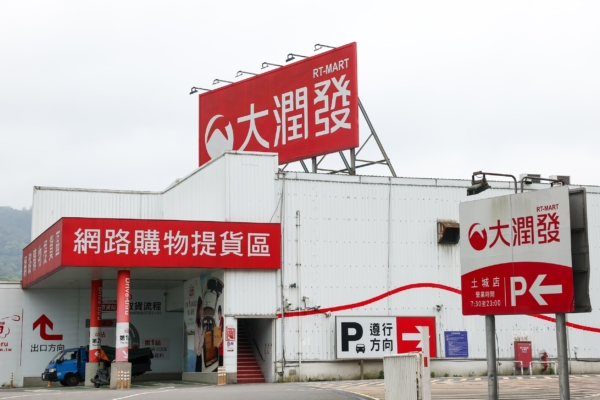
Recently, the latest financial report of Gaorun Retail, the parent company of China’s large chain hypermarket Darenfa, showed a loss of 319 million yuan (RMB) for the fiscal year 2026, with a revenue decline of over 10 percent compared to the previous year. Facing the double pressure of declining performance and top-level turmoil due to weak consumption and the impact of instant retail and e-commerce diversion, this former retail giant is in a challenging situation. It is worth noting that Gaorun Retail has replaced four CEOs within two years, raising doubts from the public about its transformation strategy and organizational stability.
On the evening of May 18th, Gaorun Retail disclosed its financial performance for the fiscal year 2026 (from April 2025 to March 2026).
According to the financial report, the company achieved a revenue of 63.442 billion yuan for the full year, a decrease of 11.3% year-on-year. Due to factors such as declining income, shrinking gross profit, asset impairment, and increased tax burden, Gaorun Retail incurred a net loss of 319 million yuan for the fiscal year. This is the first complete annual report since Dehong Capital completed the privatization of Gaorun Retail in 2025.
In addition, the company’s operating cash flow shrank drastically by over 80%, while current liabilities increased more than three times compared to the previous year.
In addition to performance pressure, there is ongoing turmoil at the personnel level. In March 2026, Li Weiping, who had been CEO for only three months, was dismissed by the board for “not taking leave for a long time and failing to fulfill duties”, marking the fourth CEO change within two years for Gaorun Retail. The frequent turnover of top executives, combined with ongoing investment in transformation, is continuously eroding profits for this retail enterprise with an annual revenue of over 60 billion yuan, posing deep challenges in strategic execution.
Previously, Lin Xiaohai led the digital transformation, but the company experienced its biggest loss since going public in the fiscal year 2024. His successor, Shen Hui, promoted cost reduction measures and briefly achieved a turnaround but resigned after serving for more than a year. Now, Hua Yuneng, co-founder of Dehong Capital, is serving as both chairman and CEO.
Industry insiders believe that frequent changes in top management lead to repeated adjustments in strategic direction, impacting operational efficiency and organizational stability.
Currently, Gaorun Retail is implementing changes in store formats, focusing on self-owned brands, and member stores as part of its new transformation strategy.
In recent years, the plight of Gaorun Retail is not isolated. Traditional large supermarkets in China have been facing operational pressures. On one hand, instant retail, community group buying, and e-commerce platforms continue to divert consumers. On the other hand, warehouse membership stores like Sam’s Club, Costco, etc., are rapidly expanding, posing challenges to traditional large stores.
Industry statistics show that in 2024, large physical supermarkets in China closed a net of 687 stores, an increase of 23.6% year-on-year, and the market share of traditional supermarkets has dropped from 19% to 13%.
Instant retail platforms are penetrating the daily consumer market from the perspective of delivery efficiency. Warehouse membership stores attract middle-class families with selected products and price advantages, while discount retail is rapidly gaining traction in lower-tier cities. In the context of slowing economic growth and conservative consumer spending, the “big and comprehensive” model of large stores is being challenged.