
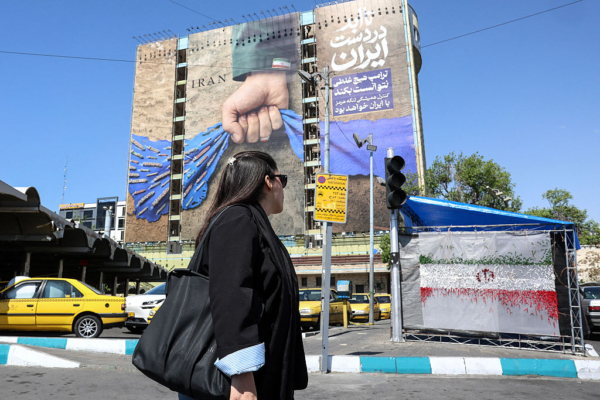
On Saturday (April 18th), the overseas media Iran International Communications Agency reported that Iran’s economy has entered a period of stagflation, struggling amid high inflation, economic stagnation, and rising unemployment.
Economists have warned that even if the ongoing conflict ends in the short term, the recovery of Iran’s domestic economy will be long and uneven. The worsening conditions have heightened the risk of renewed social unrest.
Prior to the attacks launched by the United States and Israel on Iran at the end of February, Iran had just experienced the most severe domestic protest since December 2025 – with a large number of protesters of unknown quantity being massacred by the government, and millions facing the threat of unemployment.
The service industry suffered severe damage during the protests, including advertising agencies, technology consulting firms, digital service providers, as well as hotels and tourism, which further suffered losses due to the war, some of which may be irreparable.
In order to prevent the spread of protest messages, Iranian authorities cut off the internet for three weeks during the protest activities. Since the outbreak of war on February 28th, authorities have cumulatively disconnected the internet for more than 1,100 hours to prevent people from exchanging information, resulting in substantial shutdown of most areas of the digital economy.
More importantly, the war has caused severe damage to Iran’s critical economic infrastructure, including key petrochemical industries and steel production in several cities, which are considered pillars of Iran’s industrial economy.
The damage to key industries has disrupted the supply of raw materials, leading to a chain reaction in the manufacturing and related industries. Subsequently, mass layoffs followed, affecting not only the workers in these industries but also the employees of related businesses.
Meanwhile, Iran’s heavily reliant exports have significantly declined, further limiting the already strained foreign exchange income.
Analysts pointed out that without a political solution – particularly reaching an agreement with the United States – the likelihood of more protests in the future is increasing, and the scale may exceed the protests in December 2025.
An Iranian citizen commented on the internet, saying, “Given the brutal actions of the theocratic regime and its supporters, the soaring prices of essential goods, and the increasingly bizarre hyperinflation… I believe people are just waiting for a spark to take to the streets again. Death is no longer the issue – this situation is worse than death and must end.”
Official Iranian data shows that the inflation rate exceeded 50% by the end of December 2025, and by the end of February 2026 – pre-war – it had climbed to over 70%, reaching the highest level in decades.
The inflation rates of essential goods such as meat, dairy products, edible oils, rice, fruits and vegetables have exceeded 110%. The prices of key medicines, including certain types of insulin, have multiplied several times.
Although the latest overall inflation rate data has not been released, some experts believe that inflation rates may have reached triple digits and are expected to further increase. Since 2018, Iran’s currency has devalued by over 97%, and without incoming foreign exchange, its exchange rate will continue to decline.
At the same time, the Iranian government is facing increasingly dire financial difficulties. Even before the war, the government’s budget was stretched thin and difficult to fulfill obligations. Now, due to potentially millions being unemployed, the government is unable to provide sufficient unemployment benefits, with some workers openly questioning their ability to receive government assistance.
An Iranian government spokesperson stated that the total losses from the war amount to approximately $270 billion – about 57% of Iran’s GDP, several times the annual oil revenue. This loss figure is nearly three times the government’s regular budget, highlighting unprecedented financial pressures faced by the Iranian government.
To make matters worse, Iran’s latest budget proposal includes plans to impose more taxes on the public.