
The Group of Seven (G7) finance ministers reached a consensus on Friday to strengthen cooperation with resource-rich countries and multilateral development banks to break China’s control over critical minerals and reduce countries’ dependence on China.
According to a report by Kyodo News, officials stated that the G7 finance ministers and senior officials reached this consensus at a meeting in Washington.
G7 member countries include the United States, Canada, United Kingdom, France, Germany, Italy, and Japan. In addition to G7 representatives, this meeting also included like-minded partners and mineral-producing countries such as Argentina, Australia, India, Indonesia, South Africa, and South Korea.
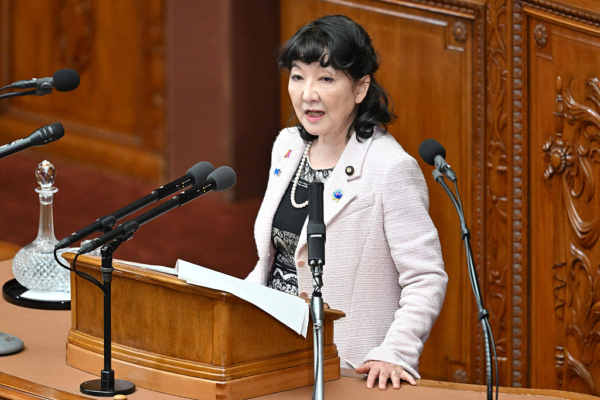
Japanese Finance Minister Satsuki Katayama told the media, “We focused on how to strengthen the supply chain of critical minerals. This is beneficial for all parties. We can ensure stable suppliers in many countries.”
“For these countries, this provides new business opportunities and room for growth,” Katayama said, referring to countries with abundant valuable natural resources.
“Considering the potential for cooperation, I believe this holds great development prospects for the future,” she said.
The meeting was jointly hosted by France and Japan, and heads of the World Bank, Asian Development Bank, and other international financial institutions also attended the meeting.
Kyodo News quoted a senior Japanese official as saying that with the support of multilateral development banks and led by France, which currently holds the G7 presidency, G7 member countries are seeking to diversify critical mineral supply chains and reduce global overreliance on China.
Finance Minister Katayama of Japan stated that countries must reduce their dependence on China’s critical minerals.
“Regardless, given China’s weaponization poses a threat to everyone, we must take action,” she said.
Rare earth minerals are one of the most critical minerals of concern for countries. Rare earth elements are crucial for manufacturing electronic products, laser-guided weapons, and advanced fighter jets.
Currently, China controls 70% of global rare earth mining and 90% of rare earth processing. In recent years, rare earths have become an important secret weapon for Beijing in diplomacy. In January of this year, China tightened its export controls on dual-use rare earths for Japan in retaliation for Japanese Prime Minister Koko Hashimoto’s remarks regarding “Taiwan affairs”. This has made diversification of the supply chain a top priority for the Japanese government.
Japanese companies are not only seeking to expand imports of rare earths from Australia, but Hashimoto also stated that Japan intends to cooperate with the United States in developing rare earth deposits in Japan’s nearby waters.