
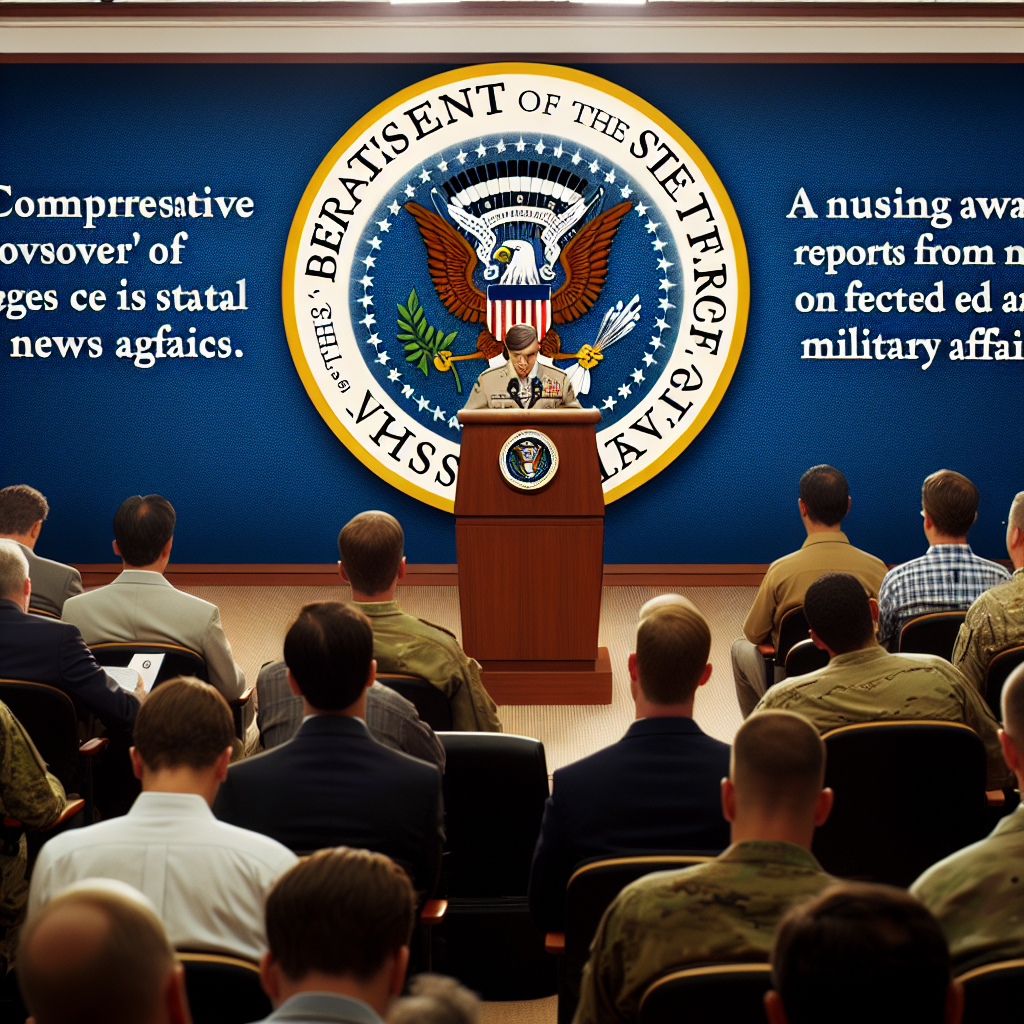
The Department of War in the United States announced a comprehensive overhaul of “Stars and Stripes” on Thursday, January 15, including a shift away from using reports from news agencies like The Associated Press and a focus on military-centered content.
According to Pentagon spokesperson Sean Parnell, in a statement posted on social media on Thursday, the Department of War is bringing the newspaper “into the 21st century.”
Parnell stated, “The Department of War is returning ‘Stars and Stripes’ to its original mission: serving our warfighters. We will modernize its operations to shift the content focus away from woke disruptions that drain morale and adapt to serve the new generation of service members.”
The military newspaper “Stars and Stripes” has a long history dating back to the Civil War period. Its funding comes in part from the Pentagon, with staff being employees of the Department of Defense.
Parnell further explained that the modernized publication will concentrate on combat, weapon systems, physical fitness, lethality, survivability, and “all matters related to the military.”
He emphasized the proud tradition of the newspaper as being crucial for servicemen and women, with the Department of War committed to ensuring that this media outlet continues to embody that tradition.
While the newspaper falls under the Defense Media Activity of the Pentagon, it has long maintained editorial independence and is managed in accordance with the principles of the First Amendment as authorized by Congress.
Meanwhile, the initiative by the Trump administration to rename the “Department of Defense” as the “Department of War” has sparked attention. The latest estimate from the Congressional Budget Office indicates that the cost of implementing the name change to “Department of War” ranges from $10 million to $125 million. If Congress approves the permanent renaming, the cost could potentially rise to hundreds of millions of dollars.
Director of the Congressional Budget Office, Phillip Swagel, in a letter to Senate leaders on January 14, noted the moderate estimated cost of around $10 million if implemented solely within the office of the Secretary of War, but could rise to $125 million for a broad and rapid implementation throughout the entire Department of War, including updates to signage, seals, official branding, and more.
This estimate is based on limited data provided by the Department of War, which includes spending $1.9 million within 30 days for training materials, identification cards, and flag updates. However, due to a lack of further execution details, there remains uncertainty in the cost estimate.
In September of last year, Trump signed an executive order authorizing executive branch agencies to actually use “Department of War” as an alternative name, suggesting that “Defense” was too politically correct and the old name sounded “better.”
Although Congress has not yet passed legislation to officially enact the change, the Air Force has been instructed to use the “Department of War” seal on official correspondence letterheads. Defense Secretary Pete Hegseth also installed a “Department of War” plaque at the main entrance of the Pentagon last fall, emphasizing the seriousness of the renaming.
Critics like Democratic U.S. Senator Jeff Merkley have labeled the rebranding as a “vanity project,” arguing that it overlooks more urgent economic priorities and provides no substantive benefit to national security and military families. Several news organizations, including Straight Arrow News, continue to use the name “Department of Defense” – a name that has been in use since 1949 – unless officially changed by Congress.