
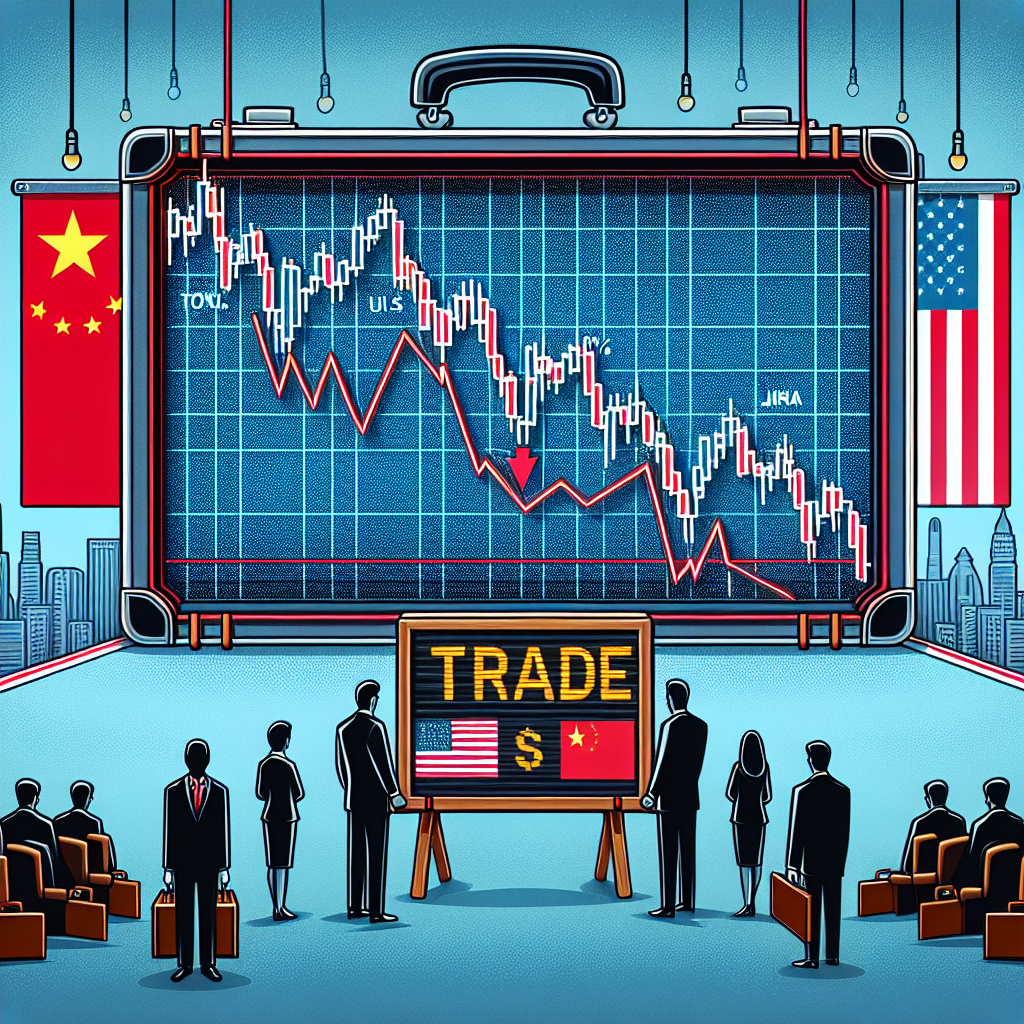
As the tensions in the US-China trade war continue to escalate, major stock markets in the Asia-Pacific region experienced a significant downturn on Monday, April 7. The Nikkei 225 and the Topix index in Japan both plummeted by over 8%, reflecting market concerns over US President Donald Trump’s tariff policies. Investor sentiment turned towards risk aversion, leading to a rapid sell-off that spread across the entire Asia-Pacific region.
In Japan, during the morning session, the Nikkei 225 index, representing the movement of large-cap stocks, tumbled by 8.03%, while the Topix index, covering around 2,000 listed companies, plummeted by 8.64%.
According to reports from the Nikkei Shimbun, the Osaka Exchange initiated a “circuit breaker” mechanism, temporarily halting trading of Nikkei 225 index futures. This measure aims to encourage investors to make “calm decisions” during sharp market fluctuations and marks the first time this measure has been implemented since August 2012.
In South Korea, the Kospi index started the day with a 4.34% decline, while the Kosdaq, which mainly consists of small and medium-sized stocks, dropped by 3.48%.
The Taiwan stock market opened with a sharp decline of over 2,000 points, hitting a low of 19,212.02 points. More than a thousand stocks hit their downward price limit, including major weighted stocks such as TSMC, MediaTek, and Hon Hai, which respectively reached their limit prices of 848 NT dollars, 1295 NT dollars, and 138.5 NT dollars.
The Australian S&P/ASX 200 index opened with a 6.07% decrease. Since reaching its previous high point in February, the benchmark index has declined by 11%, officially entering a technical correction zone.
Meanwhile, due to market expectations that the Trump administration will struggle to reach agreements with other countries to lower tariffs in the short term, US stock futures saw a significant drop. This indicates that US stocks may continue to weaken at the start of the week.
On Sunday, US oil prices fell below $60 per barrel. Futures linked to the US West Texas Intermediate (WTI) crude oil dropped by over 3% to $59.74 per barrel, marking the lowest price since April 2021.
Senior economic officials in the Trump administration stated that tariffs will not have a long-term impact on the economy, will not lead to uncontrollable inflation or economic recession, and emphasized that regardless of market reactions, the tariff policies will continue to be implemented.
Last Friday, US stocks experienced a sharp decline after Beijing decided to impose retaliatory tariffs on American goods, sparking concerns in the market about the US-China trade war and economic recession.
The Dow Jones Industrial Average fell by 2,231.07 points on Friday, a decrease of 5.5%, closing at 38,314.86 points, marking the largest single-day drop since the outbreak of the pandemic in June 2020.
The S&P 500 index tumbled by 5.97% to close at 5,074.08 points, recording the largest decline since March 2020.
The tech-heavy Nasdaq Composite index dropped by 5.8% to 15,587.79 points. Since reaching its peak in December last year, the index has fallen by 22%, entering what Wall Street defines as a bear market territory.