
The impact of the Iran war on the rise in oil prices has led to an increase in government bond yields from Tokyo, London to New York, as well as turbulence in the stock markets. These phenomena may indicate that investors are concerned that this war in the Middle East will trigger persistent inflation issues.
On May 18th (Monday), international oil prices continued to climb, with Brent crude oil futures breaking through the $111 per barrel mark, sparking a sell-off in bonds. The main reason for this oil price increase was the drone attack near a nuclear power plant in the UAE on the 17th, leading the market to believe that the Iran war will not end soon.
Additionally, US S&P 500 futures fell by 0.4%, while Nasdaq futures dropped by 0.5% in early trading. Japan’s Nikkei index fell by 0.4% after dropping 2% from its historical high point last week, and the Korean stock market fell by 2.1%.
Currently, the average 10-year borrowing rate for the Group of Seven (G7) governments has approached 4%, higher than the 3.2% before the war began in late February. From the Eurozone to the UK and Japan, the trends in major bond markets are similar, with yields reaching historic highs, indicating concerns among investors.
Although central banks are responsible for setting benchmark interest rates, actual borrowing rates for businesses, individuals, and governments are determined by the bond market, meaning financing ranging from car loans to multi-billion-dollar data centers will inevitably be impacted.
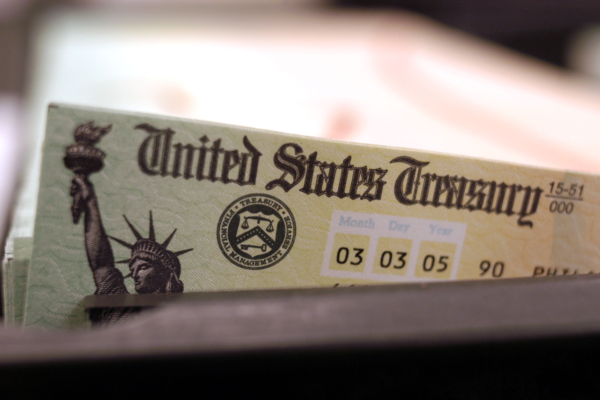
In early trading on May 18th, the US 10-year Treasury yield briefly rose by 3.6 basis points to reach 4.63%, the highest level since February 2025. The US 2-year Treasury yield, most sensitive to inflation and rate expectations, reached 4.11%, a 14-month high. The US 30-year Treasury yield reached 5.16%, a one-year high.
On May 13th, the US Treasury issued $25 billion worth of 30-year new Treasury bonds with an auction yield of 5.05%. This is part of the Treasury’s broader refinancing plan for May.
In addition to the US, Japan is also feeling the impact of inflation and worsening public finances. Japan’s 10-year government bond yield (the benchmark long-term rate) briefly climbed to 2.8% in Tokyo trading on May 18th, hitting a 29-year high.
The UK also faces concerns of political instability and rising inflation, with the country’s 30-year government bond yield reaching its highest level since the late 1990s. Additionally, the UK 10-year government bond yield surged to a remarkable 5.14% last week, the highest since July 2008.
As the benchmark for the Eurozone, Germany’s 10-year government bond yield rose by 10 basis points in a week, reaching 3.193%, a 15-year high.
Heavily indebted countries experienced more drastic increases; Italy’s 10-year government bond yield rose by 12 basis points to touch 3.90% in a week, while France also saw a 26 basis point increase.
Nick Twidale, Chief Market Analyst at ATFX Global, stated, “The data released confirms market concerns about inflation since the start of the Middle East conflict.”
“Government bond yields” represent the returns investors receive from lending money to governments over different periods. As government bond yields move opposite to bond price trends, an increase in yields reflects a decrease in bond prices. When confidence in the government issuing bonds wavers, investors often demand higher returns to buy bonds.
The G7 Finance Ministers and Central Bank Governors meeting convened in Paris on May 18th for a two-day meeting focused on discussing the economic impact of the Middle East conflict and the volatility in the global bond market.
French Finance Minister Roland Lescure, upon arriving at the venue, was asked if the bond market was collapsing. He responded, “The market is undergoing an adjustment. I wouldn’t say it’s collapsing, but we are entering a period where public debt issues must be monitored.”
When asked about concerns over bond sell-offs, European Central Bank President Christine Lagarde remarked, “I am always concerned because it’s my job.”
Joachim Nagel, President of the German Central Bank, believed that policymakers can take many measures to stabilize the market and provide a positive boost to it.
Megan Greene, a rate setter at the Bank of England, warned that central banks should not consider the inflation impact of the Iran war as temporary. She noted, “Traditionally, negative supply shocks are overlooked. However, I think it’s outdated to ignore them when they keep coming. We shouldn’t turn a blind eye anymore.”
Kenneth Broux, Head of FX and Rates at Societe Generale, believed that preventing a “slow-motion collapse” in the bond market would require a fall in oil prices, fears of economic recession triggering safe-haven buying, or bond prices dropping low enough to attract buyers again.
The impacts on government bond yields and the stock market are closely linked to oil supply. On May 18th, Fatih Birol, Executive Director of the International Energy Agency (IEA), mentioned that due to the Iran war and the closure of the Strait of Hormuz, commercial oil inventories are rapidly depleting, leaving only a few weeks’ worth of supply.
Birol, attending the G7 Finance Ministers meeting in Paris, told reporters that while we are releasing 2.5 million barrels of crude oil from strategic reserves daily to boost the market, these reserves are “not infinite”.
In March, the IEA coordinated the largest-ever release of strategic reserves, agreeing to extract 400 million barrels of oil to stabilize the market. By May 8th, around 164 million barrels of oil have been released.
Furthermore, in a recent report, the IEA warned that global energy demand will peak in the summer, and if the issues in the Strait of Hormuz are not resolved, oil and fuel prices are expected to continue rising.