
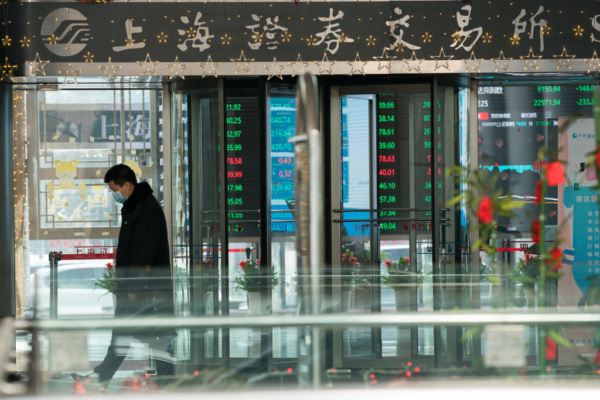
During the meeting between the U.S. and China, there was no unexpectedly positive news, leading to a two-day consecutive drop in the Chinese stock market. On May 15th, the A-share market experienced a general decline, with all three major indexes closing in the red. The previous day also saw a widespread drop in the indexes, with the Shanghai Composite falling below 4,200 points. Notably, significant amounts of main funds have been flowing out for two consecutive days.
In the A-share market on May 15th, stocks plummeted in the morning session and rebounded slightly in the afternoon with the rise of telecommunications-related stocks, but took another dive in the final trading session.
At the close, the Shanghai Composite Index fell by 1.02% to 4,135.39 points, the Shenzhen Component Index dropped by 1.17% to 15,561.37 points, the ChiNext Index declined by 0.56% to 3,929.06 points, the STAR 50 Index fell by 1.67% to 1,696.26 points, the CSI 300 Index decreased by 1.12% to 4,859.59 points, the CSI 500 Index dropped by 1.54% to 8,536.34 points, and the CSI 1000 Index declined by 1.09% to 8,682.65 points.
According to Wind statistics, out of a total of 1,811 stocks in both Shanghai and Shenzhen exchanges, as well as the Beijing Stock Exchange, 3,582 stocks registered declines while 117 remained flat.
The total trading volume in the Shanghai and Shenzhen markets was around 3.34476 trillion yuan, a decrease of approximately 177.77 billion yuan from the previous trading day. Main funds in Shanghai and Shenzhen markets had a net outflow of 60.428 billion yuan, with the ChiNext market experiencing a net outflow of 24.388 billion yuan and the CSI 300 component stocks seeing a net outflow of 16.373 billion yuan.
Among the 20 industries with net outflow of main funds, the electronic industry had the largest outflow at 24.801 billion yuan; the non-ferrous metals and telecommunications industries also witnessed outflows exceeding 8.5 billion yuan each, while the computer, power equipment, national defense military industry, and utilities industries all had outflows of over 2 billion yuan each.
Concept sectors such as servers, energy metals, photovoltaic glass, computing power leasing, industrial gases, and commercial aerospace were among the top losers. However, themes like fluorine chemicals, PEEK materials, car networking, and deep-sea technology showed strength against the market trend.
On the previous day, May 14th, the A-share market opened high but closed lower, with all three main indexes recording declines. The Shanghai Composite fell by 1.52% to 4,177.92 points, dropping below 4,200 points; the Shenzhen Component Index declined by 2.14% to 15,745.74 points; the ChiNext Index dropped by 2.16% to 3,975.14 points; and the STAR 50 Index decreased by 2.31% to 1,892.36 points.
The two markets had a total trading volume of 3.39 trillion yuan on that day, with main funds having a net outflow of 174 billion yuan, marking the largest single-day outflow since March 4th.
Additionally, on May 15th, the Hong Kong stock market also took a downturn.
The Hang Seng Index opened with a small gain but turned downward, at one point dropping by as much as 541 points, hitting a low of 25,847 points, and ultimately closing with a 1.62% decrease at 25,962 points, falling below the key level of 26,000 points; the HSI Index declined by 1.89% to 8,691 points; the Tech Index fell by 2.66% to 4,941 points. All three major indexes registered their largest single-day declines in over a month.
In terms of technical trends, the Hang Seng Index fell below its 10, 20, and 100-day moving averages in a single day; the Tech Index also dropped below its 10 and 20-day averages. Northbound funds halted two consecutive days of outflows, with a net inflow of 24.955 billion yuan on that day, reaching a new high since March 23rd, but could not reverse the downward trend.
For the entire week, the Hang Seng Index fell by 1.63%, the HSI Index by 2.23%, and the Tech Index by 3.17%, marking the largest weekly decline since early March.
According to a report from Reuters, Chen Weicong, senior investment strategist at East Asia Securities, believes that the performance of mainland and Hong Kong stocks has weakened. One reason is the relatively stable relations between China and the United States over the past six months, with the market having additional expectations for the recent meeting between the two countries’ leaders. However, as of now, there have been no clear large-scale agreements signed between the two sides, leading to potential profit-taking in the short term.