
In a recent political earthquake that rocked the Chinese community in the prominent city of Arcadia in Southern California, former Chinese-American mayor Eileen Wang pleaded guilty to acting as an illegal agent for the Chinese Communist Party and resigned from her position on May 11th. The event has not only drawn significant attention from mainstream media but also sent shockwaves through the Chinese community in Southern California, leading to some overseas Chinese leaders keeping a low profile. This incident has sparked in-depth discussions about the “loyalty” and “identity” of Asian American politicians.
Arcadia, known for being a high-quality school district and residential area for the Chinese community in the United States, was taken aback by the sudden guilty plea of Mayor Eileen Wang. It has been reported that as details of the case emerged, many Chinese community organizations that had previous dealings with Wang began to distance themselves and emphasized individual independence.
An unnamed Chinese overseas leader revealed that since the Sun Yaoning incident, the overseas Chinese community has been cautious about Wang, with many activities no longer actively inviting her. However, Wang sometimes still requests attendance, putting the organizers in a dilemma. With Wang’s formal confession now, the community leader believes that “future scrutiny of community activities will be more careful to avoid any connection with controversial figures.”
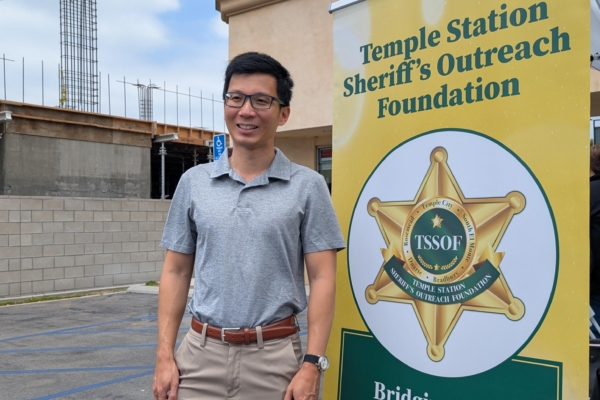
In the neighboring city of Temple City, a historic moment unfolded. According to the latest statistics in 2026, Asian residents in Temple City now account for nearly seventy percent of the population. In the recent council elections, William Man became the mayor, while Ed Chen took on the role of vice mayor, marking the first time in the city’s history that two Chinese-American leaders have assumed these positions.
In response to the negative perceptions sparked by the Eileen Wang incident, Mayor William Man, serving his third term, expressed his thoughts. He emphasized that such events inevitably affect the outside view of Asian American officials, but the key lies in “fulfilling their duties.”
“We represent the American people and the interests of the community as a whole, not the interests of any foreign government,” Mayor William Man emphasized. “Asian American politicians work tirelessly every day to serve the community. We are loyal to America and represent the values of the American people.”
He reminded that when individuals participate in organizations related to specific backgrounds, they should be more cautious, clearly delineating their positions. “America is America, and we serve the American community and voters.”
The Eileen Wang incident has also prompted collective reflections among Taiwanese and mainland Chinese immigrants.
Victoria, who has lived in Temple City for over twenty years, recalled that when she came to the United States from Taiwan in the 1980s, her elders warned her to “beware of the Communist bandits around you.” She initially thought it was an outdated slogan; however, looking back now, she believes that amidst the complicated international situation, there is a need to reassess the political risks around.
Mr. Zhang, who resides in Arcadia and experienced the Cultural Revolution in China, deliberately avoids Chinese activities and Chinese churches since immigrating. He expressed his sadness, stating that since coming to America to enjoy democracy and freedom, one should be loyal to this land. “It is regrettable whether for benefits or emotions to act as an illegal agent.”
Mayor William Man stated that the journey for Asians in American politics is extremely challenging, often facing challenges from the outside world. He called on mainstream society not to form stereotypical impressions of Asian Americans based on a single event. In the shadow of Arcadia Mayor Eileen Wang’s guilty plea, how Asian American elected officials in Southern California regain voter trust through more transparent governance and clearer political boundaries will be an important lesson for the future. ◇