
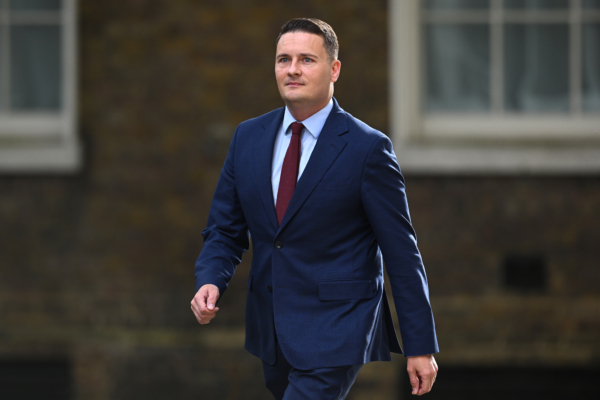
On May 14th, Wes Streeting, the UK’s Health Secretary, announced his resignation from the government and urged Keir Starmer to step down as Prime Minister. Streeting, in his resignation letter posted on X platform, claimed that despite being one of Starmer’s closest political allies and staunchest supporters for many years, he had “lost confidence” in Starmer’s leadership.
The Labour Party suffered an “unprecedented defeat” in the early May local and regional elections, sparking strong doubts within the party about Starmer’s leadership. Meanwhile, the Reform UK party, advocating for tighter immigration policies and welfare system reforms, made historic breakthroughs, seen as a “threat to the survival” of the Labour Party.
Streeting and Starmer had a “tense meeting” on Wednesday, lasting around 16-20 minutes, but failed to resolve their differences. Streeting officially resigned on Thursday. Analysts believe Streeting’s move is aimed at distancing himself from Starmer’s growing political crisis.
In his letter posted on X platform on Thursday, Streeting first listed his accomplishments in his role to demonstrate that his resignation was not due to poor performance but based on political judgment.
He stated, “The results are in, and I’m pleased to report: when I became your appointed Secretary of Health and Social Care, I have achieved the ambitious goals you set for me.”
He cited various improvements in the National Health Service (NHS), mentioning data that showed surpassing waiting time targets despite facing strikes, with a substantial reduction of 110,000 people on the waiting list in March, the largest monthly decrease since 2008, except during major outbreaks. He highlighted progress towards achieving the fastest waiting times in NHS history.
Streeting then listed specific data on other accomplishments, stating, “These are all compelling reasons for me to continue in office.”
He went on to say, “But as I mentioned in our recent conversation earlier this week, after losing confidence in your leadership, I believe that continuing in office would neither be honorable nor principled.”
He criticized the current government for lacking direction and pointed out some policy mistakes, including cutting winter fuel subsidies and the blurred political messages that leave voters “uncertain about what Labour represents.”
Streeting concluded his letter by stating, “It is now evident that you will not lead Labour into the next general election, and Labour MPs and unions are eager to debate on the next steps, which is a debate on ideology rather than personal grievances or narrow factionalism. This discussion must be broad and involve assembling the best lineup of candidates. I support this approach and hope you can facilitate it.”
Streeting’s resignation sets the stage for a leadership battle within Labour. Prime Minister Starmer will have to face potential competitors, including this 43-year-old Member of Parliament. Although Streeting did not mention running for party leadership in his letter, he openly urged Starmer to “facilitate” a competition and expressed his desire to see the “best candidates” compete to replace the current Prime Minister.
However, according to Bloomberg, someone familiar with Streeting’s thoughts said he did not launch a challenge on Thursday, but it does not rule out the possibility in the coming days.
If Starmer does not initiate a leadership election, challengers must obtain nominations from 20% of Labour MPs. With 403 MPs in Labour currently, the threshold is 81 people. The subsequent election will be decided by Labour party members and affiliated organizations through a ranked voting system.
Following the disastrous local election last week, about a quarter of Labour members openly called for Starmer to step down, as he is currently striving to hold on to his position as Prime Minister.
In his response to Streeting, Starmer expressed regret over the Health Secretary’s resignation but urged unity within the party to avoid being exploited by the opposition. He said, “We must deliver … our commitments and turn the page on the confusion that was thoroughly rejected by the British people in the last general election.”
The public conflict between Streeting and Starmer emerged as early as November last year. At that time, allies of the Prime Minister accused Streeting of planning a challenge to the party leadership, but Streeting denied the accusations in media interviews and demanded Starmer to dismiss anyone spreading such claims.
The conflict continued into this year. Streeting seemed to criticize Starmer for multiple policy U-turns during an interview in mid-January, saying that Labour should strive to “get things right the first time.”
In his resignation letter, Streeting wrote, “There is no doubt that the unpopularity of this government is a major common factor in our defeats in campaigns across England, Scotland, and Wales. When we need a vision, we see a vacuum; when we need direction, we get swept along in the current.”
Additionally, he criticized the leadership for taking a hardline approach to dissenting voices, while urging Starmer to allow a broad leadership competition to proceed at a time when his poll support is plummeting, rather than clinging to power.
Compared to Starmer, who is often criticized for lacking political storytelling skills, Streeting is seen as a more efficient communicator and orator. Streeting has also achieved a decrease in non-urgent medical waiting times, one of the key promises of the current UK government in elections.
Streeting is not the sole figure potentially entering the leadership contest. Former Deputy Prime Minister Angela Rayner stated on Thursday morning that she had been cleared of wrongdoing in a tax investigation; however, Left-wing Labour is also working to secure parliamentary seats for Rayner as she cannot run for leadership without being a member of parliament.
Andy Burnham is currently the only senior UK political figure with positive ratings in polls, which would diminish Streeting’s chances if he were to run. Burnham is a prominent political figure in the Labour Party, currently serving as the Mayor of Greater Manchester, and is one of the most prominent local political leaders in recent years in the UK.
Analysts point out that Streeting publicly supports a timeline favorable to Burnham to avoid internal backlash, while privately believing that the Labour executive, dominated by Starmer’s allies, would ultimately block Burnham’s candidacy. Polls also suggest that for Starmer, it may be more advantageous if Burnham does not run.