
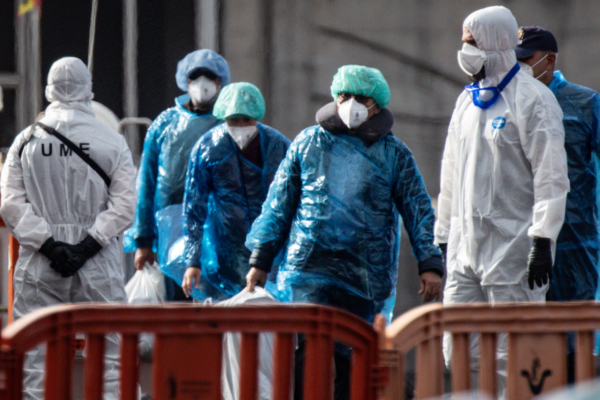
Luxury cruise ship “MV Hondius” outbreak of the Hantan virus has resulted in the deaths of 3 passengers. Currently, in the United States, 41 people are under surveillance, with the majority expected to undergo home quarantine and avoid contact with others during the 42-day monitoring period.
The Centers for Disease Control and Prevention (CDC) incident commander for the Hantan virus response team, Dr. David Fitter, stated on Thursday (May 14) that these 41 individuals primarily come from three groups, but did not specify which states these individuals are from. They are as follows:
– 18 passengers post-outbreak:
Recently repatriated and are currently under observation in medical facilities in Nebraska and Georgia.
– 7 passengers pre-outbreak:
Had left the cruise ship before the outbreak was discovered and returned home.
– 16 related personnel:
Potentially exposed to the virus risk while traveling due to sharing the same flight with cases exhibiting symptoms.
Fitter confirmed that individuals with symptoms mentioned in the third group had taken a flight from Saint Helena to Johannesburg. The case had been previously confirmed by the World Health Organization (WHO).
Although the CDC recommends that the individuals avoid traveling during the 42-day monitoring period, Fitter explained why the department did not enforce federal quarantine powers on them to mandate isolation.
He stated, “Our approach is based on risk and evidence. We are working closely with passengers and public health partners to ensure monitoring is in place and prompt medical services are available when symptoms arise.”
As of Thursday, there have been no confirmed Hantan virus positive cases related to this outbreak in the United States.
According to the World Health Organization (WHO) report, this outbreak has led to 11 cases of Hantan virus-related illnesses, with 8 cases confirmed through laboratory testing, including 3 fatal cases.
Following the severe devastation caused by the COVID-19 (novel coronavirus) outbreak a few years ago, concerns have arisen about the potential global health crisis caused by the spread of the Hantan virus this time. However, public health experts emphasize that the risk of this outbreak is limited and unlikely to result in a large-scale health emergency.
Unlike other diseases such as the COVID-19, measles, and influenza, the Andes virus strain associated with this outbreak is not easily transmitted among people.
Nevertheless, experts suggest that due to the longer incubation period of the virus, more confirmed cases may emerge in the coming weeks.