
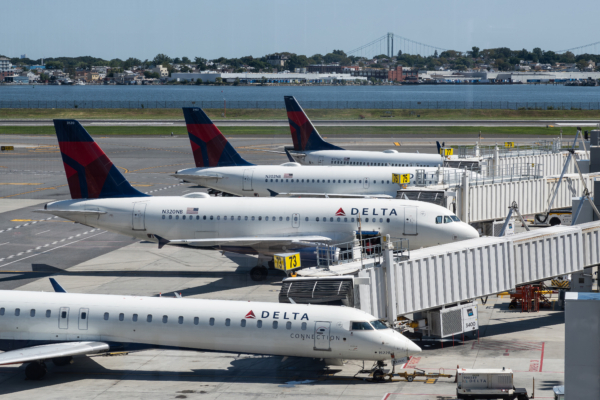
The ongoing conflict in Iran has caused a surge in aviation fuel costs, leading major airlines to announce cuts to their summer flight schedules. Canadian Airlines, Delta Airlines, and other carriers revealed on Friday (April 18) that certain routes will be affected, indicating that air travel during the upcoming summer season may be more chaotic.
Chief Economist of Tourism Economics, Stephen Rooney, told CBS News that the spike in oil prices has particularly severe implications on aviation fuel costs, a significant expense for airlines, especially on long-haul flights.
When airlines pre-sell tickets, they do so under the assumption that fuel costs will remain relatively stable. However, Rooney predicts that due to the rising fuel costs, airlines will need to cancel some flights. Since the outbreak of the Iran conflict on February 28, aviation fuel prices have doubled, adding to the operational costs of airlines.
Industry analysts indicate that aviation fuel typically accounts for around 25% to 30% of an airline’s total costs. Rooney explains that airlines base their ticket sales projections on fuel price expectations, and when oil prices rise, flights may need to be canceled or additional fees imposed. As tickets are sold on a contractual basis, airlines cannot retract them, hence canceling certain routes to avoid such situations.
Delta Airlines announced on Friday that they will reduce operation on four routes this summer, including flights departing from New York’s JFK International Airport, Detroit, and Boston, until September. Regarding fuel costs, Delta Airlines stated that the decision to cut these routes is based on various factors, including operational costs and broader operational considerations when adjusting flight schedules.
The affected flights include: from June 7 to September 7, the JFK to Memphis route; from June 7 to September 7, the JFK to St. Louis route; from May 7 to July 6, the DTW to Reykjavik, Iceland route; and from July 18 to September 5, the BOS to the Bahamas Nassau route.
A spokesperson for an airline stated in a statement to CBS News that the company will directly contact all affected passengers and provide alternative options.
Executive Director of the International Energy Agency, Fatih Birol, expressed that this crisis is the largest energy crisis in history, with European airport aviation fuel reserves able to sustain only about six weeks. A shortage of aviation fuel could result in the cancelation of some flights.
Air Canada announced on Friday that since the outbreak of the Iran conflict, aviation fuel prices have doubled, making some less profitable routes and flights economically unfeasible. The company is currently adjusting its flight schedules and will be cutting flights from Toronto and Montreal to JFK International Airport in New York between June 1 and October 25.
Royal Dutch Airlines and Lufthansa also indicated that due to the increased fuel costs, some routes are no longer profitable, leading to adjustments in flight schedules and the closure of certain routes or flights.
Aviation industry analysts are increasingly concerned about the chaos in the aviation sector. Analyst Henry Harteveldt stated that such a massive situation has never been witnessed before and is shocking.
Since most aviation fuel in the United States is domestically produced, U.S. airlines are in a slightly better position than European carriers. However, American travelers flying to Europe may face challenges, including potential flight delays. Harteveldt explained that if airports in certain routes lack sufficient aviation fuel, flights may need to make refueling stops en route, extending the return time and increasing the risk of flying to Europe.
If the Hormuz Strait can be reopened and tankers responsible for about 20% of global oil supply resume operations, aviation fuel prices are expected to normalize, but this may take time. Experts predict that it could take several weeks or even months to see a resolution.