
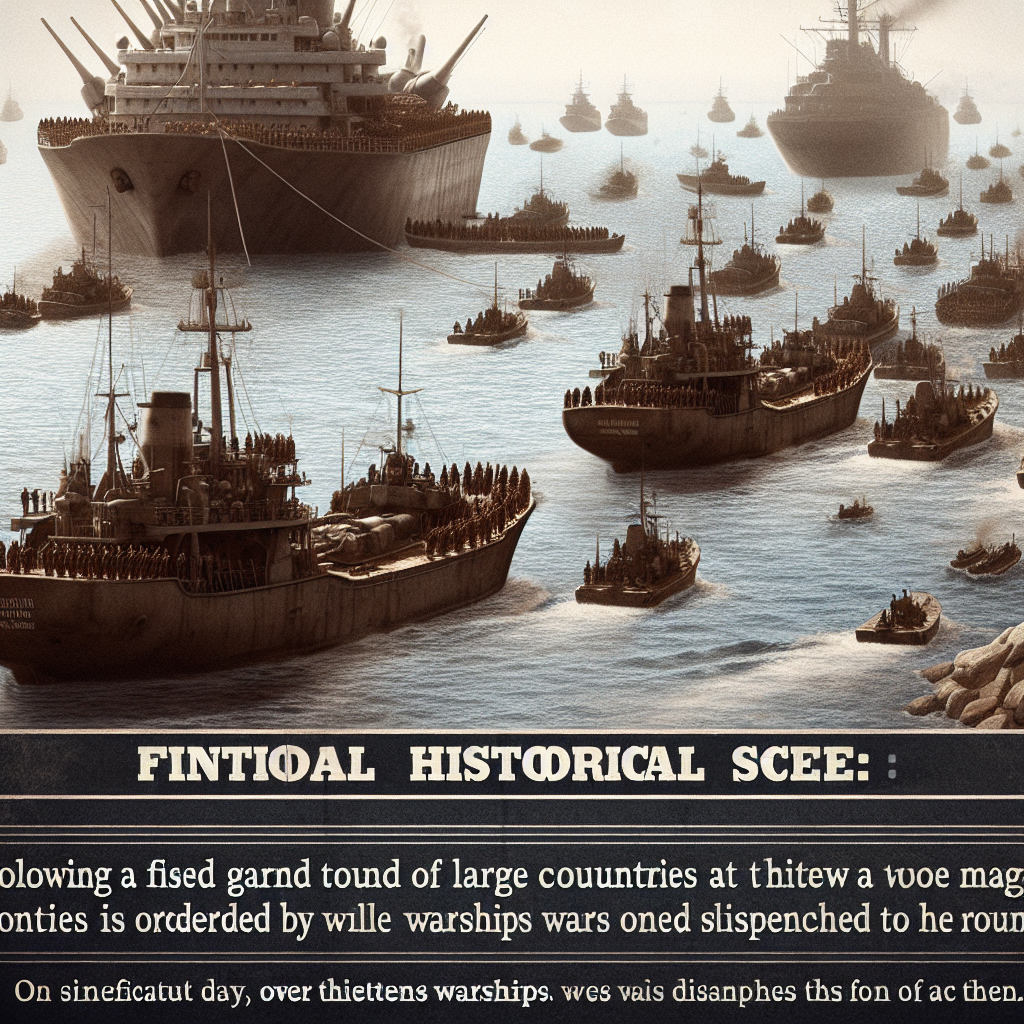
The first round of negotiations between the United States and Iran collapsed, prompting President Trump to order the blockade of the Strait of Hormuz on April 13th. According to the Wall Street Journal, on that day, more than 15 warships were deployed by the US military in the region.
The US Central Command stated on social platform X on April 15 that within the initial 48 hours of the blockade, no ships had breached the US blockade, while 9 vessels followed US instructions to turn back to Iranian ports or coastal areas.
Political science master’s student and military expert, Wu Mingjie, from National Sun Yat-sen University in Taiwan, mentioned in an interview with NTD that Trump’s action to blockade Iran not only appears to target Iran on the surface but also has a deeper strategic aim to cut off the pipeline through which the Chinese Communist Party (CCP) obtains crude oil from Iran, directly constraining CCP’s energy lifeline.
Wu Mingjie pointed out that the direct objective of the US military’s action this time is to pressure Iran through maritime blockade, forcing Tehran to make concessions at the negotiation table.
The Wall Street Journal on the 13th cited an estimate by Miad Maleki, an analyst from the Foundation for Defense of Democracies, pointing out that the US blockade of the Strait of Hormuz could cost Iran approximately $425 million per day. Wu Mingjie believes that this will not only weaken Iran’s financial capabilities but also make it more difficult for them to sustain military operations and replenish war supplies in the future.
Apart from the setback in oil exports, Iran also faces weaknesses in food and raw material imports. The Economist reported on the same day that Iran has a high reliance on imported raw materials in areas such as animal feed and vegetable oils. The report also mentioned that food prices in Iran had risen by 110% compared to the same period last year.
Wu Mingjie’s analysis suggests that for the US military, maritime blockade is a lower-cost and relatively more manageable strategic option. Compared to directly deploying ground forces to capture important energy facilities or ports in Iran, maritime blockade can not only help avoid casualties from ground combat but also allow for better control of Iranian crude oil exports, making it more cost-effective overall.
Regarding the method of blockade, Wu Mingjie believes that both Iran and the US are not implementing a comprehensive blockade but rather a selective “dual blockade.” Iran is restricting passage for ships other than those from oil-buying countries like China, while the US is mainly intercepting ships related to Iranian ports and oil trading. Despite the different approaches, the core objective for both sides is to pressure their opponents and compel them to compromise.
Wu Mingjie further pointed out that another strategic goal of the US military’s action is to target the strategic oil pipeline that the CCP accesses from Iran.
According to a report by the Wall Street Journal on April 6, the CCP has long been purchasing oil from Iran through the so-called “shadow fleet.” After Iran faced US sanctions, the CCP became its primary buyer. The report also quoted data from commodity tracking firm Kpler, which stated that in 2025 alone, Beijing purchased about 1.4 million barrels of oil from Iran daily, accounting for over 80% of Iran’s total oil sales.
Reuters reported on the 14th that the CCP oil tanker “Rich Starry,” which was sanctioned by the US, passed through the Strait of Hormuz on the 13th. However, shipping data showed that the vessel returned to the strait on the 15th after leaving the Gulf a day earlier, failing to break through the US blockade on ships entering and leaving Iranian ports.
Wu Mingjie’s analysis suggests that if the blockade of the Strait of Hormuz continues, it will not only severely impact Iran’s oil exports but also directly affect China’s energy supply. This is why Trump’s recent action, while seemingly targeting Iran on the surface, actually has a strategic effect that is clearly aimed at the CCP. In the eyes of the US, Beijing is seen as Iran’s primary external supporter.
Trump’s scheduled visit to China in March was postponed due to war-related factors to May. Wu Mingjie analyzed that Trump likely hopes to end this conflict as soon as possible within this month and push for some form of cooperation with Iran. This so-called cooperation is also a way to exert control over Iran to further compel the CCP to withdraw its influence from the Middle East.
However, Beijing has recently publicly advocated for a ceasefire and called for a de-escalation. When Chinese Foreign Minister Wang Yi spoke with Iranian Foreign Minister Zarif on April 15, he stated that the current situation had come to a “critical stage of transition from war to peace,” and China supports maintaining the ceasefire and momentum for negotiations, expressing willingness to continue promoting a de-escalation of the situation.
In response to this, Wu Mingjie’s analysis suggests that Beijing’s intervention at this time may have two layers of calculations behind it. Firstly, to prevent the war from ending completely, maintaining only a ceasefire without a thorough resolution, thereby weakening the US advantage before the Trump-Xi meeting; secondly, by taking on a mediation stance, seeking more benefits from the US and emphasizing China’s role in the Middle East situation.
He further pointed out that on one hand, the CCP hopes to keep Iran tying down the US military, leading to continued American entanglement in the Middle East affairs. However, on the other hand, Beijing does not want Iran to be devastated. If Iran were to be severely damaged or even effectively controlled by the US, the CCP may not only lose an important source of crude oil but might also be forced to exit its existing layout in the entire Middle East region. From this perspective, the conflict between the US and Iran is not only a military confrontation on the surface but also involves a strategic power struggle between the US and China.