
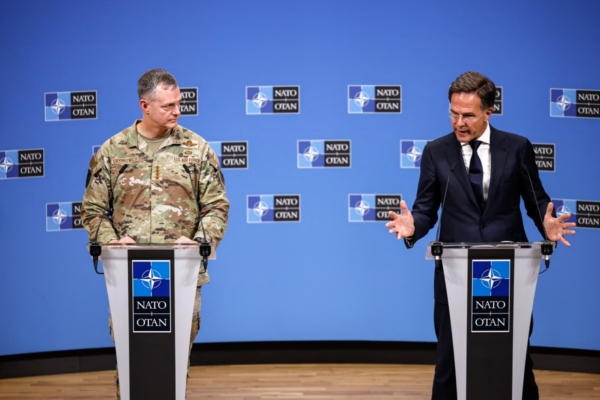
On Tuesday, May 19th, the Supreme Allied Commander of NATO, Alexus Grynkewich, announced that the United States has decided to withdraw one armored brigade from Europe, totaling around 5,000 soldiers. Grynkewich stated that the withdrawal of American troops will not weaken NATO’s defense plans in Europe.
During a meeting with military leaders from NATO countries in Brussels on Tuesday, Grynkewich, a U.S. general who has been serving as the Commander of the U.S. European Command and NATO’s Supreme Allied Commander in Europe since July 2025, emphasized that European allies and Canada are taking on more responsibilities for conventional defense in Europe. The United States will continue to support its allies while adjusting its own military capabilities.
According to Grynkewich, “With the strengthening of NATO’s European pillar, this allows the U.S. to reduce its troops in Europe and focus on critical capabilities that allies currently cannot provide.”
He mentioned that there is no specific timeline for the U.S. troop withdrawal but believes it will be a “multi-year process.”
Data from the Defense Manpower Data Center (DMDC) shows that as of December 2025, approximately 68,000 active-duty military personnel from the U.S. were stationed at overseas bases in Europe. This number does not include rotational deployments and troops participating in exercise missions.
A report from the U.S. Congress revealed that as of March 2024, U.S. troops in Europe were spread across 31 permanent bases and an additional 19 military locations that could be used in wartime.
The U.S. European Command is responsible for U.S. military operations in Europe and collaborates with NATO allies through six subordinate commands. These commands represent the Army, Navy, Air Force, Marine Corps, Special Operations Forces, and the newly established Space Force.
The U.S. military is stationed in several European countries, with the highest number of troops in Germany, Italy, and the United Kingdom.