
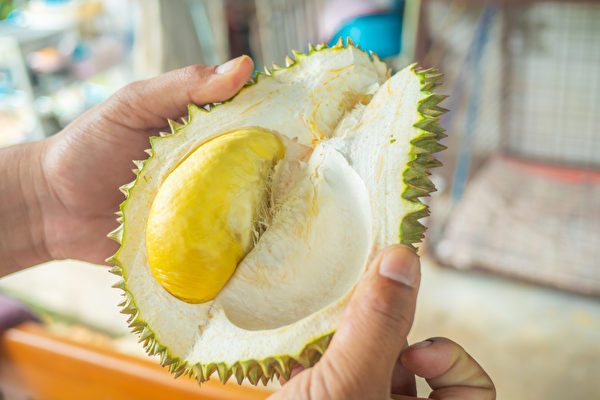
Recently, the topic of “bumper durian harvest this year leads to a significant price drop” and “durian price falls below 10 yuan per kilogram” has surged in hot searches again. Due to the extreme weather in Thailand, the durian market has experienced a rare large price drop this year, with many importers facing huge losses.
According to the financial technology media 36Kr, the price of durian has significantly decreased since the beginning of this year. The national agricultural product wholesale market price information system shows that the wholesale average price of durian in May is 25.6 yuan per kilogram, lower than the same period last year. Some cracked fruits and clearance stocks are even priced below 10 yuan per kilogram.
As a result, the news of “durian price falls below 10 yuan per kilogram” has trended.
“Wang Xinyu, who has been working in the durian industry for many years and is the CEO of Qingdao Xingguang Jiahe Supply Chain Company, both an importer of Thai durians and an agent of domestic Hainan durians, said, “This year it’s too hot, durians ripened too quickly, many fruits have split open on the trees, and fruit farmers have to cut them early to avoid losses.”
According to his observation, the proportion of unpacked durians (durians that have split open but the flesh is not ripe) in the durians harvested this year is very high. Large quantities of low-quality durians have entered the domestic market, resulting in a sharp drop in prices in mid-May.
Industry insiders also stated that the weather in Thailand this year has been abnormal, with high temperatures causing durians to ripen too quickly, leading to many fruits splitting open prematurely. After a large number of poor-quality durians flowed into the Chinese market, they could only be sold at low prices, triggering a “stampede” in prices.
In addition to the problems faced by the planting side, transportation issues have also been frequent. Due to humid weather and logistics congestion, many durians cracked, rotted, or even deteriorated during shipping. Some durian containers that were originally worth nearly a million yuan could only be sold for two to three hundred thousand yuan.
At the same time, Vietnamese durians are rapidly seizing the Chinese market. Compared to Thai durians, Vietnamese durians have shorter transportation distances, lower labor costs, and a price advantage. Platforms such as JD.com and Hema have significantly increased the proportion of Vietnamese durian sales.
However, the durian industry is still described as a “blind box business.” From harvesting, transportation to sales, every link may encounter problems, and importers often bear high risks. Insiders revealed that many durian importers have incurred losses this year.
Although the import volume of durians in the Chinese market has been increasing rapidly in recent years, the “durian freedom” is still far away. In fact, the durian price of “10 yuan per kilogram” that trended is just an extremely individual phenomenon, and the market price of durians is still influenced by supply and demand.
Experts point out that the domestic durian production is extremely low and cannot affect the market in the short term; while Southeast Asian durians are expanding production, it takes many years from planting to maturity. Therefore, high-quality durians are still in short supply.