
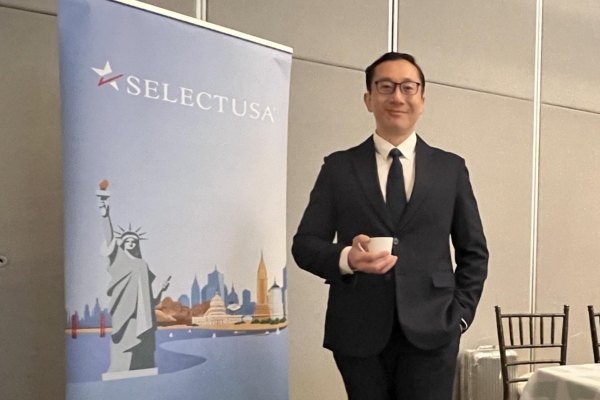
In recent years, as the difficulty of obtaining work visas in the United States has increased and the pressure on international students to stay in the US has intensified, many Taiwanese families have begun to pay attention to the EB-5 investment immigration program. However, veteran immigration lawyer Chen Qigeng warns that there is a growing number of exaggerated advertisements and suspected scams in the market, including claims of “guaranteed green card,” “quick approval in a short time,” and “immigration with just payment,” so investors must increase their vigilance.
Recently, due to the approaching deadline of the EB-5 “grandfathering clause,” market inquiries have significantly increased. The “grandfathering clause” is a key protection mechanism in the 2022 “EB-5 Reform and Integrity Act” (RIA). Chen Qigeng explained that as long as investors submit their applications and are accepted by the immigration authorities before September 30, 2026, even if regional center projects expire or policies tighten in the future, the cases will still be processed according to the current favorable regulations, providing legal stability for investors.
However, with the increase in application demand, some unscrupulous intermediaries are taking advantage of people’s anxiety to provide false promises. Chen Qigeng, in an interview with Dajiyuan, stated that EB-5 is not the “buying a green card” misconception that outsiders often think, but a genuinely risky investment endeavor.
He explained that EB-5 applicants not only need to invest capital but also must meet the requirements set by the US government, including proving the legal source of funds and creating 10 full-time job opportunities through the investment. If the investment project fails or does not meet employment requirements, it could potentially affect obtaining the green card in the end.
“Anyone claiming a 100% success guarantee, investors should be especially cautious,” Chen Qigeng said. Currently, there are several types of high-risk rhetoric commonly seen in the market, such as “just pay and get the green card guaranteed,” “no need to explain the source of funds,” “complete all applications within a few days,” “special government channels internally,” and “completely risk-free guarantee of investment capital,” which should all be carefully considered.
Chen Qigeng emphasized that the US immigration law scrutinizes the source of funds for EB-5 very strictly. Applicants must submit complete tax returns, bank statements, asset confirmations, real estate transaction records, gift documents, etc., to prove that the funds are legally obtained and have undergone thorough tax procedures. Especially for many Taiwanese families whose source of funds involves years of accumulation, family gifts, or property sales, the relevant documents often require weeks or even months to organize, translate, and notarize.
Therefore, Chen Qigeng advises applicants not to blindly trust the “quick and easy” intermediary rhetoric just to submit before the deadline. “The closer to the policy deadline, the more likely it is to encounter hasty decisions,” he said. Investors should confirm if the lawyer is licensed to practice in the US, if the regional center is approved by the US immigration authorities, if the cooperating accountant is familiar with the Taiwanese-American tax system, and carefully review the investment documents and risk disclosure content.
Furthermore, Chen Qigeng clarified that investment immigration fundamentally remains an investment and there are no “risk-free” projects. Even large regional centers may face the failure of investment plans due to market conditions, real estate market fluctuations, or poor operation. Therefore, investors need to not only focus on the immigration results but also assess the business feasibility and repayment ability of the projects themselves.
He recommended that before signing any documents, people should at least do the following:
1. Check the lawyer’s license and firm background.
2. Confirm the legitimacy and past records of the regional center.
3. Carefully read the investment risk disclosure documents.
4. Do not trust promises of “guaranteed approval.”
5. Keep complete financial flow and contract documents.
6. Confirm investment proof with a professional accountant.
With the continuous increase in demand for working and immigrating to the US, Chen Qigeng reminds that although EB-5 provides another way for some families to obtain US status, it involves significant amounts of funds and complex regulations, so people should carefully evaluate and avoid falling into scam traps due to rushing to immigrate. ◇