
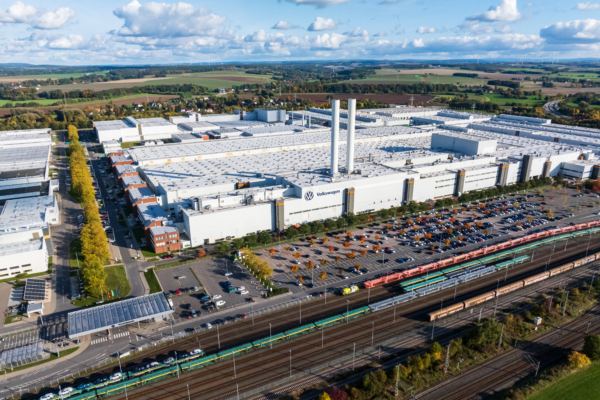
German metal industry union IG Metall spokesman told Reuters on Monday (May 11) that in response to rumors that Volkswagen may open up underutilized factories to Chinese car manufacturers, the union believes that any such measures should undergo extremely careful evaluation.
“We do not completely reject this idea, but each specific case must be carefully assessed,” the spokesman said.
He emphasized, “It is crucial that these measures complement Volkswagen’s independent industrial strategy, rather than replace it. In any case, they should not replace established investment plans and vehicle projects.”
The union’s concerns about “replacement” mainly point to Volkswagen’s repeatedly delayed core projects due to cost pressures and software delays. For example, the production timing of the “Trinity” project (based on the SSP platform), symbolic of Volkswagen’s future electrification core, has been significantly delayed from 2026 to the early 2030s.
The union is concerned that once Chinese subcontractors are introduced, management may use the excuse of “capacity being filled” to further reduce or cancel investment in these core German domestic technology projects.
Volkswagen CEO Oliver Blume is committed to further reducing costs for this German automotive giant. Currently, Volkswagen holds shares in XPeng Motors and has showcased jointly developed models at the 2026 Beijing Auto Show.
However, industry analysts warn that this move could open the floodgates for the core area of the German automotive industry.
Bank of America analyst Horst Schneider has warned that Volkswagen’s move could bring in a “wolf in sheep’s clothing.” First, this will allow Chinese car companies to directly access top German engineering talent and manufacturing systems without the foundation of a European domestic supply chain, accelerating their “Europeanization” process and hurting local brands.
Secondly, as warned by Bernard Jullien, an automotive industry expert at the University of Bordeaux in France, this could become a “backdoor” for Chinese companies to avoid EU tariffs, turning German factories into cheap subcontracting bases for competitors, reducing the brand premium of German manufacturing.
Most dangerously, once Volkswagen becomes accustomed to relying on Chinese technology and vehicle models to fill production capacity, its independent research and development (such as the SSP platform and Trinity project) will further shrink, ultimately leading to the German automotive industry transitioning from an “innovation engine” to simply an “assembly line,” completely losing its say in future electric vehicle standards.