
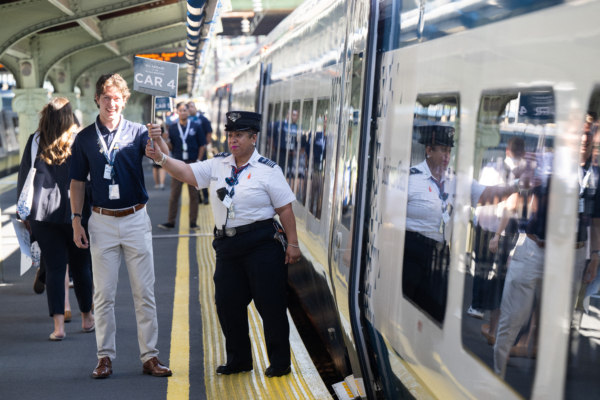
Due to frequent flight delays and cancellations nationwide in recent months, many New Yorkers chose to travel by train, long-distance bus, or even drive themselves back home this Thanksgiving to avoid the uncertainty of airports. Although the Federal Department of Transportation claims that air traffic control manpower has “returned to normal,” passengers’ confidence has clearly not returned to pre-pandemic levels.
This year, the three major airports in New York have experienced flight delays due to outdated radar equipment, shortage of air traffic controllers, and the impact of the government shutdown. During the federal government shutdown, the Department of Transportation (DOT) even requested a 10% reduction in flights at 40 major airports across the country, with the New York area being hit hard.
As of November 25, more than 200 flights have been delayed and at least six flights have been canceled in the state during Thanksgiving, with most concentrated at JFK, LaGuardia, and Newark airports.
Although the Federal Aviation Administration (FAA) has lifted the flight reduction order, at Newark Airport (EWR) for example, to avoid congestion, the FAA still enforces a peak landing and takeoff limit of 68 flights per hour (previously up to 77 flights), indicating that the aviation network has not fully recovered yet.
Passengers are not entirely buying into the official explanations. They say that due to flight delays, they often have to stay overnight at the airport, which is not the case with trains, making trains a better option this year.
The latest statistics from aviation analysis company Cirium show that as of November 24, Thanksgiving flight bookings this year decreased by about 4.48% compared to last year. This reflects that many passengers have canceled their flight plans in advance and opted for other modes of transportation. According to the American Automobile Association (AAA) estimate, 81.8 million people will travel during the Thanksgiving holiday, of which only about 6.1 million will choose to fly, a significantly lower percentage.
On the other hand, Jason Abrams, a spokesman for Amtrak, admitted that the demand for train travel has been increasing and its popularity has been growing. During the same period last year (November 22 to December 1), the national railway transported 1.1 million passengers, and this year, it is estimated to be more, although he has not provided specific figures at the moment.