
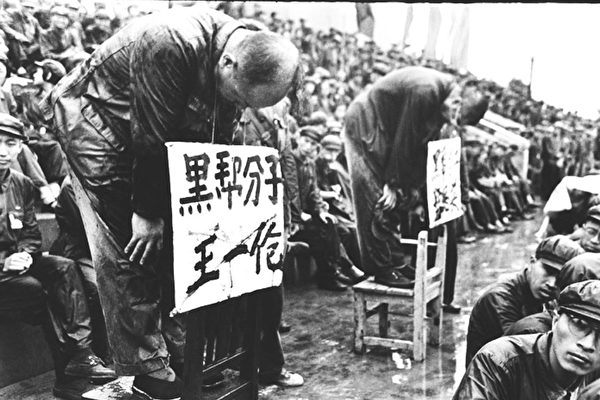
2026 marks the Year of Bingwu in the Chinese zodiac, which also signifies a full century since the tumultuous “Cultural Revolution” swept through China. For many who did not experience that era, terms like “May 16 Notification,” “Sweep Away All Monsters and Demons,” and “Bombard the Headquarters” are merely political names in history books. However, for those who lived through it, these were not just documents but things that could truly overturn people’s destinies.
Reflecting on the Bingwu year of the past, Geng Qiuyu (pseudonym), an elderly man who endured political turmoil during the Cultural Revolution, expressed a sense of nostalgia during an exclusive interview with Dajiyuan: “It feels like it’s all just a distant dream.”
On May 16, 1966, the Communist Party’s Central Political Bureau issued the “Notification on the Revocation of the Summary of Reports on Current Academic Discussions by the Five-Person Small Group of the Cultural Revolution,” known as the “May 16 Notification,” which is widely regarded as the official launch of the “Cultural Revolution.” Subsequently, the CCP turned its ideological struggle towards targeting the “party’s leading clique,” leading to rapid spread of movements like the Red Guards, smashing the Four Olds, criticism and struggles, and armed conflicts, plunging the nation into ongoing turmoil. This political movement lasting for a decade was later characterized by the CCP as the “Ten-Year Catastrophe.”
Sixty years on, Geng Qiuyu, a historian and scholar residing in Guizhou, has reached his twilight years. His father was denounced as a “historical counter-revolutionary” back in the day, enduring criticism and imprisonment. Geng Qiuyu remarked that in 1966, another Bingwu year, after a span of a century, “it feels like I’m living through a dream, experiencing everything I hadn’t before.”
Recalling those years, Geng Qiuyu stated: “There’s the May 16 Notification, then on June 1st, the People’s Daily published the editorial ‘Sweep Away All Monsters and Demons,’ how could one forget that? I experienced it.”
The “May 16 Notification” was later regarded by researchers as one of the most crucial political documents of the early Cultural Revolution. Geng Qiuyu explained that the May 16 Notification served as the “mobilization order” and “military order” of the Cultural Revolution, noting that “many top CCP officials didn’t fully grasp what was unfolding.” Subsequently, the People’s Daily published the editorial “Sweep Away All Monsters and Demons,” followed by the Nie Yuanzi big-character poster. “If the movement stagnated, the Red Guards were mobilized. Mao Zedong met with the Red Guards eight times, turning the world upside down,” Geng Qiuyu added.
During his junior high school years, influenced by his father, Geng Qiuyu was not unfamiliar with politics and power struggles within the CCP leadership. He recollected: “At that time, Peng Zhen (a CCP political figure) was removed from office, the Beijing Municipal Committee faced upheaval, almost all incumbents were ousted, replaced by the Cultural Revolution leadership group, the Central Cultural Revolution Group, and local Cultural Revolution teams. When the situation could no longer be controlled, military representatives and military propaganda teams were sent in. Later, after the military representatives were withdrawn, they turned into labor propaganda teams and student propaganda teams, aiming to stabilize the regions.”
Geng Qiuyu’s father, nearing a hundred years old, shared during an interview that the Cultural Revolution in his memory could be divided into two periods: “Before the ‘September 13 Incident’ involving Lin Biao was the first half, after the incident was the second half, when they began reining in.” Detailing further, he mentioned that following the ‘September 13 Incident,’ numerous educated youths started returning to urban areas. “My son (Geng Qiuyu) was also gradually summoned back from the countryside during that time. He was in the village during the ‘September 13’ incident.”
In the early dawn of September 13, 1971, Lin Biao, then Vice Chairman of the CCP and Mao Zedong’s chosen successor, fled aboard a Trident jet, which eventually crashed in Mongolia. Subsequently, the CCP labeled it as a “defection and treason incident.”
Many survivors of the Cultural Revolution view the ‘September 13 Incident’ as a crucial turning point. Geng Qiuyu reminisced that during that period, a group leader relayed the news of Lin Biao’s event to educated youths with incredulity, exclaiming, “Can’t wrap my head around Lin Biao betraying the party. Everyone stared at him. Lin Biao eats three meals of egg noodles a day; how can he betray the party?” Geng Qiuyu noted that their biggest aspiration at that time was simply to “eat three meals of egg noodles a day.”
Guizhou was one of the regions in China heavily impacted by violent struggles and power seizures during the Cultural Revolution. The People’s Daily once published “Spring Thunder in the Southwest,” openly supporting the rebel forces in Guizhou. According to Geng Qiuyu, with the occurrence of the Lin Biao incident, followed by the later arrest of the “Gang of Four,” the influence of extreme leftist forces, repressive forces, and the forces causing people’s misery all came to an end.
Geng Qiuyu further remarked on his own experience of a “22-year-old puppy life.” His father had been isolated for review back in 1956 during the “anti-Hu Feng” campaign, and later during the “anti-rightist” campaign, he was transferred from his original position to teach at an elementary school. Subsequently, he was assigned to work on a park in Guiyang, “carrying stones and bricks.” During the Cultural Revolution, his father was labelled as a “black gang counter-revolutionary” and “historical counter-revolutionary.”
“They said he attacked Jiang Qing, attacked the leader, and that he didn’t speak or open his eyes while reading Mao Zedong’s quotations – all of which led them to label him a counter-revolutionary.”
The “Ten-Year Catastrophe” left a lasting impact on China’s intellectual community. As Geng Qiuyu, at his old age, recounted: “My father was sent to prison in 1966, only released in 1973, and not exonerated until 1978. In those 22 years, his salary kept dropping. From around 70-80 yuan in the 1950s, it fell to 58 yuan during the most difficult times in the 60s. His administrative rank also plummeted, making our family’s situation unbearable.”
Reflecting on the societal conditions during the Cultural Revolution, a 92-year-old man from Sichuan, Zhang, told reporters about how it tore families apart: “Each family was divided into multiple factions – the students, the working fathers, the mothers holding minor positions.”
Zhang criticized Mao Zedong for initiating the Cultural Revolution to secure power, eventually losing control of the situation. “The movement plunged the nation into chaos. The period between 1967 and 1968 was the most severe, with widespread armed conflicts, halting of railway services, workers’ strikes, and students boycotting classes; everything was in turmoil. It was a chaos of promoting militancy over diplomacy, with the Red Guards armed with guns, swords, and spears, and later even crafting homemade guns.”
In Zhang’s view, when Mao Zedong realized the situation had escalated, he advocated for “ideological struggle over physical struggle,” but by then, factions had already formed across the country, creating several strongholds. “There were only a few within the military who truly supported Mao Zedong’s methods,” he noted.
“Most of the old commanders were dealt with by him.”
Looking back at the Bingwu year 60 years ago, many interviewees mentioned how the Party’s successive political movements, from the Rectification Movement in Yan’an to the Anti-Rightist Campaign and then the Cultural Revolution, overturned the fates of many ordinary Chinese people.
Regarding the power structure of Mao Zedong in his later years, Geng Kangqian, explained to reporters that, in a sense, the greatest threat for power-seizing revolutionaries was that anyone could potentially replace them. “The legitimacy of his rule was based on rebellions. Once others started rebelling, he couldn’t stay put.”
In closing, the interviewees revisited the Bingwu year of 1966, remarking, “1966 itself was a Bingwu year. A century has passed. This year has arrived again, it all feels like a distant dream coming to an end.”