
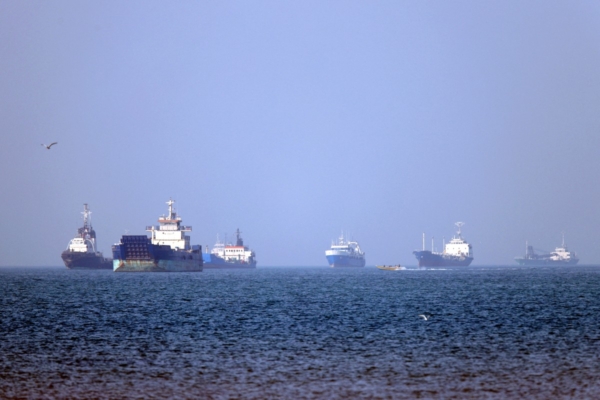
The British Ministry of Defence announced on Tuesday (May 12) that the UK is deploying advanced autonomous mine-clearing equipment, advanced anti-drone systems, Typhoon fighter jets, and the HMS Dragon destroyer to the Strait of Hormuz to participate in a multinational defense mission aimed at ensuring the safety of navigation in the strait.
British Defense Minister John Healey made this commitment during a virtual ministerial summit held on Tuesday. Representatives from more than 40 countries participating in the multinational military operation attended this virtual summit.
Healey said, “The UK is taking a leading role in maintaining security in the Strait of Hormuz, and today we are demonstrating this with new cutting-edge equipment to protect our interests and ensure the safety of the strait.”
“The new funding provided for autonomous mine-clearing and anti-drone systems, advanced Typhoon fighter jets, and the HMS Dragon destroyer is a firm and clear commitment aimed at boosting confidence in commercial shipping and alleviating the burden of conflict on our domestic population. This multinational joint action, along with allies, will be defensive, independent, and credible,” he said.
According to the British Ministry of Defence, the advanced autonomous mine-clearing equipment has the capabilities to detect and neutralize mines. The UK also announced the contribution of the navy’s Beehive system, which can deploy high-speed autonomous Kraken drones, allowing multinational forces to perceive, track, identify potential threats, and destroy them.
Britain stated that the Typhoon fighter jets with combat experience in the region are ready to conduct aerial patrol missions over the Strait of Hormuz. The UK will also dispatch advanced military mine clearance experts who have been prepared for mine clearance operations in the UK.
The HMS Dragon destroyer of the UK is already on its way to the Middle East. The Ministry of Defence stated that the destroyer is ready to carry out any mission to ensure the safety of the Strait of Hormuz, with its anti-drone system including the advanced “Sea Viper” system.
All these measures are a supplement to the UK’s existing defense operations in the Middle East. The UK has deployed over 1,000 personnel in the region, including anti-drone teams and fast jet squadrons, playing a crucial role in protecting British citizens and regional partners.
The Ministry of Defence stated that this multinational joint defense mission will be launched when conditions allow and is supported by £115 million in new funding for the procurement of mine-clearing drones and anti-drone systems.
The conflict in Iran has severely disrupted the navigation in the Strait of Hormuz, disrupting oil exports and driving up energy prices. Approximately one-fifth of the world’s oil is transported through this strait.