
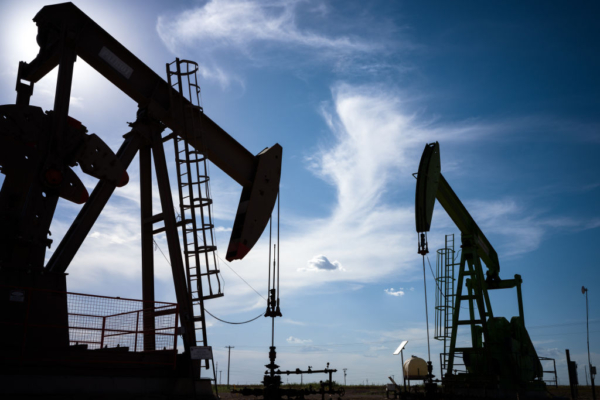
The ongoing tensions in the Middle East have led to a substantial blockade near the Hormuz Strait, causing a slowdown in China’s procurement of crude oil from the region. According to the latest statistics from the General Administration of Customs of China, import of crude oil from six Middle Eastern countries in March decreased by 25% compared to the same period last year.
Reports from mainland China’s Caixin and Nikkei Chinese website indicate that based on the March trade statistics released by the General Administration of Customs of China on the 20th, China imported 122.6 million barrels of crude oil from the six Middle Eastern countries (Saudi Arabia, Iraq, UAE, Oman, Kuwait, Qatar) in March, representing a 25% decline from March 2025.
Among the six Middle Eastern countries, which account for 30-40% of China’s total crude oil imports, four countries experienced decreases: Saudi Arabia by 30.7%, Iraq by 46%, Kuwait by 52.3%, and Qatar by 64.5%.
China is the world’s largest importer of crude oil, with 70% of its domestic consumption reliant on imports. Due to Iran’s blockade of the Hormuz Strait, oil tanker shipments have been restricted. Overall, China imported approximately 362 million barrels of crude oil in March, a slight 2% decrease from the same period last year.
Russia was the largest source of crude oil imported by China in March, showing a 14% increase. With the US easing sanctions on Russian oil production in mid-March, other countries may increase their procurement of Russian crude oil.
In addition to countries like Saudi Arabia and Iraq, China has also been procuring crude oil from Iran, despite facing US sanctions. Malaysia and Indonesia serve as transit centers for Iranian oil, with China’s crude oil imports from Malaysia decreasing by 39% in March, further widening the decline from February.
China has been intensifying efforts to diversify its oil procurement beyond the Middle East, with a significant increase in crude oil imports from Brazil in March, reaching 2.5 times the amount from the same period last year.
Recently, the United States implemented a naval blockade against Iran, with the Treasury Secretary stating that China will no longer be able to access Iranian oil through the Hormuz Strait.
Wild swings in three main directions have placed pressure on China’s crude oil imports this year: first, the uncertainty surrounding China’s major sanctioned oil source due to the US-led military attacks against Iran.
Second, after the US arrested Venezuelan President Maduro earlier this year, Venezuelan ports ceased all loading of crude oil shipments to China.
And third, the actual halt of operations in the Hormuz Strait threatens to extend further to affect China’s daily procurement of over 7 million barrels of legally purchased Middle Eastern oil.
Nomura Securities’ Chief China Analyst, Lu Ting, has pointed out that China is the world’s largest importer of oil and natural gas, with 73% of its crude oil consumption and 40% of natural gas consumption relying on imports, with about 50% of crude oil imports and 16% of natural gas imports transiting through the Hormuz Strait.
In 2025, China’s maritime crude oil imports reached a record high of approximately 10.27 million barrels per day for the year. Data from commodity analysis firm Kpler shows that in 2025, China imported an average of 1.38 million barrels of Iranian oil per day, accounting for 13.4% of total maritime oil imports.
A report from the Legal Department of the China Council for the Promotion of International Trade on March 17 acknowledged that the military stand-off between the US and Iran has severely disrupted transport through the Hormuz Strait, affecting over 40% of China’s oil imports and also involving crucial materials for chip manufacturing.
The report indicates that over 40% of China’s imported crude oil requires transit through the Hormuz Strait. Multiple maritime routes from China have been forced to detour around the Cape of Good Hope, resulting in delays of 10-20 days and a surge of over 50% in freight costs, squeezing the profit margins of Chinese foreign trade enterprises and increasing the risk of order defaults.
The report further highlights that shrinking demand in the Middle East market has led to a roughly 15-20% decline in export orders for some Chinese companies. The shift of local economic resources towards security and defense sectors, along with weakened infrastructure and consumer demand, directly impacts China’s exports.