
Japan’s government officially amended the “Three Principles on Transfer of Defense Equipment” as part of its export control rules on Tuesday (April 21), abolishing the ban on exporting lethal weapons. The decision, passed by Prime Minister Sanae Takamichi’s Cabinet and the National Security Council (NSC), signifies a significant shift in Japan’s post-war “pacifist” policy, aimed at revitalizing the defense industry to address increasingly serious regional security challenges.
After announcing the policy, Prime Minister Sanae Takamichi took to social media to express, “Amid the increasingly severe security environment, no country can now maintain its peace and security solely by its own efforts, hence the necessity of having partners that support each other in the field of defense equipment.”
This amendment completely removes the previous restrictions that limited exports to the five categories of non-combat areas: “rescue, transportation, surveillance, mine sweeping, and alert.”
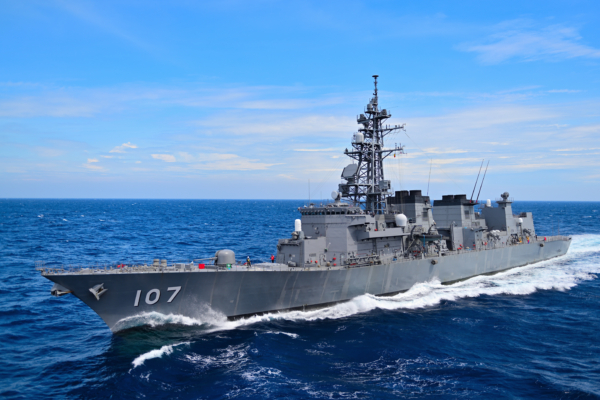
The new guidelines categorize defense equipment into “weapons” and “non-weapons,” allowing the export of equipment such as fighter jets, combat drones, missiles, and escort ships with lethal capabilities.
Chief Cabinet Secretary Minoru Kihara stated at a press conference that the new policy will “ensure Japan’s security and further contribute to peace and stability in the region and the international community amid rapidly changing security environments around Japan.”
He also emphasized that by relaxing export principles, Japan will be able to build a more resilient defense industrial base.
“The government will strategically promote the transfer of defense equipment to create a security environment that aligns with Japan’s interests and establish an industrial foundation that can sustain enduring operational capabilities,” said Minoru Kihara.
Currently, arms exports are only permitted to 17 countries that have signed the “Agreement on Defense Equipment and Technology Transfer” with Japan, including the United States, the United Kingdom, Australia, as well as India, the Philippines, France, Germany, Italy, among others.
While Japan still does not export lethal weapons to countries in active conflicts in principle, the new guidelines include “special circumstances” as exceptions, allowing for consideration of Japan’s security needs and exports to support U.S. operations in the Indo-Pacific region.
To prevent equipment from being misused, the Japanese government will strengthen monitoring mechanisms by sending officials to receiving countries for regular inspections of military equipment.
The Takamichi administration has designated the defense industry as one of 17 strategic growth areas and is supporting startups and academic research to reverse the trend of contractors withdrawing from the market.
Concrete achievements include an agreement reached last week with Australia, where Mitsubishi Heavy Industries will build 11 “top-grade” patrol vessels for Australia in an “improved” version.
The revision of Japan’s arms export guidelines has also attracted procurement interest from countries in Southeast Asia and Europe.
Last week, a delegation of 30 NATO representatives visited Japan to discuss further deepening bilateral relations. They visited a subsidiary of Mitsubishi, which is also involved in the joint development of a sixth-generation fighter jet with the UK and Italy, known for its satellite technology.
The Philippines, facing significant threats due to sovereignty disputes with China in the South China Sea, is considering purchasing retired “Abukuma-class” escort ships from the Japan Maritime Self-Defense Force to enhance deterrence against China.
However, the Takamichi administration’s move still faces some opposition domestically in Japan.
As the new regulations stipulate that arms exports only require notification to parliament after government approval, rather than prior submission for parliamentary review, it is expected to draw criticism from the opposition parties. The opposition has consistently argued that parliamentary approval should be sought in advance to avoid escalating conflicts or fueling arms races.