
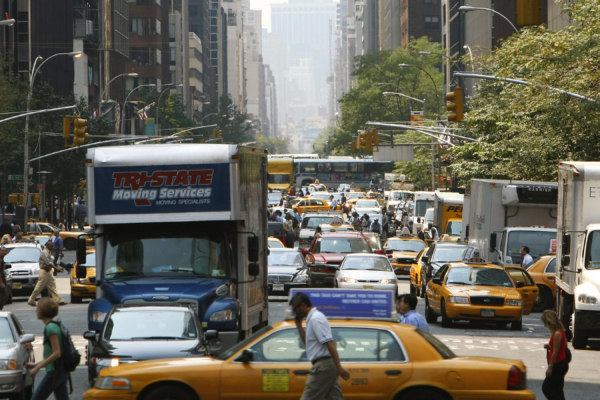
New York City, known as the “City That Never Sleeps,” is becoming increasingly noisy according to the latest data from the city government. In 2025, a total of 636,000 noise complaints were received through the 311 system, averaging around 1,700 complaints per day. Although slightly lower than the peak of over 700,000 complaints in the previous year, noise remains one of the most prominent issues among various civic complaints.
When looking at the types of complaints, the most common involve loud music and parties, followed by sounds of banging, construction noise, and even “loud talking” as a source of residents’ complaints. Experts point out that prolonged exposure to high decibel noise can lead to hearing damage, increased stress, sleep disorders, and even negative impacts on mental health and cardiovascular health.
Among all districts, Community District 12 in the Bronx is considered the noisiest area in the city, covering neighborhoods like Edenwald and Wakefield. Throughout 2025, a total of 153,082 complaints were recorded in this area, nearly 100,000 more than the second-ranking district. Local residents have reported serious issues with late-night car stereos, fireworks, and street noise, with some describing the situation as “the whole street vibrating.”
Flatbush in Brooklyn, with the zip code 11226, comes in second place with 59,180 complaints recorded throughout the year. Residents have complained about noticeable traffic noise and vibrations caused by heavy trucks, making it difficult to avoid disturbance even when living in high-rise buildings.
Additionally, neighborhoods like Williamsbridge and Highbridge in the Bronx, as well as Ridgewood in Queens, are among the areas with most severe noise pollution issues.
In response to these problems, the New York City government has recently introduced a series of measures to address the issue. According to the plans by the New York City Department of Environmental Protection (DEP), the existing 11 noise monitoring cameras throughout the city will be expanded to at least 5 in each administrative district. These devices are equipped with microphones, panoramic cameras, and license plate recognition systems, automatically recording and submitting to the DEP for review when vehicle noise exceeds 85 decibels.
Violators will face fines ranging from $800 to $2,500, particularly targeting vehicles with illegally modified exhaust systems. Some city council members have proposed the introduction of artificial intelligence technology to further enhance the accuracy of noise monitoring.
Starting from April 21, 2026, the city government will require specific large construction sites to install around-the-clock noise monitoring equipment. This regulation applies to projects exceeding 200,000 square feet, located within 50 feet of residential areas, and with durations exceeding 30 days, aiming to reduce the impact of nighttime construction on residents.
The city government encourages the public to use the “NYC Noise” mobile application to record noise levels, time, and sources, and directly submit complaints. Noise types that can be reported include alarms, construction, animals, air conditioning units, music, and sirens.
While it may be difficult to completely eliminate urban noise, the city government hopes to gradually improve residents’ quality of life and create a more livable sound environment for New York through technological monitoring and law enforcement upgrades.