
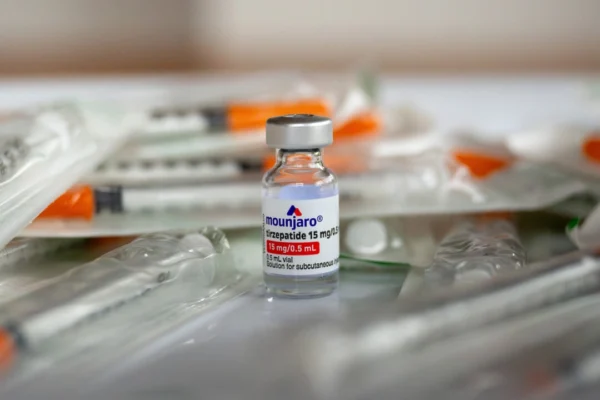
Last Saturday, on April 18th, the Indian drug regulatory agency seized more than 260 suspected counterfeit injection pens of Mounjaro, a drug for obesity and diabetes, from the Indian branch of Eli Lilly. Authorities in India stated that the main suspect had ordered raw materials from a supplier on the Chinese e-commerce platform Alibaba.
In a statement, the Haryana Food and Drug Administration in India revealed that officials in the state of Haryana discovered the suspected counterfeit Mounjaro injection pens inside a car in the outskirts of New Delhi on Saturday. They also arrested two individuals involved in the manufacturing and sale of fake medicines.
India is facing an exponential obesity crisis, making it the world’s second-largest population of overweight individuals, with approximately 180 million adults affected by this issue.
Eli Lilly’s significant weight loss drug Mounjaro (tesamorelin) was launched in India in March 2025. With a lower pricing strategy (about a quarter of the price in the United States) and a “first-mover advantage,” it rapidly became the mainstream drug in the Indian market for treating obesity and diabetes, becoming the top-selling drug in India.
India’s drug control officer Amandeep Chauhan informed Reuters that the main suspect did not have pharmaceutical licenses and was producing these products in private properties. He mentioned that the two arrested individuals were selling these injection pens on the online marketplace IndiaMART at a price 27% lower than that of genuine drugs.
Chauhan revealed that the peptides used in these drugs were sourced from suppliers on Alibaba. He added that officials discovered a large quantity of raw materials, including locally produced Mounjaro packaging labels, in the properties involved in the case on Monday. The retrieved items were valued at around 7 million Indian rupees.
Alibaba and IndiaMART have not responded to Reuters’ requests for comment. Reuters was also unable to independently verify these claims.
Chauhan stated that the storage temperature of these pens did not meet standards, and discrepancies in font size and other details on the labels raised suspicions about the counterfeit products.
He further mentioned that samples had been sent to government laboratories for identification, and the individuals involved in the case were detained for judicial investigation.
On Monday, Eli Lilly stated in a release to Reuters: “Eli Lilly takes patient safety extremely seriously and welcomes actions by regulatory agencies to combat illegal drugs.” The company also stated that they were cooperating with the investigation.