
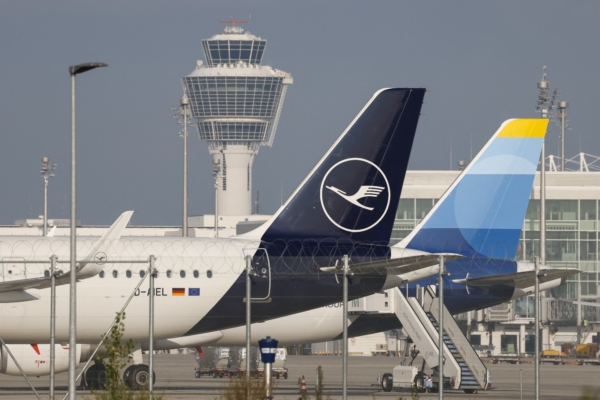
Amid escalating tensions in the Iran war, data from Kpler and the London Stock Exchange Group (LSEG) reveals that in April this year, the amount of aviation fuel imported from the United States to Europe hit a historic high.
Since the military actions initiated by the United States and Israel against Iran on February 28th, Iran has blocked the Strait of Hormuz, leading to the interruption of shipping of goods, including crude oil, through the strait. This disruption has pushed up global oil prices, causing fuel supply shortages or tensions in some European and Asian countries.
Approximately 75% of Europe’s aviation fuel imports rely on the Middle East, accounting for about 375,000 barrels per day.
According to Reuters, data from vessels that have already unloaded or are yet to unload shows that in April, the expected daily flow of oil from the United States is projected to reach between 149,000 to 200,000 barrels, marking a historic high since records by LSEG in 2015 and Kpler in 2017.
Aviation fuel constitutes a significant operational cost for airlines. Since the outbreak of the Iran war on February 28th, aviation fuel prices have more than doubled.
Reported by The Associated Press, on Tuesday, several European airlines urged the European Commission to take emergency measures to ensure aviation fuel supply to cope with the energy supply issues resulting from the Iran conflict.
The “European Airline Association,” established by the five major airlines in Europe, called for the establishment of a monitoring mechanism at the EU level for aviation fuel supply. They proposed direct access to information provided by suppliers and suggested joint procurement of aviation fuel by the EU. The association also urged the suspension of the EU Emissions Trading System and the abolition of aviation taxes.
The EU requires countries to maintain a 90-day emergency oil reserve, but does not specify how much of it must include specific types of fuels. According to data from the International Energy Agency, Spain is a net exporter of aviation fuel, while the UK, as the largest consumer in the region, relies on imports for 65% of its aviation fuel demand. Last week, independent aviation fuel stocks at the Amsterdam-Rotterdam-Antwerp refinery and storage center fell to their lowest level since March 2023.
Despite being the largest consumer of aviation fuel globally, the United States has seen a record high in aviation fuel exports. Data from the Energy Information Administration (EIA) shows that in the week ending April 3rd, US aviation fuel exports were estimated at 442,000 barrels, double the average level of 219,000 barrels during the same period last year.
The International Energy Agency (IEA) also noted in its monthly report that if the European market fails to make up for more than 50% of the fuel shortfall from the Middle East, inventories will reach a critical level of 23 days by June, leading to actual fuel shortages.