
Recently, the official data released by Guangdong Province, a major economic powerhouse in China, showed that its gross domestic product (GDP) grew by only 3.9% last year, falling below the national average and missing the target for the third consecutive year.
Across the mainland, various local legislative meetings have been held to disclose last year’s economic data. According to a report by Meng Fanli, the Governor of Guangdong Province, the province’s GDP in 2025 reached 14.58 trillion yuan, with a growth rate of 3.9%, lower than the initial target of around 5% set at the beginning of the year and also below the national GDP growth rate of 5%. However, Guangdong’s total economic output still ranks first in China. Given the long-standing practice of official data manipulation, there is a widespread belief that the true economic situation may be even worse than reported.
Some netizens commented that if Guangdong’s GDP growth is only 3.9%, how could the national average be 5%? They criticized the exaggeration in falsifying data.
User “Ah Huat” stated: “Fake data, zero credibility.”
Currently, China’s economic challenges go beyond cold macroeconomic data to a tangible sense of “economic decline” felt by generations from middle-aged to young people. The waves of unemployment, layoffs, and midlife crises are impacting each generation in different ways as the economy falters.
Since last year, Shenzhen, once hailed as the “Silicon Valley of China,” has been facing an unprecedented economic winter due to the double blow of hindered exports and weak domestic demand. Key economic indicators in the region have continued to deteriorate, with up to 40% of enterprises running at a loss.
Reports from the public suggest that there is a wave of foreign capital withdrawal, private business closures, commercial depression, rising unemployment among the populace, declining government revenues, and even many high-tech industries struggling to pay their employees.
One netizen, who moved from Hubei to Guangdong for work, mentioned encountering many homeless individuals on the streets upon arrival. This first-hand observation led them to believe that the economy in Guangdong has truly declined. Uncertain about finding a job there, they are contemplating returning to their hometown if employment opportunities do not materialize.
Numerous videos on social media depict homeless individuals, including software engineers, construction workers, and food delivery riders, sleeping under bridges, in squares, alleys behind office buildings in Shenzhen, Guangzhou, and other areas. These individuals spend their days looking for work and shelter on the streets at night, resorting to instant noodles and tap water to save costs.
In the first three quarters of 2025, Guangdong’s GDP increased by 4.1% year-on-year, lower than the national average. This extended period of lagging behind the nation indicates a rare lack of growth momentum for the “economic locomotive.” President Xi Jinping previously expressed that this situation was “acceptable.” As early as the first quarter of last year, Guangdong’s economic growth rate was only 4.1%, failing to keep pace with the national average.
As a long-standing manufacturing hub and the acclaimed “economic locomotive” of China, Guangdong’s weak economic performance reveals deep-rooted issues in China’s overall economic structure. The concurrent decline in external demand and weak domestic consumption has placed unprecedented pressure on Guangdong. The sustained slower GDP growth rate compared to the national average provides a glimpse into the true state of the Chinese economy.
In 2024, Guangdong’s economic growth rate was merely 3.5%, failing to meet the target for the third consecutive year. Many are questioning how the Chinese authorities arrive at an average economic growth rate of 5% if Guangdong, a key economic contributor, only grows by 3.5%.
Renowned political and economic commentator Wang He pointed out that Guangdong’s dilemma lies in the vulnerability of its export-oriented industries under the trend of “de-globalization.” For decades, Guangdong has been known as the world’s factory due to low-cost manufacturing and a massive foreign trade system, but this model is no longer sustainable.
Furthermore, Guangdong’s “industrial dominance” has led to imbalanced industry structures, severely restricting the province’s sustainable economic development. Insufficient domestic demand in Guangdong exacerbates these challenges.
Wang He’s analysis suggests that Guangdong’s economic issues are a microcosm of China’s economy. The problems in Guangdong extend beyond economics to the policies and institutional flaws of the Chinese Communist Party, preventing Guangdong’s economy from transforming and upgrading for over 20 years. As long as the CCP remains intact, this is the economic fate of China under the CCP’s rule.
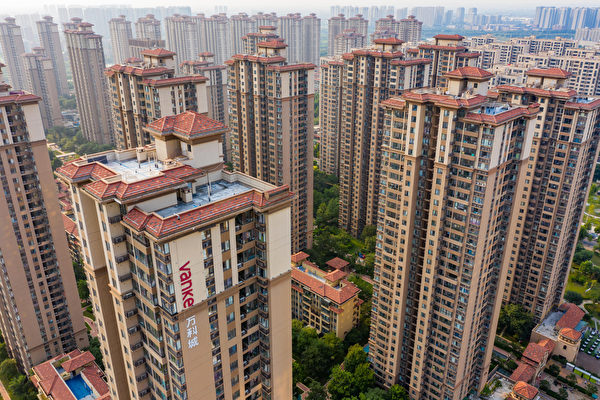
Guangdong is home to prominent real estate companies like Evergrande, Country Garden, Vanke, and Agile Group, yet the province’s housing market recovery lags behind other regions. Plummeting property prices have dampened consumer and business confidence, leading to retail sales in Guangdong falling below the national average.