
As tensions in Iran continue to escalate, the risk of regional conflicts continues to grow. In recent days, senior Chinese officials have been conducting internal assessments on the related security situation. Insiders familiar with the situation revealed that China’s diplomatic system and security departments have been evaluating the changing situation in the Middle East in recent times, remaining vigilant about potential security risks spreading to Iran and its surrounding areas, although these assessments have not been made public.
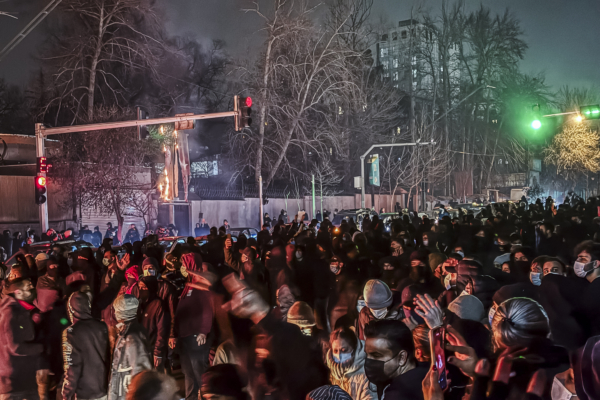
Amid recent protests by Iranian citizens, the already tense domestic situation has worsened; tensions between Iran and Israel have been escalating, with the spillover effects of the Gaza conflict persisting. The situation in southern Lebanon, parts of Syria, and the Red Sea shipping route has been fluctuating. The US and its allies maintain military deployments in the Middle East, with several countries issuing warnings regarding personnel safety and shipping risks. China’s personnel arrangements in Iran and neighboring countries, energy cooperation projects, and shipping channels are facing more variables, with related security issues now under high-level assessment.
Sources close to China’s diplomatic system indicated that this round of internal assessments has focused on various aspects, including whether to continue purchasing oil from Iran, whether Chinese-funded projects in Iran can continue to operate, and feasible plans for evacuating personnel and handling projects in emergency situations.
These sources further disclosed that China’s diplomatic system has requested embassies in various Middle Eastern countries to increase the frequency of sending back security information, monitor local situation changes continuously, and simultaneously study specific evacuation plans for Chinese diplomatic personnel and Chinese enterprise managers in Iran in case of emergencies.
According to sources familiar with China’s foreign affairs, some Chinese institutions involved in business with Iran and neighboring countries have recently been asked to reassess the security risks faced by their overseas personnel internally. Some diplomatic personnel and officials stationed in Iran have received notifications from the Ministry of Foreign Affairs and embassies to “prepare for evacuation”, with some Chinese projects temporarily halted. Meanwhile, related companies have privately adjusted personnel rotation schedules and on-site arrangements, while enhancing safety reminders for frontline staff. However, these measures have all been implemented through internal notifications and have not been publicly announced through official channels.
Yang Yongming (pseudonym), knowledgeable about China’s diplomatic system operations, stated that at this stage, China’s internal assessments of the situation in Iran primarily focus on “rising risks but not suitable for public qualitative evaluation”. On the one hand, relevant departments have heightened their alert status, advanced security contingency plans, and resource deployment. On the other hand, they deliberately refrain from issuing clear risk warnings publicly to avoid impacting China’s diplomatic layout, energy cooperation, and existing political relationships in the Middle East.
Yang Yongming mentioned that China’s diplomatic system continues to downplay the level of tension in the Iranian situation in its external expressions and deliberately avoids mentioning the military and political pressures imposed by the US and Israel on Iran when addressing the domestic audience. He noted that the Chinese authorities rarely mention changes in the US military’s deployment in the Middle East, changes that are widely seen in the international community as preparations for potential military conflict.
During a routine press conference at the Ministry of Foreign Affairs on January 13, a foreign journalist asked about multiple foreign embassies issuing notices urging their citizens to leave Iran and inquired whether China would issue travel safety warnings for Chinese citizens traveling to Iran. Chinese Foreign Ministry spokesperson Mao Ning did not provide a clear response, only stating that they are “closely monitoring developments in Iran and will take necessary measures to protect the safety of Chinese citizens”, without specifying any adjustments to current travel advice.
Mr. Kuang, a researcher on US-China relations, stated in an interview that this approach of “heightened internal vigilance and tightened external information transmission” is a common practice for China in handling foreign security risks. He pointed out that whether to issue clear travel safety reminders to the public does not depend on the risk itself but on the authorities’ assessment of diplomatic consequences and political influences. Under this decision-making logic, ordinary citizens are not the primary recipients of risk information.
Mr. Kuang further pointed out that China has effectively acknowledged the existence of uncertain risks in the Iranian situation. He said that when official emergency preparations are being promoted internally but specific assessments are avoided at the public level, it often indicates that risk assessments have been initiated but the related information is intentionally delayed or even selectively blocked.
In Mr. Kuang’s view, this is not a technical delay but a systemic choice within the Chinese authoritarian system. He mentioned that Chinese authorities prefer to respond to risks through internal control and post-remediation rather than disclosing the actual situation to the public in advance, allowing people to make their own judgments and avoid danger. “In this logic, the party’s interests always come first, and ordinary citizens are just passive recipients of risks.”
Mr. Kuang candidly stated that compared to China’s issuance of travel warnings against Japan in the past, this difference is ironic. In November 2025, after Japanese Prime Minister Soanae Takaki made remarks related to Taiwan, Sino-Japanese relations rapidly deteriorated, leading to the Chinese Foreign Ministry and relevant departments immediately issuing safety reminders, urging Chinese citizens to avoid traveling to Japan. Mr. Kuang pointed out that at that time, the Chinese response was prompt and clear, not because Japanese society suddenly became unsafe, but out of political necessity, “Warnings were issued without hesitation when needed, and no warnings were issued when not, even if the situation is more dangerous; silence was the choice.”
He believes that this selective release of safety information clearly exposes China’s true attitude towards citizen safety: whether to alert and when to alert does not depend on the risk itself, but on whether it aligns with the authorities’ political interests and external storytelling needs.