
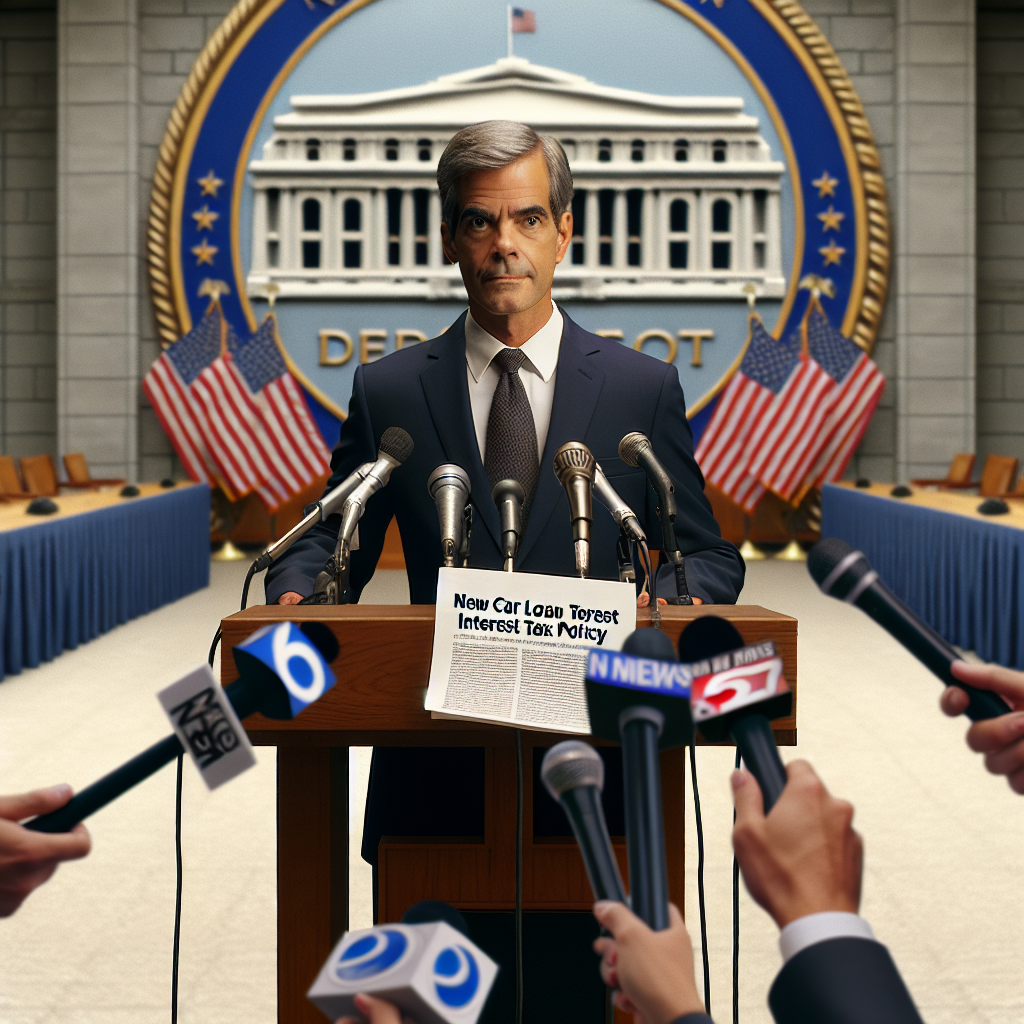
The U.S. Treasury Secretary, Scott Bessent, announced on January 7th that the U.S. Treasury is implementing a policy to eliminate taxes on car loan interest in an effort to reduce expenses.
According to the guidance, new cars eligible for tax deductions include vehicles that are assembled in the United States.
Bessent stated that this policy, named the “U.S. Car Loan Interest Tax-Free” initiative, is being implemented under the framework of the “One Big Beautiful Bill Act” supported by the Trump administration, which was signed into law last summer.
In a statement released on platform X, Bessent wrote that this tax reduction measure will “put money back into the pockets of working and middle-class families.”
“For new U.S.-assembled vehicles purchased between 2025 and 2028, qualifying taxpayers can deduct up to $10,000 in car loan interest annually, whether they choose itemized deductions or standard deductions,” he said. “This deduction helps reduce monthly expenses for the public and makes car ownership more affordable when families need it most.”
“This tax relief measure also supports American workers by applying only to U.S.-assembled vehicles, thereby strengthening domestic manufacturing.”
On the last day of 2025, the Internal Revenue Service (IRS) announced guidance on how to handle new car loan interest deductions under the law, stating that the deduction applies to vehicle loans signed after December 31, 2024. The IRS indicated that this tax relief allows a maximum deduction of $10,000 for car loan interest.
According to the IRS, the guidance specifies that eligible new cars for tax deductions include vehicles assembled in the United States and used for personal, not commercial or business purposes.
The IRS has not yet released a list of vehicles and models that may qualify for this program.
The release of this statement on Wednesday comes as the Trump administration attempts to shift the focus to economic issues ahead of the November 2026 midterm elections, which could determine which party controls the House of Representatives and the Senate.
Since last November, President Donald Trump and Bessent have been emphasizing the White House’s measures to lower prices of various goods and services, such as gasoline and eggs.
Trump also announced that he would ban large institutional investors from buying standalone homes, stating that this policy is necessary to help young families purchase their first homes.
In a Truth Social post, Trump urged Congress to enshrine this ban into law, stating, “People live in houses, not corporations.” He also expressed concern that due to high inflation, the “American Dream is becoming increasingly out of reach, especially for young Americans,” particularly when buying their first homes.
Last month, Trump promised during a prime-time speech that he would launch “some of the most radical housing reform plans in American history” in 2026. Meanwhile, government officials, including Bessent, have indicated that additional tax reduction measures will be implemented this year to provide more refund funds for families.
In his post, Trump mentioned that he would discuss housing and affordability issues in more detail at the World Economic Forum in Davos, Switzerland. The forum is known for attracting CEOs, wealthy financiers, and scholars.