
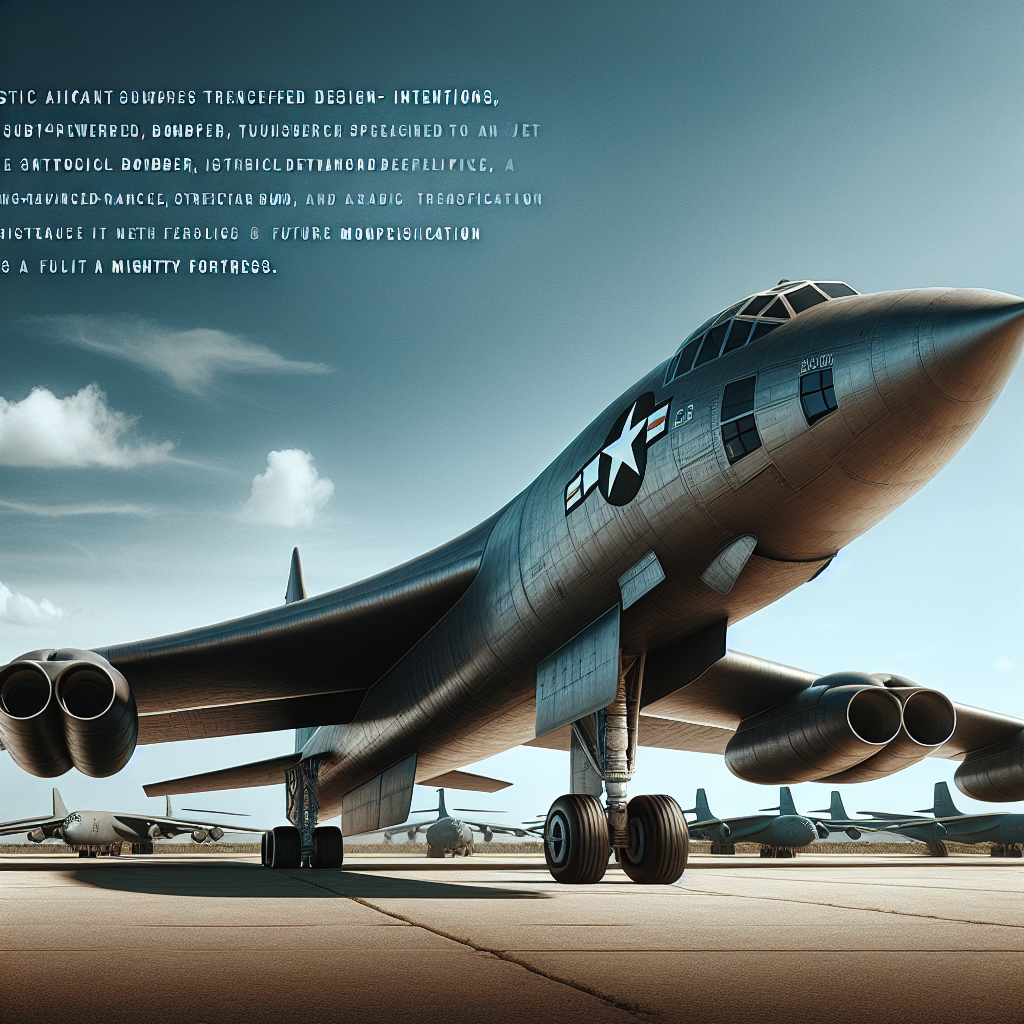
In aviation history, there are aircraft that surpass their initial design purposes, becoming enduring symbols of capability and adaptability. One such aircraft is the B-52 “Stratofortress” bomber manufactured by Boeing, which first flew in 1952 and entered into service in 1955. If modernization efforts continue and policies and funding allow, the service life of the B-52 could approach 100 years, unprecedented among jet military aircraft.
This bomber has had an extraordinary journey, evolving from a deterrent force during the Cold War to a multi-role powerhouse in the 21st century. The recent upgrades to the B-52J version further solidify the future of this bomber.
Many modern aircraft retire after serving for decades, but the B-52 continues to fly due to its design flexibility from the outset, not limited to specific missions. Its long service life reflects strategic thinking, engineering vision, and ongoing modernization efforts.
The B-52 is a durable aircraft, with every scratch, dent, and crack telling tales of flight miles, mission execution, and the passage of time.
Born out of the geopolitical needs of the early Cold War, the B-52 was developed to address the challenge of projecting nuclear strength into distant regions, particularly in the face of the Soviet Union and its nuclear program. This need drove the development of a bomber capable of carrying heavy payloads to strike distant targets while avoiding or withstanding enemy defenses. Boeing’s design ultimately met these requirements on an unprecedented scale and capability.
Following its entry into service in 1955, the B-52 provided the Strategic Air Command (SAC) with genuine global strike capabilities when establishing expeditionary forward bases was impractical, and intercontinental ballistic missiles had not yet been introduced. The engineering design of the B-52 bomber intentionally maintained conservatism, with sufficient redundancy in the airframe structure as engineers could not predict future technological advancements.
Boeing did not solely pursue weight reduction and cutting-edge performance but opted for reliability and growth potential, qualities proved crucial decades later. These early design decisions laid the foundation for the platform to evolve continuously rather than being phased out.
The longevity of the B-52 bomber lies in its structural design philosophy, emphasizing durability and maintainability rather than pursuing marginal performance improvements. Unlike modern fighters seeking high maneuverability or optimized stealth capabilities of current bombers, the “Stratofortress” bomber prioritizes robust airframe and mission endurance.
Equally critical is the independence of mission systems and physical structures. With mature digital aviation electronics, sensors, and various weapons, the modular design enables the B-52 to be upgraded rather than replaced, preserving its historic airframe while equipping it with cutting-edge capabilities. Essentially, this aged aircraft has become a flying platform carrying generations of technological innovations.
Unlike many strategic bombers primarily serving as symbols of deterrence, the B-52 boasts a rich combat history of nearly seven decades. Its roles span from saturation bombing to precise strikes, showcasing its operational value in an ever-evolving era of warfare.
The Vietnam War marked the B-52’s first large-scale combat deployment. In the “Arc Light” missions, B-52 bombers dropped a substantial number of conventional bombs on enemy territories, testing the aircraft’s endurance and sustained firepower delivery capabilities.
In the battlefields of Afghanistan and Iraq, the B-52 shifted towards precision strikes, carrying GPS-guided bombs and leveraging networked target data coordinated with ground forces. This evolution from strategic carpet bombing to precise tactical strikes exemplifies the bomber’s strong adaptability.
If structural durability has ensured the B-52’s longevity, then modernization projects ensure its critical role on 21st-century battlefields.
According to a report by National Interest magazine, the two most influential upgrades in the B-52 modernization are the engine and radar systems, significantly enhancing the bomber’s capabilities beyond its initial 1950s level. These upgrades collectively address issues with mobility, sustainability, and situational awareness.
Under the upgrade plan, the bomber will be fitted with Rolls-Royce plc’s F130 turbofan engines, a modern commercial derivative engine that offers substantial improvements in fuel efficiency, reliability, and maintenance costs compared to the older engines.
These new engines not only extend the range and loiter time but also increase the available electrical power for onboard systems, laying the groundwork for future upgrades without necessitating further propulsion system alterations.
Upon successful validation, the engine replacement work is expected to progress further later in this decade, entering the development and production phases. This step could be one of the most crucial in ensuring the B-52 bomber’s service extends into the 2050s.
The new engines enable efficient flight, while sensor upgrades ensure the aircraft’s effectiveness in contested airspace. By the end of 2025, a B-52 bomber equipped with a new Active Electronically Scanned Array (AESA) radar completed a long-distance flight from Boeing’s San Antonio facility to Edwards Air Force Base for advanced tests. This new sensor system, derived from mature fighter jet technology, offers numerous advantages to the bomber, including high-resolution ground mapping and improved target detection capabilities.
Despite facing cost scrutiny and schedule pressures in the funding sector, ongoing tests will determine how and when the system will be deployed across the entire B-52 fleet. If fully implemented, this radar will bring heavy bombers into a sensor era previously only accessible to advanced fighters and reconnaissance platforms.
Additionally, according to Air Force Magazine, Boeing is considering installing a full-glass cockpit on this legendary bomber to make it perfectly adaptable to the realities of the 21st century. These upgrades collectively redefine the role of the “Stratofortress” bomber in future conflicts. Higher efficiency engines reduce logistics pressure and fuel costs while enhancing endurance; advanced sensors make the aircraft more autonomous and survivable in contested airspace.
Currently, there are 76 B-52 aircraft still in service. The U.S. military plans to keep the B-52 operational until sometime in the 2060s, potentially making it the longest-serving military aircraft in history, with a service life approaching a century.
In mid-February 2022, a B-52 conducted a safe flight circling Europe and the Mediterranean for 23 hours and 25 minutes in the air. This demonstration flight aimed to showcase the U.S.’ capability to rapidly deploy bombers to anywhere in the world, drawing the attention of countries like Russia and China.
While places like Minot, North Dakota may be 6,000 miles from China, the U.S. Air Force could deploy B-52 bombers to the South China Sea equipped with 8 to 12 “Harpoon” anti-ship missiles and 20 AGM-158 Joint Air-to-Surface Standoff Missiles (JASSM) weapons within 24 hours.
Until now, no jet aircraft has achieved the milestone of the B-52. Typically, commercial planes retire after 30 to 40 years of service. Most military aircraft, including fighters and bombers, retire within decades due to obsolescence, evolving mission requirements, and escalating maintenance costs. The B-52’s adaptability, structural resilience, and modernization support set it apart.
As the “Stratofortress” bomber approaches its eighth decade of service and envisions continuous flight for potentially a century ahead, this bomber represents an extraordinary achievement in the U.S. military aviation domain.
If current modernization efforts continue as planned into the 2030s and beyond, it is reasonable to anticipate that the B-52 “Stratofortress” bomber, constructed in the early 1950s, will still be capable of carrying out combat missions in the 2050s. Such an achievement would not only break records but also redefine the lifespan of jet aircraft.
Once the latest B-21 “Raider” stealth bomber is introduced, it will become a potent asset in countering China, making it challenging for China to resist. The B-21 holds numerous advantages to confront potential conflicts with China and Russia in the future.
All remaining B-1 and B-2 “Spirit” bombers are expected to retire within the next decade. This will leave the U.S. Air Force with the B-21 and B-52 “Stratofortress,” equipped with upgraded engines, forming the bombers’ fleet.
(*This article was referenced from a report by Simple Flight website)