
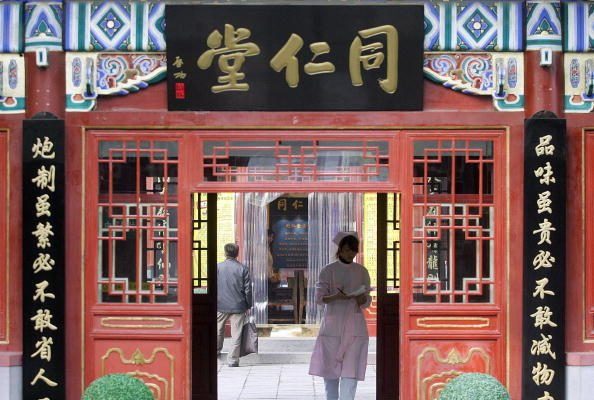
Recently, a product labeled as “Beijing Tongrentang 99% High-Purity Antarctic Krill Oil” claimed to have a phospholipid content of 43%, but actual test results showed it to be 0. The purchasing price was 3.7 yuan per bottle, while the retail price was over 60 yuan per bottle. On December 20th, China’s Beijing Tongrentang (Group) Co., Ltd. issued an apology for selling fake “Antarctic Krill Oil”.
Beijing Tongrentang Group stated that it highly values the recent public concern regarding the “Antarctic Krill Oil” and sincerely apologizes for the harm caused to consumers. They expressed their deepest apologies to the vast consumers and all sectors of society.
According to Beijing Tongrentang Group, they have ordered the distributor, Sichuan Health, to remove this “Antarctic Krill Oil” from shelves and compensate consumers. They also plan to hold Sichuan Health, Habo Pharmaceutical, and related e-commerce platforms accountable for illegal use of the “Beijing Tongrentang” name and misleading consumers.
On December 11th, the Shanghai Consumer Protection Committee’s official account mentioned a product labeled as “Beijing Tongrentang 99% High-Purity Antarctic Krill Oil”, boasting phrases like “high content,” “raw materials imported from Chile,” and “highly refined.” The phospholipid label indicated a value of 43%, suggesting a high-quality product. However, the test results revealed that the phospholipid content was actually 0.
The Shanghai Consumer Protection Committee has held discussions with the producer, Anhui Habo Pharmaceutical Co., Ltd., and the distributor, Beijing Tongrentang (Sichuan) Health Pharmaceutical Co., Ltd. The manufacturer claimed that the product, which was allegedly customized for them, was purchased at a significantly lower price than usual and admitted that the promised “Antarctic Krill Oil” was not added during production. Beijing Tongrentang (Sichuan) Health Pharmaceutical Co., Ltd. stated that they were unaware of the alleged falsification of the product.
On the evening of the 17th, Beijing Tongrentang announced that they do not directly or indirectly hold any equity or investment interest in Sichuan Health mentioned in the reports related to Antarctic Krill Oil, clarifying that Sichuan Health does not belong to any of the company’s subsidiary enterprises. Sichuan Health is a subsidiary of Beijing Tongrentang Health Pharmaceutical Co., Ltd., a controlling subsidiary of Tongrentang Group.
Public information shows that Tongrentang Group owns three listed companies: Beijing Tongrentang Co., Ltd. (Shanghai Stock Exchange: 600085), Beijing Tongrentang Technology Development Co., Ltd. (Hong Kong Stock Exchange: 1666), and Beijing Tongrentang National Pharmaceutical Co., Ltd. (Hong Kong Stock Exchange: 03613, responsible for overseas operations).
According to enterprise data, Beijing Tongrentang (Sichuan) Health Pharmaceutical Co., Ltd. was established in 2000 with a registered capital of 130 million yuan and is a member of China’s Beijing Tongrentang Group. It is 51% owned by Beijing Tongrentang Health Pharmaceutical Co., Ltd., with Tongrentang Group holding 49.07% of the shares.
Beijing Tongrentang (Sichuan) Health Pharmaceutical is a subsidiary of Tongrentang Group and the alleged fake “Antarctic Krill Oil” is considered to be a brand product of Beijing Tongrentang.
This incident has once again sparked discussions in the market about Tongrentang’s branding and licensing model. Ms. Li, a consumer from Hong Kong, expressed to Dajiyuan that for years, numerous health products and wellness items with the keyword “Tongrentang” on e-commerce platforms have made it challenging for ordinary consumers to distinguish the relationship between these items and the group’s official brand. She noted, “I am not clear about the internal production and distribution arrangements within Tongrentang, making it difficult for consumers to discern.”
Tongrentang brand, founded by Le Xianyang, a Ningbo native, dates back to 1669 (the eighth year of Emperor Kangxi’s reign during the Qing Dynasty), and has a history spanning 356 years. In 1723 (the first year of Emperor Yongzheng’s reign during the Qing Dynasty), it supplied imperial medicines to the Qing court and has served eight generations of emperors.
In the 1940s, Tongrentang was passed down to the thirteenth-generation descendant, Le Songsong. Under his management, Tongrentang’s pharmacies spread across the north and south of the Yangtze River, becoming synonymous with traditional Chinese medicine.
In 1954, during the public-private partnership of the Chinese Communist Party, Le Songsong served as the general manager. In 1966, Tongrentang shifted from “public-private partnership” to “collective ownership” and was directly taken over by the Communist Party government. During the Cultural Revolution, Tongrentang ceased operations for many years, and Le Songsong tragically passed away. After the end of the Cultural Revolution in 1979, Tongrentang resumed operations. In 1992, Beijing Tongrentang Group Co., Ltd. was established and later restructured as a solely state-owned company in 2001.