
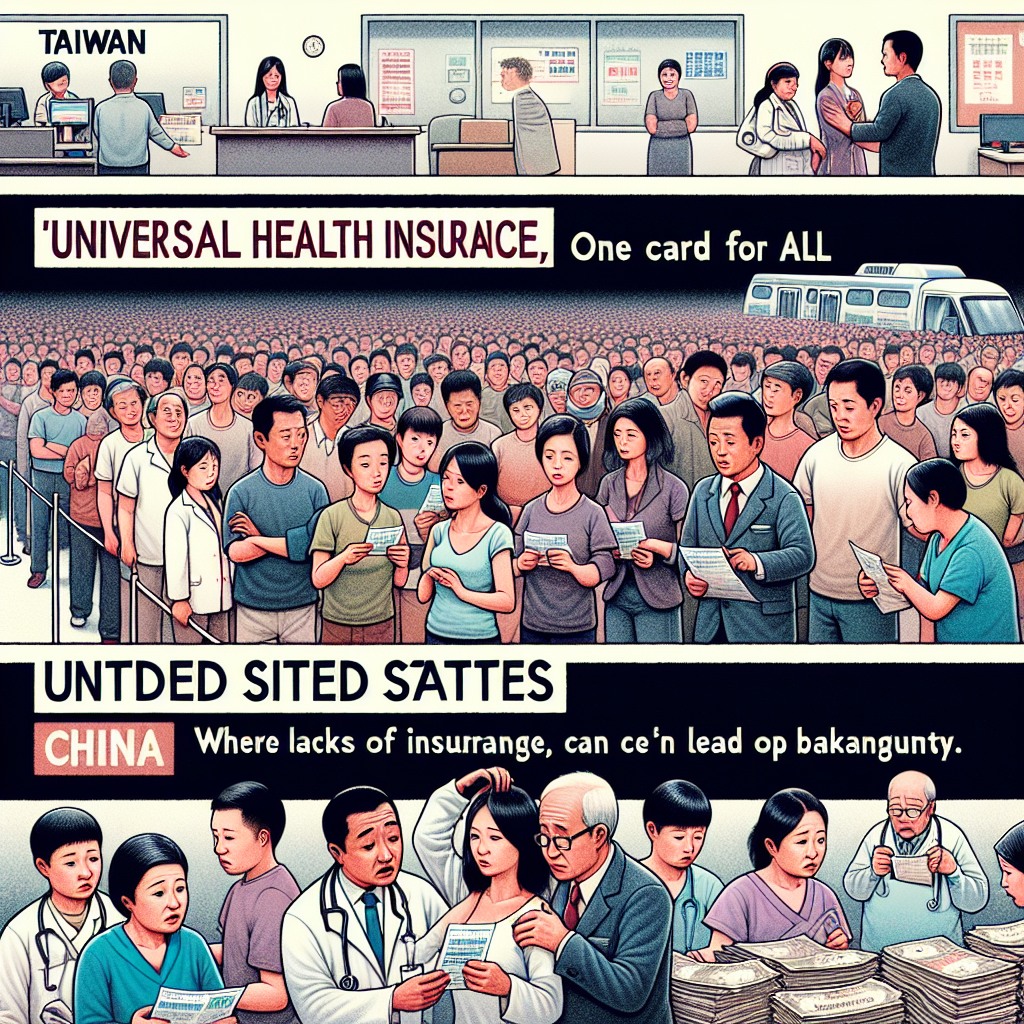
Everyone knows that the United States does not have a system like Taiwan’s “universal health insurance, one card for all,” and its healthcare system is different from China’s as well. However, in the U.S., getting sick without insurance can lead to bankruptcy, which is certainly no joke. Today, we are here to help everyone quickly understand the U.S. healthcare system, find insurance that suits them, and ensure they have coverage when seeking medical treatment!
First of all, in the United States, most people obtain health insurance through the following ways:
1. Employer-sponsored insurance
2. ACA Marketplace / ObamaCare
3. Government healthcare: Medicare (for those 65 and older or with major disabilities), Medicaid (for low-income individuals), CHIP (for children)
4. Short-term traveler/visitor medical insurance (for short-term stayers)
Excluding short-term individuals, there are three main sources of health insurance. The first is employer-sponsored insurance, which is the primary insurance source for full-time employees in the U.S. Typically, the company will pay a portion of the premium, and you will pay the rest. Sometimes, you can also add coverage for a spouse or children (family coverage).
It is important to note that when new immigrants receive salary quotes (wages, benefits), they should inquire about the company’s health insurance coverage, as sometimes it can be more practical than several thousand dollars extra per year.
The second type is the marketplace insurance. If you do not have company insurance and have legal residency (green card, most work visas, etc.), you can purchase insurance through Healthcare.gov or state-run marketplaces.
Premiums may be subsidized by the federal government (Premium Tax Credit), with the amount depending on your household income. There is an Open Enrollment period every year, usually between November and January of the following year; moving, getting married, having a baby, losing existing insurance, etc., can trigger a Special Enrollment period.
Insurance policies in the marketplace are categorized by “metal levels,” based on the “insurance vs. insured person cost-sharing ratio,” not on quality: Bronze level usually has the lowest premiums. It has high deductibles, suitable for those who rarely visit the doctor and just want coverage for major illnesses.
Silver level has medium premiums. It can come with cost-sharing reductions (CSR), making it the best balance for low-to-moderate-income families. It is important to note that to receive CSR, you must select a Silver plan.
Gold level has higher premiums but lower out-of-pocket costs for doctor visits, making it suitable for those who frequently visit the doctor or have chronic conditions. Finally, there is the Platinum level with the highest premiums and almost the lowest out-of-pocket costs. Fewer people opt for this level, unless they have very frequent medical needs.
The third type is government insurance, Medicare: primarily for U.S. citizens or legal permanent residents (green card holders) aged 65 and above, who have usually paid a certain number of years of payroll taxes in the U.S. or have certain long-term disabilities, specific disabilities, end-stage renal disease patients.
Medicaid: for low-income individuals, eligibility is jointly determined by the federal government and states. New immigrants often encounter the “5-year bar” – in most cases, they need to have held a green card for 5 years before being eligible to apply for Medicaid (but there are exceptions in some states), although children and pregnant women may have exceptions, especially in states that have opted to eliminate the five-year wait.
Medicaid usually has very low premiums or even zero premiums for eligible families, with very low or sometimes no out-of-pocket costs for doctor visits. Coverage varies by state but generally includes: doctor visits, hospital stays, tests, some long-term care services, maternity care, etc.
Additionally, there is the Children’s Health Insurance Program (CHIP): for children from families who do not qualify for Medicaid but have moderate incomes.
For newly arrived immigrants who are not yet 65 years old, the most likely option is the marketplace insurance (ACA plans), although some states may have Medicaid/CHIP options for pregnant women and children. If the family has a low income, children may be eligible for Medicaid or CHIP, while adults may use ACA marketplace insurance with subsidies.
Whether elderly immigrants (approaching or over 65 years old) can use Medicare depends on whether they or their spouses have accumulated enough work tax years and meet residency and status requirements.
There are also several common types of insurance that should be known: HMO, PPO, EPO, HDHP.
HMO (Health Maintenance Organization): requires a primary care physician (PCP) to manage your healthcare; most specialty visits require a referral from the PCP. Typically, it has lower premiums, lower out-of-pocket costs, but limited flexibility. This option is suitable for those who do not mind an extra referral step and want more controlled overall costs.
The second type, PPO (Preferred Provider Organization), allows visits to specialists without referrals, and patients can see doctors, clinics, or hospitals both in and out of the network without referral, but out-of-network costs are much higher. Generally, it has higher premiums with the greatest freedom. It is more suitable for frequent travelers, those who frequently change addresses, or those who demand a high degree of freedom in choosing physicians.
The third type, EPO (Exclusive Provider Organization), falls between HMO and PPO, usually without referral requirements for specialists, offering more freedom in selecting specialists. However, it typically only covers services within the network, with limited out-of-network coverage. It is suitable for individuals with a fixed range of activities who are willing to seek treatment only within a specific medical network.
The fourth type, HDHP + HSA (High Deductible Health Plan + Health Savings Account), has high deductibles but lower premiums. Coupled with an HSA, pre-tax money can be deposited into the account to pay for medical expenses. Any remaining balance can be accumulated, invested, making it a suitable long-term option serving as a “retirement account for medical expenses.” It is suitable for individuals in good health, who rarely seek medical care, want to save on taxes, and are willing to pay more for minor ailments but have insurance coverage for major illnesses.
HMO, PPO, EPO, HDHP also have variations in bronze, silver levels. In simple terms, “bronze/silver/gold/platinum” indicates the “level of cost-sharing,” while HMO/PPO/EPO/HDHP refer to “plan designs and network types.”
As a result, HMO, PPO, EPO can each have versions in bronze/silver/gold/platinum levels, but HDHP typically falls under bronze or silver levels (due to high deductibles, the overall actuarial value is usually lower). In practice, you might see names like Bronze HMO 2500, Silver PPO 3000, Gold EPO 500. ◇
Disclaimer: This article is for informational purposes only and readers are urged to use their own independent thinking to make investment decisions, as individual circumstances vary. Should there be any investment needs, please make your own judgments and seek advice from professionals. It is important to understand that all investments carry risks, and the publisher cannot be held responsible for any related losses.