
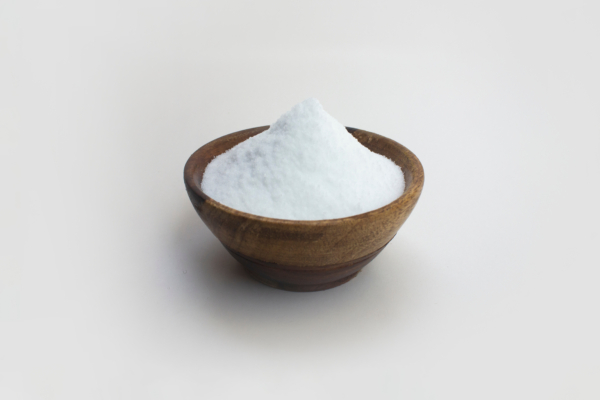
On cold winter days, it is common to see condensation forming on windows at home. Although these droplets may seem harmless at first glance, if left unattended, they could lead to the growth of mold on windows or walls, posing a threat to people’s health and compromising aesthetics. To tackle this issue, experts suggest placing a bowl of salt near windows to alleviate the problem.
Many people are aware that when warm indoor air meets the cold surface of a window, condensation occurs, resulting in water droplets forming on the glass, resembling mist or fog. The National Oceanic and Atmospheric Administration of the United States indicates that condensation is not solely dependent on a specific temperature, but rather on the difference between two temperatures – air temperature and dew point temperature.
Dew point temperature refers to the temperature at which dew can form, indicating the saturation of air, unable to hold more water vapor. Further cooling leads to the condensation of water vapor. When air temperature equals the dew point temperature, mist often appears.
According to a report by the British newspaper “Daily Express,” if you do not have a dehumidifier at home, you can use salt as a solution to absorb excess moisture in the air. Salt possesses excellent hygroscopic properties, effectively absorbing water vapor in the air and aiding in preventing condensation.
Experts recommend placing a bowl of salt behind curtains or inside and outside wardrobes to help dry the air and reduce humidity at home. This is a very economical and natural method for dehumidifying during the winter season.
Glen Peskett, a DIY expert from the UK tool specialty store Saxton Blades, mentioned that a pack of salt can act as a natural dehumidifier. Peskett advised, “Placing a small bowl of salt on the windowsill, especially at night, can significantly reduce condensation and prevent mold growth.”
He further suggested, “Use a small baking dish, jar, or plate to hold any inexpensive table salt or rock salt, then place it on the windowsill, behind curtains, or in areas susceptible to dampness such as wardrobes or cupboards.”
Salt absorbs moisture from the air and gradually clumps when saturated, indicating its effectiveness. These salt bowls can be replaced when needed, requiring minimal cost.
Andy Ellis, an expert from the UK household and gardening retail company Posh, told the “Daily Mirror” that the accumulation of condensation at home is not favorable. He also recommended using a bowl of salt to reduce indoor humidity.
Ellis stated, “Salt can naturally absorb moisture from the air, essentially drying it out, thus resulting in lesser condensation when it comes into contact with glass.”
He added, “This is a simple trick that doesn’t require any particular skills. Just place some salt in a shallow bowl or small jar – it could be table salt or coarse salt.”
He mentioned, “The amount you use depends on the size of the window where you place the salt. Generally, the larger the window, the more salt needed, but usually, a small bowl is sufficient. A bowl of salt can last for several days. When the salt appears damp and starts clumping, it is time to replace it.”
Previously, Adam Pawson, the owner of a large window supplier in the UK, shared some tips on reducing water droplets and mold indoors, including maintaining ventilation and consistent indoor temperatures.
He stressed the importance of keeping indoor temperatures consistent, such as using heating regularly during cold weather to avoid sharp temperature contrasts, which help prevent condensation. Excessive temperature differences make water droplets more prone to condensation.