
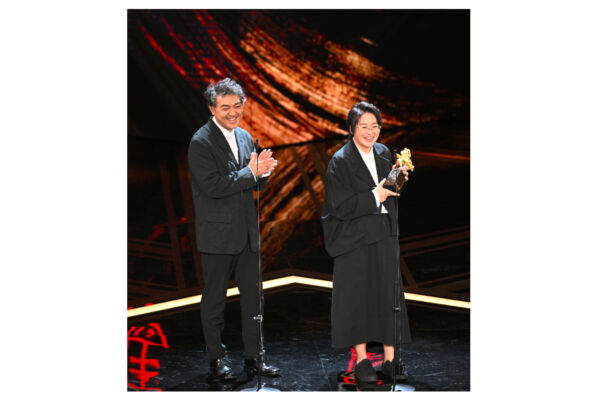
The application deadline for the short film category (drama, documentary, animation) of the 61st Golden Horse Awards was on July 1st. However, the Chinese National Film Administration issued a sudden announcement on the 4th, requiring Chinese domestically produced short films to participate in overseas film festivals, and they must also file with the National Film Administration prior to submitting their films. It remains to be seen whether this move will force Mainland Chinese short films that have already registered for the Golden Horse Awards to withdraw from the competition, pending further observation.
The official website of the Chinese National Film Administration announced on the evening of the 4th that, according to relevant regulations, “once a film is completed and obtains a film screening permit, it may participate in a film festival (exhibition). For those intending to participate in overseas film festivals (exhibitions), the exhibiting entity and other organizations must file relevant materials with the film regulatory department 20 business days before the overseas film festival (exhibition).”
Of note, the announcement emphasized that “short films participating in overseas film festivals must also comply, and must be filed with the National Film Administration by the first domestic screening unit or exhibiting entity.” The announcement also included an electronic “Registration Form for Short Films Participating in Overseas Film Festivals (Exhibitions).”
According to the Chinese “Film Industry Promotion Law” and “Regulations on the Administration of Broadcasting, Television, and Program Exchange Activities (Exhibitions),” films intending to participate in overseas film festivals (exhibitions) should file with the film regulatory department 20 days before the festival (exhibition) is held. However, these two regulations do not specifically mention short films.
The Golden Horse Awards, along with the Golden Bell Awards and Golden Melody Awards, collectively known as the “Three Golden Awards,” hold widespread influence in the Chinese-speaking world and serve as an important platform for cultural exchange. However, at the 55th Golden Horse Awards ceremony in 2018, a Taiwan director’s acceptance speech was deemed by the Chinese authorities to contain elements of “Taiwan independence,” sparking a significant backlash.
At that time, the Chinese state media swiftly cut off the live broadcast of the Golden Horse Awards, prompting mainland Chinese artists present and absent to express their stance by reposting “Not One Less Inch of China” on Weibo. In 2019, the Chinese authorities began to boycott the Golden Horse Awards. When the list of nominees for that year was announced, Mainland Chinese works were conspicuously absent.
However, subsequently, mainland Chinese short films and filmmakers have continued to register, be nominated, and win awards. For example, mainland Chinese actress Hu Ling was nominated for Best Actress at the 60th Golden Horse Awards for the independent film “Pineapple, Pineapple.” The film “Stone Gate,” co-directed by Chinese Hunan director Huang Ji and her Japanese husband Ryûsuke Hamaguchi, won the Best Feature Film award at the 60th Golden Horse Awards. The mainland Chinese short film “Memorandum,” set against the backdrop of the Shanghai lockdown in 2022, won the Best Documentary Short Film at the 60th Golden Horse Awards. However, this short film depicting the various crazy effects of the epidemic lockdown on citizens faced a nationwide ban in China after winning the award and cannot be found online to this day.