
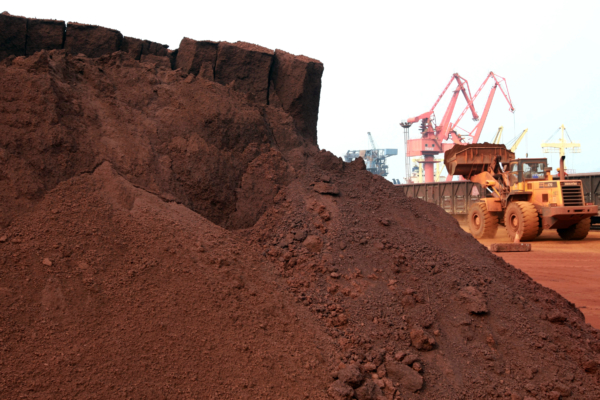
In order to break free from the reliance on China’s rare earth supply chain, more and more Japanese companies are turning their focus towards Southeast Asia, working hard to establish independent and self-sufficient rare earth supply chains. For example, Japan’s Sumitomo Metal Mining is developing rare earth mines in the Philippines, and Sojitz is exploring rare earth mining in Vietnam and Malaysia.
According to a report by Nikkei News, Sumitomo Mining holds shares in a mine in the Philippines, and the extracted ores are transported to the company’s factory in Hyogo Prefecture for processing. The company plans to increase the production of the rare earth element scandium for fuel cells by 20% in the fiscal year 2026.
The use of scandium in fuel cells can reduce operating temperatures and improve durability. Fuel cells are a highly promising energy source for rapidly developing AI data centers, with global demand for scandium doubling last year. China currently accounts for 80% of global scandium supply, while Japan only holds 10%. Russia and Canada also produce scandium.
Sumitomo Mining is the only Japanese company capable of supplying scandium on a large scale. It is currently working to further increase production to meet the demand of some European and American companies hoping to reduce their reliance on China.
Sojitz is partnering with Australia’s Lynas Rare Earths to develop rare earth mines in Vietnam, Malaysia, and other locations. In March of this year, the two sides reached an agreement through a joint venture between Sojitz and Japan’s METI-affiliated organization to utilize Lynas’ base in Malaysia for rare earth refining. Construction is currently underway to expand production capacity, with completion expected in 2027.
Since 2011, Sojitz and the METI-affiliated organization have made multiple investments in Lynas to promote the import of Australian rare earths, including neodymium used in high-performance magnets.
The largest concentrates of rare earth deposits are found in China, accounting for approximately 70% of global production. Leveraging the world’s heavy reliance on Chinese rare earths, the Chinese Communist Party has repeatedly used rare earths as an economic coercion tool to threaten other countries. Following the deterioration of Sino-US relations in April 2025, China began restricting the export of seven rare earth elements, including scandium.
Moreover, in January of this year, China announced stricter dual-use material export restrictions on Japan, which seemingly include key minerals such as dysprosium (a rare earth element used in high-performance magnets).
On the other hand, Southeast Asia is gaining increasing attention due to its abundant untapped rare earth deposits with promising prospects. In October 2025, the United States signed a memorandum of understanding on rare earth and other critical mineral supply chains with Thailand and Malaysia.
A representative from the METI-affiliated organization expressed that Southeast Asia holds enormous development potential due to its rare earth supply chains, transportation infrastructure, potential reserves, and long-term cooperation relationship with Japan.