
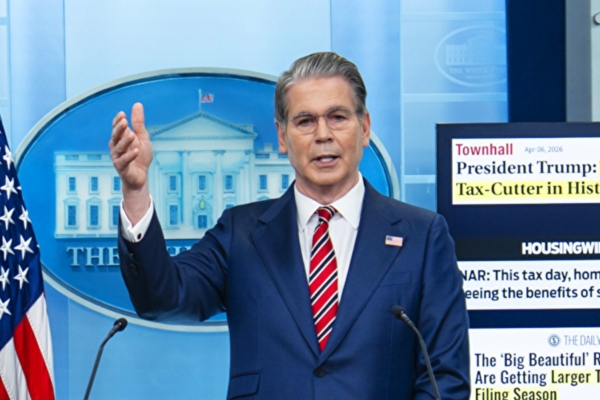
The United States Treasury Secretary Scott Bessent announced on Monday (May 18) that the United States will extend the waiver of sanctions on Russian offshore oil for 30 days and grant permission to import this stranded oil to the most energy-vulnerable countries. Bessent emphasized that by redirecting the flow of this oil, it can reduce China’s ability to hoard cheap oil.
This extension provides additional flexibility, and the Treasury Department will work with these countries to issue specific permits as needed. The temporary general permit issued for 30 days aims to temporarily provide access to the Russian oil currently stranded at sea for the most vulnerable countries.
“This extension will provide additional flexibility, and we will work with these countries to issue specific permits as needed. This general permit will help stabilize the crude oil spot market and ensure that oil reaches the most energy-vulnerable countries,” Bessent said.
The Secretary also stressed that this move “will help reallocate existing supplies to flow to the countries in greatest need, while reducing China’s ability to hoard discounted oil.”
Bessent expressed dissatisfaction with China’s hoarding of oil practices last month. He stated that during the Iran conflict, China not only did not help alleviate the global oil demand shortage caused by the blockade of the Strait of Hormuz by Iran but also hoarded more oil and restricted exports of certain goods, similar to hoarding medical supplies during COVID-19, making them an unreliable international partner.
China already has strategic oil reserves roughly equivalent to the total reserves of the 32 member countries of the International Energy Agency, yet they continue to purchase oil. Bessent stated, “They have been buying, hoarding, and have already cut off exports of many products.”
Before the US Treasury Secretary criticized China for hoarding oil, the International Monetary Fund, World Bank, and International Energy Agency urged countries last month to avoid stockpiling energy supplies and implementing export controls to prevent exacerbating the largest historic impacts on the global energy market.