
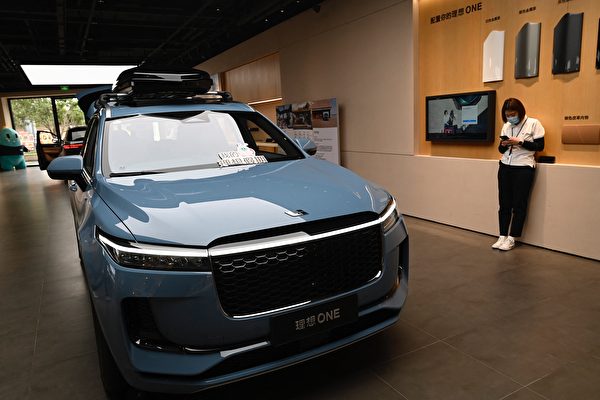
On May 18, Hong Kong automotive stocks collectively fell, with Ideal Motors plummeting over 14%, closing at HK$64.9 per share, hitting a new low for the year and wiping out over 20 billion Hong Kong dollars in market value in a single day.
At the close of trading, Ideal Motors dropped by 14.15%, Zero Run Motors by over 7%, Geely Motors by over 4%, Chery Motors, Great Wall Motors, NIO, Shanghaimate Group, and BAIC Motors dropped by over 3%, BYD Co., and GAC Group by over 2%.
Moreover, Chinese concept stocks in the US stock market experienced more declines than gains. As of the Epoch Times report, the Nasdaq China Golden Dragon Index fell by around 0.5%, with automotive stocks leading the decline. Leading the losses were Linkeddoor Holdings down by over 18%, Xpeng Motors down by over 13%, Ideal Motors down by over 10%, R&D Pharma down by over 8%, XPeng Motors down by over 4%, and NIO down by over 3%.
On May 15, Ideal Motors officially released the new generation Ideal L9 smart flagship SUV. The new vehicle offers two versions, the Ultra Edition and Livis Edition, with a nationwide retail price of 459,800 yuan for the Ultra Edition and 509,800 yuan for the Livis Edition. Deliveries officially began on May 17. The Ideal L9’s pricing was considered high by the market, with poor value for money, leading to expectations of reduced sales for the flagship model.
The topic labeled “Ideal Motors plunge over 14%” trended on Weibo on the 18th.
Video blogger and Weibo influencer “Gadget Doctor” posted, “Ideal just released the new L9 yesterday, and today the stock price plummeted by 14 points, showing lack of market confidence.”
Another video blogger and Weibo influencer “Stellar Channel” remarked, “Automotive stocks across the board are taking a big hit, especially Ideal Motors and Zero Run. What’s going on? Combining this news with the fact that in April, total social consumption goods increased by only 0.2%, with non-auto consumer goods rising by 1.8%, indicating a negative growth in automotive consumption. Additionally, according to data from the China Passenger Car Association, retail sales of domestic passenger vehicles in April decreased by 21.5% year-on-year and 16.0% month-on-month. With such attractive offers for car purchases and high-end features, why are fewer people buying cars? Is the demand for automotive consumption being exhausted prematurely?”
Tech blogger and Weibo influencer “Tech U” analyzed, “Ideal just launched a new car and the market voted with their feet today. Why is that? Let’s delve into three core reasons.”
1. New car fell short of expectations, pricing strategy viewed negatively.
On May 15, the Ideal L9 Livis Edition was launched with a price of 509,800 yuan, 70,000 lower than the presale price. However, institutions poured cold water, with Citibank rating it as “neutral,” believing the value proposition is only on par with competitors, not a “disruptor”, with monthly sales expected to be only 1,000 units, far below market expectations. The new car did not bring incremental sales, intensifying concerns over price wars and directly lowering profit expectations.
2. Industry competition + overcapacity, profit logic shattered.
The penetration rate of new energy vehicles peaked, with an annual capacity of around 100,000 vehicles for the 400,000+ high-end SUVs, and by 2026, there will be more than 40 9-series SUVs entering the market, leading to severe oversupply.
The industry profit margin dropped to a ten-year low (only 2.9%), continuous price wars squeezing profits, with Ideal’s net profit plummeting by 85.8% in 2025, poor sales of the pure electric MEGA, and a delayed turning point in profitability.
3. Funding panic escape, growth track collectively slashing valuations.
The Hong Kong stock market weakened, with a sudden decline in risk appetite for funds, and high-growth stocks in new energy exiting as a hedge. As a benchmark for new forces, Ideal experienced institutional sell-offs, triggering a sector-wide sell-off including Zero Run, NIO, among others.
The blogger concluded, “New car falling short of expectations + intensified industry competition + funding panic escape, a triple negative impact, Ideal faced a market ‘blow’ shortly after launching a new car. The logic of new energy vehicle stocks has shifted from ‘sales growth’ to ‘profit realization’. What comes next is who can truly realize profit!”