
China’s economic growth in April has shown a comprehensive slowdown trend. With the double impact of the global energy crisis and weak domestic demand, retail sales, industrial output, and fixed asset investment data were all lower than expected, indicating that the world’s second-largest economy is showing signs of fatigue on the road to recovery.
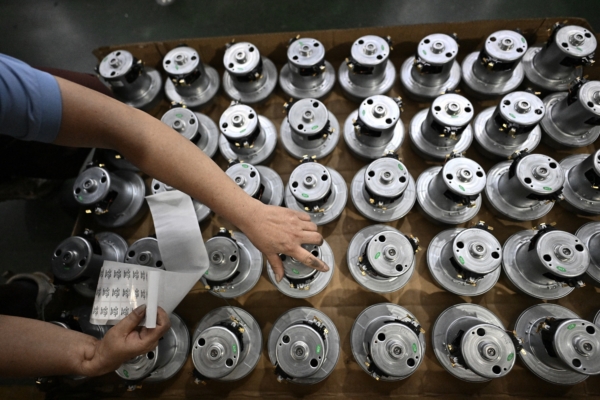
Despite concerns about the potential increase in global input costs due to the Iran war, overseas buyers accelerated stockpiling, driving strong export performance in China in April. However, it still remains challenging to fully offset the weakness in domestic economic activities.
According to data released by China’s National Bureau of Statistics on Monday, as a measure of consumption, the total retail sales of consumer goods only grew by 0.2% in April, far below the analysts’ expected 2%, and the lowest growth rate since December 2022. At that time, China had just emerged from the extreme lockdown of Covid-19 without sufficient buffers and medical supplies, facing a severe peak of the epidemic.
At the same time, China’s industrial value-added above a certain scale grew by 4.1% in April, lower than the market’s expected 5.9%, marking the weakest performance in nearly three years.
Surprisingly, fixed asset investment for the first four months of this year shrank by 1.6%, despite a 1.7% year-on-year growth in the first quarter.
Zhang Zhiwei, Chief Economist at Pinpoint Asset Management, pointed out, “Economic activity in April was weaker than market expectations. The strong performance of exporters helps alleviate the impact of weak domestic demand, but is still insufficient to fully offset its effect.”
The National Bureau of Statistics of China claimed in a statement that the Chinese economy is “making progress in stability,” but also admitted that “external conditions are complex and changeable, domestic supply is strong while demand is weak, and some companies are facing operational difficulties.”
While domestic demand remains subdued, China’s exports grew against the trend by 14.1% in April, far exceeding the predicted 7.9% growth rate. CNBC pointed out that one reason for this export growth is that foreign buyers are concerned that the Iran war may increase global input costs, prompting them to accelerate stockpiling.
Although the overall urban unemployment rate slightly dropped to 5.2%, the employment situation for crucial groups of new entrants to the workforce remains grim. According to Bloomberg, the recently released unemployment rate for the youth group has risen to the highest level in over two years, sparking concerns in the market about the impact of artificial intelligence (AI) on employment.
Furthermore, the prolonged downturn in the real estate market continues to impact the household sector, making it difficult for consumer confidence to recover. Despite ample market liquidity, loan demand remains weak, leading to a significant decrease in new loans for residents.
After the data was released, the market’s response was relatively muted, indicating that investors had already anticipated the weak economy. On Monday, the offshore Chinese yuan fell by 0.1% to 6.8215 yuan per US dollar, hitting a near two-week low. The 10-year Chinese government bond yield remained at 1.76%, while the decline in the 30-year government bond futures narrowed slightly.
Faced with the scenario of “hot exports but cold domestic demand,” the authorities in Beijing currently seem to be adopting a wait-and-see approach. Zhang Zhiwei predicts that unless more signs of economic deterioration appear, Chinese policymakers will temporarily maintain the existing stimulus measures unchanged.
This also highlights that while high-tech manufacturing and state-owned enterprise spending continue to support some economic activities, they have yet to effectively boost consumer confidence.
In the dilemma of rising global energy costs and declining domestic demand, China’s economy faces even more daunting challenges in rebalancing growth momentum.