
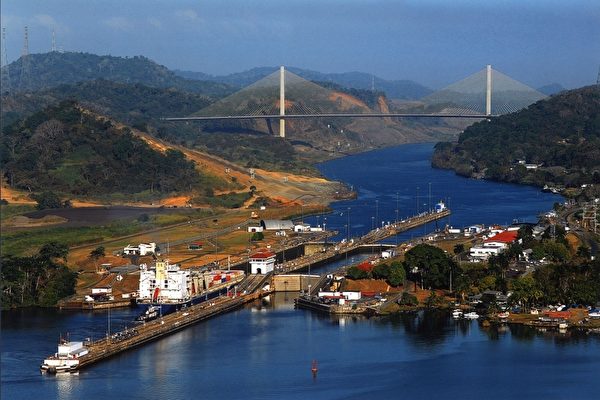
In the midst of the Iran War, the Hormuz Strait has essentially been closed to traffic, prompting Asian buyers to seek oil supplies from the United States. In April, the amount of crude oil and petroleum products transported through the Panama Canal increased by more than 70% compared to the same period last year.
According to a report by Nikkei Asia, data from the market research firm Kpler shows that the average daily oil shipment through the Panama Canal last month was 1.77 million barrels, a 74% increase from 2025, marking the highest level recorded since 2013. Among them, the amount of oil transported to Japan increased by more than five times, reaching 260,000 barrels per day.
Large oil tankers transporting oil to Asia usually cannot pass through the Panama Canal, so U.S. crude oil exports to Asia typically have to take the longer route around the southern tip of Africa known as the “Cape of Good Hope”, which, while time-consuming, is cost-effective. Due to conflicts in the Middle East, Asian countries such as Japan and China, which rely on Middle Eastern energy sources, have switched to using smaller oil tankers from the United States to fill the supply gap through the shorter Panama Canal route. At the end of last month, a batch of crude oil purchased by Japan’s Cosmo Energy Holdings also arrived in Japan via this route.
Even under normal circumstances, the Panama Canal is bustling with container ships, oil tankers, liquefied petroleum gas (LPG) carriers, and bulk carriers shuttling back and forth incessantly. Due to limitations in the lock system, the number of vessels allowed passage through the canal is limited each day. With the sudden surge in the number of vessels transporting oil and petroleum products, the canal appears more congested than usual.
Vessels typically need to book berths in advance to pass through the canal. Oil tankers and container ships with fixed routes usually make reservations in advance. However, many oil tankers transporting oil from the United States currently are on short notice and can only purchase berths through competitive bidding.
Recent data from the Panama Canal Authority shows that the average bid price for oil tanker berths soared from $135,000 to $140,000 before the Iran War to nearly $385,000. WaterFront Maritime Services, based in Panama, has observed a significant increase in the number of berths priced at over $1 million.
WaterFront has noted that vessels without reservations must wait for extended periods due to congestion in vessel traffic on both sides of the canal. A shipping company executive from Japan expressed frustration, not knowing when they would secure a berth. While using the Panama Canal can shorten transportation time, the uncertainty of berth availability has led some freight companies to hesitate, opting to sail around the Cape of Good Hope to ensure timely delivery.
Prior to the outbreak of the Iran War, Japan had started importing liquefied petroleum gas and other products from the United States through the Panama Canal. An official from a Japanese gas wholesale company revealed that it has become increasingly difficult to secure berths for LPG carriers lately, whereas in the past, it was relatively easy for container ships and LNG carriers.
The report concludes by highlighting that berth fees in the Panama Canal are high, and costs will increase when opting for the Cape of Good Hope route. Regardless of the method chosen, both will lead to higher prices for petroleum products and natural gas. American oil buyers not only face intense market competition and policy changes such as export restrictions but also new uncertainties arising from canal transit restrictions.