
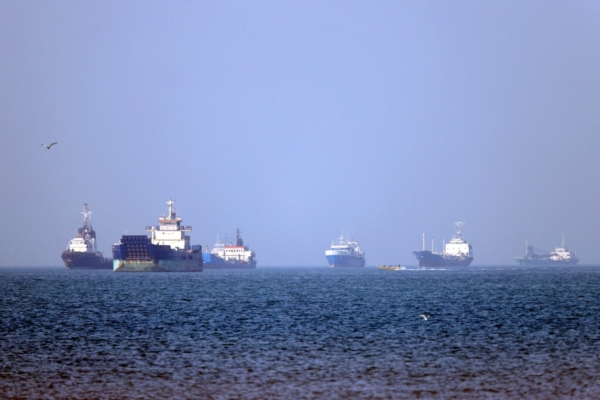
On Wednesday, South Korean Defense Minister Ahn Kyu-beom stated that the country is considering participating in phased security escort operations in the Strait of Hormuz. This indicates that South Korea will be involved in safeguarding this vital transport route but will not engage in military actions.
According to Reuters, Ahn Kyu-beom expressed Seoul’s position in a meeting with U.S. Defense Secretary Hagels on Monday. He mentioned, “We will essentially participate as a responsible member of the international community and will explore ways to contribute in a phased manner.”
Ahn Kyu-beom mentioned that potential forms of phased support could include political support, deployment of personnel, intelligence sharing, and provision of military assets. He emphasized that discussions have not yet delved into expanding South Korean troop involvement.
He added that any decision must adhere to domestic legal processes.
On Wednesday, National Security Office Chief Wi Sung-lac stated in a press conference that Seoul is evaluating joining the U.S.-led maritime “freedom plan” to assist in maintaining security in the Strait of Hormuz.
The South Korea-U.S. defense ministers’ meeting followed an incident where a ship flying the South Korean flag was attacked near the Strait of Hormuz.
The South Korean presidential office strongly condemned the attack and stated an ongoing investigation on identifying responsibility for the incident.
Ahn Kyu-beom disclosed that he discussed the attacked cargo ship with U.S. officials and mentioned that Seoul will decide on response measures following the completion of the investigation.
During the U.S.-South Korea defense ministers’ meeting on Monday, Hagels expressed Washington’s desire for allies to “stand together” amidst increasing global threats.
Hagels commended Seoul’s plans to increase defense spending and take on more responsibility for security on the Korean Peninsula, calling South Korea an exemplary ally in sharing security responsibilities.
Ahn Kyu-beom informed reporters that Hagels understands South Korea’s desire to “conditionally” take over wartime operational control (OPCON) from the U.S. at the earliest opportunity.
Regarding the transfer process of wartime operational control to South Korea, Ahn Kyu-beom mentioned that Washington’s perspective is “slightly different,” but Seoul will continue efforts to persuade the U.S.
South Korean President Lee Jae-myung publicly stated that once the agreed military capability conditions are met with Washington, South Korea plans to complete the OPCON transfer process within his term (by 2030).
Ahn Kyu-beom also mentioned that both sides exchanged views on other issues related to the U.S.-South Korea alliance, including plans to build nuclear-powered submarines for the U.S. Navy. However, discussions did not touch on reducing the number of U.S. troops stationed in South Korea or strategic flexibility of these troops.