
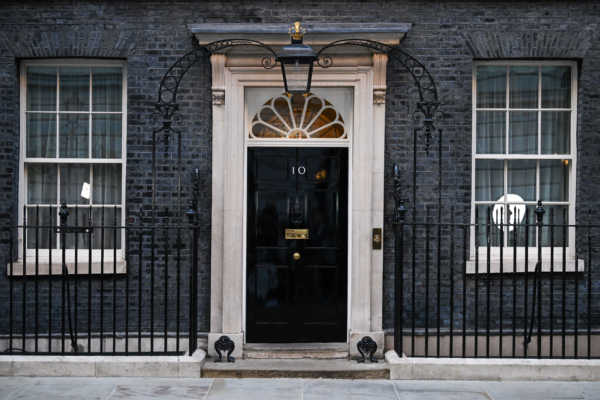
British Prime Minister Keir Starmer is facing the toughest challenge since taking office, with several ministers resigning and dozens of lawmakers calling for his resignation. Despite his leadership being questioned, Starmer plans to unveil a series of legislative proposals through the “King’s Speech” in an attempt to demonstrate that the government can still fulfill its governance responsibilities. However, this political upheaval has already caused financial market instability, leading to a sharp increase in the long-term borrowing costs in the UK.
On Wednesday morning, the British monarch will deliver the “King’s Speech” for the Labour Party government, announcing the government’s legislative agenda for the coming year. However, just hours before the speech, Starmer is expected to have a crucial showdown meeting with Health Secretary Wes Streeting, who is seen as a potential successor.
The political crisis stems from Labour’s disastrous performance in local elections, losing nearly 1,500 local council seats. Currently, four ministers have resigned from the government, including Jess Phillips, the Deputy Minister for Safeguarding at the Home Office, and around 90 Labour MPs openly calling for Starmer to step down.
Facing pressure from within his party to resign, Starmer has taken a tough stance. During a cabinet meeting on Tuesday, he stated, “There is a challenge process to the leadership of the Labour Party, but it has not been initiated yet,” demanding that any challenger formally propose to challenge his leadership. According to party rules, this action would require the support of 81 colleagues, which is 20% of Labour MPs.
He emphasized that the British public expects the government to continue fulfilling its governance responsibilities and said, “That’s exactly what I’m doing right now.”
The current political focus is on Streeting, a key figure in the leadership competition. Several of his allies have already resigned, seen as increasing pressure on the Prime Minister. Additionally, Andy Burnham, the Mayor of Greater Manchester, is also being closely watched as a potential leadership contender.
Market reactions to the political instability have been severe, with UK bonds being sold off and long-term borrowing costs reaching highs not seen since 1998. The 30-year UK government bond yield spiked to 5.81% before easing to 5.77%, while the benchmark 10-year bond yield rose to 5.13%, the highest since 2008, before slightly dropping to 5.1%. This reflects concerns that if Starmer were to step down, it could lead to political instability, increased government borrowing, and potentially push Labour policies further to the left.
However, the Prime Minister’s office still has some support, with over 100 Labour MPs signing a petition in support of Starmer, believing that “now is not the time to fight for leadership” and should focus on the reforms needed for the country.
Resigning ministers have openly expressed dissatisfaction with the leadership. Phillips criticized the Prime Minister for avoiding direct debates, making it difficult for the government to effectively push through reforms, stating, “I cannot wait until a crisis hits to drive faster change.”
Zubir Ahmed, the resigned Deputy Minister of Health, also pointed out that the public has “irreversibly lost confidence” in the Prime Minister.
Despite the escalating political crisis, Starmer still plans to present over 35 legislative proposals covering cost of living reductions, NHS reforms, and green energy and infrastructure construction in the King’s Speech today to show that the government still has governance capabilities.
In a statement before the speech, he said, “Britain is at a critical moment: whether to continue advancing plans and build a stronger, fairer nation, or regress into past chaos and turmoil.”