
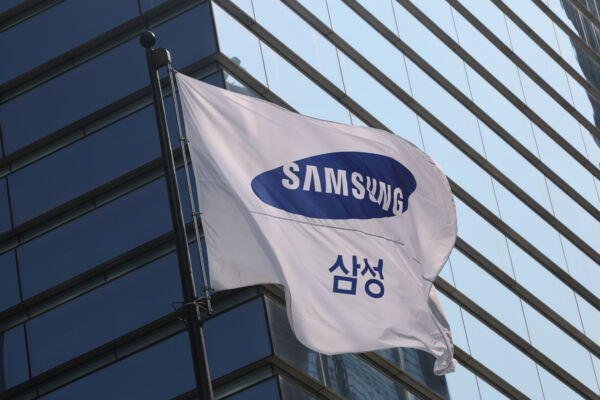
On Wednesday, May 13th, Samsung Electronics, a subsidiary of the Samsung Group in South Korea, failed to reach a salary agreement with the union, escalating the risk of a large-scale strike. The Samsung union warned that if an agreement is not reached, they will initiate a comprehensive 18-day strike which could severely impact the global supply chain of AI and semiconductor chips.
This strike not only threatens the company’s chip production but also affects the entire South Korean economy. As South Korea’s economy heavily relies on chaebols (family-owned business conglomerates) and large corporations, the strike crisis has raised concerns externally about the “too big to fail” nature of these entities.
Under the mediation of the South Korean government, marathon negotiations took place between the labor and management on May 11th and 12th, but the talks remained deadlocked.
Due to the anxiety caused by the potential strike, South Korea convened an emergency meeting of relevant ministers to formulate and discuss strategies to prevent further deterioration of the country’s economy. South Korea’s GDP growth in 2025 was only 1%, mainly supported by semiconductors. However, domestic prices surged, consumer and construction investment weakened, and even a quarter-on-quarter decline occurred in the fourth quarter.
Prime Minister Kim Min-seok instructed the government to closely monitor the situation during the meeting. His office issued a statement saying, “Considering the serious impact of the strike on the national economy, the government actively provides support to ensure continuous dialogue between the union and management to prevent the occurrence of a strike.”
Samsung Electronics expressed regret over the breakdown of salary negotiations with the South Korean union, acknowledging that it could exacerbate anxiety among employees, shareholders, and the public. They pledged to continue engaging in “sincere dialogue” with the union to prevent the worst-case scenario.
However, the leader of the Samsung union earlier warned that if an agreement on salaries with the company is not reached, more than 50,000 workers may embark on an 18-day full-scale strike starting from May 21st.
The core of this labor dispute is related to the unequal distribution of profits brought by the AI boom. In the competition between Samsung Electronics and SK Hynix, the South Korean semiconductor giant, for providing high-bandwidth memory (HBM) to NVIDIA for AI, SK Hynix had previously outperformed Samsung Electronics and had accepted the salary reform demands made by their union last September, including removing the bonus ceiling.
Additionally, Samsung Electronics has also benefited from the development of AI, with record-breaking profits pushing its market value beyond $1 trillion, making it the second Asian company to achieve this milestone after TSMC (Taiwan Semiconductor Manufacturing Company).
However, compared to their competitors’ generous dividends and wage increases, Samsung employees are unhappy with the company’s lack of timely adjustments to their wages, leading to a significant increase in Samsung union membership. The union currently has over 90,000 members, accounting for over 70% of Samsung’s total employees in South Korea.
Currently, the union strongly demands that Samsung Electronics increase basic salaries by 7%, allocate 15% of the annual operating profits as bonuses, and establish a clearer bonus calculation method.