
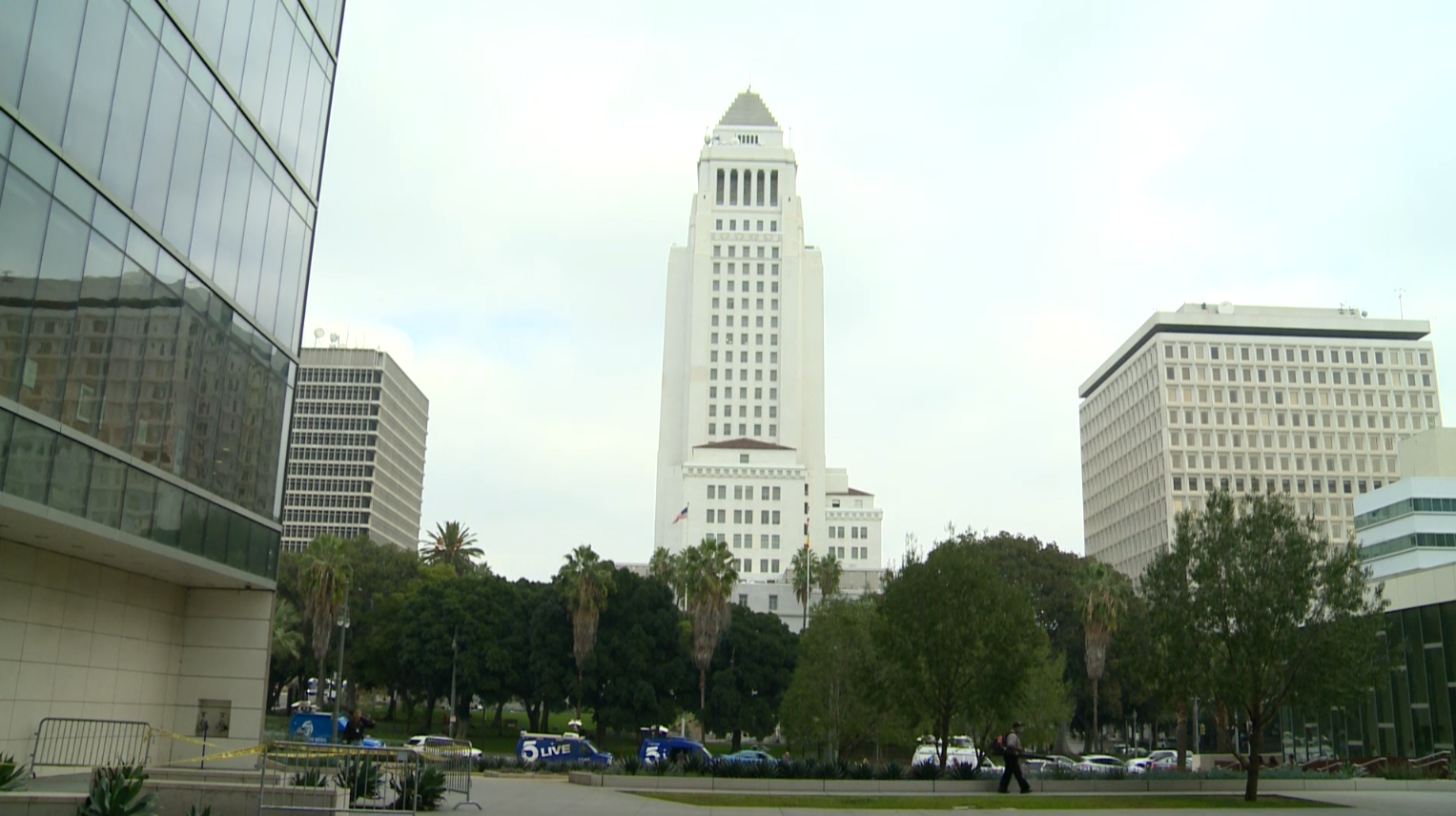
The Los Angeles City Council passed a resolution this week, making it the largest city in the United States to strictly limit routine stops of minor traffic violations by police, in order to investigate whether there are more serious criminal issues.
On Wednesday (6th), the City Council of Los Angeles unanimously passed the resolution 14-0, adopting a similar approach to San Francisco, prohibiting police from stopping vehicles for minor equipment violations such as a broken taillight, or intercepting cyclists or pedestrians for minor violations unless there is an imminent safety risk.
Nearly two hundred people attended the hearing, with many residents expressing concerns about racial discrimination in police stops, as the drivers stopped by the police are often people of color. They argued that these stops have had minimal impact on curbing violent crime and have instead eroded public trust.
The motion by the Los Angeles City Council was first proposed in 2020. Council President Marqueece Harris-Dawson sees this vote as a “moral shift” and criticizes police stops of vehicles for minor violations as “barbaric.”
However, this resolution will not immediately affect the policies of the Los Angeles Police Department (LAPD); it will still be up to the Los Angeles Board of Police Commissioners to decide on its implementation.
Mayor Bass stated after the vote that she will work with the Police Commission and the Chief of Police to implement the plan and provide appropriate training to officers.
LAPD Chief Jim McDonnell referred to such stops as an important law enforcement tool to combat gun, gang, and drug crime. He cited that the Supreme Court of the United States has ruled that these checkpoints are constitutional.
Given that last year, the number of people killed in traffic accidents in Los Angeles (290) exceeded the number of homicide victims by 60, he and some traffic rights advocates believe that the city needs to crack down more severely on reckless driving behavior. He also expressed willingness to “fully cooperate” with the Police Commission and looks forward to working with city leadership to enhance traffic enforcement and improve the safety of Los Angeles.
Some analysts believe that this proposed change is an effort by city leadership to gain greater oversight over the LAPD from the Police Commission, but they may face strong opposition from within the police department and their union organization, the “Los Angeles Police Protective League.”
As of this month, in addition to Virginia, more than a dozen cities in the United States have implemented such a ban, including cities like Berkeley in California, Philadelphia and Pittsburgh in Pennsylvania, Seattle in Washington, Memphis in Tennessee, Houston in Texas, in addition to San Francisco and Los Angeles. The regulations are relatively similar.
According to a report from the Legislative Analyst’s Office of the Los Angeles City Council in January of this year, LAPD conducted over 61,000 “pretext stops” between April 2022 and September 2025, involving over 72,000 individuals. About 30% of these stops led to the discovery of other criminal evidence, while only 12% of those stopped received citations. The report also showed that 86% of all individuals stopped were African-American or Latinx.
Since April 2022, LAPD has restricted officers from making pretextual stops, requiring them to have reasonable suspicion for more serious crimes and to wear body-worn cameras during stops. In January of this year, the police issued special instructions, stating that such stops can only be conducted when there is a public safety risk.