
The Department of Homeland Security (DHS) in the United States issued a statement on Sunday (February 22) regarding the ongoing shutdown within the agency, which has lasted for a week, causing severe limitations on departmental funding and manpower. Consequently, a series of emergency measures had to be implemented that will directly impact travelers, airport entry and exit services, as well as the Federal Emergency Management Agency’s (FEMA) services in non-disaster areas.
FEMA has transitioned into “emergency operations mode,” retaining only the most basic disaster response work directly related to life safety. All non-disaster related work within FEMA has been halted; ongoing or planned post-disaster reconstruction projects have been paused; long-term recovery plans, administrative processes, policy development have all been suspended; support will only be provided for disasters facing “immediate life-threatening” situations; all non-essential travel and deployments have been halted.
The statement mentioned that FEMA has “entered an emergency state and will scale down operations to the bare minimum, focusing solely on life-saving actions.” As of 6:00 AM on February 22, FEMA will cease all non-essential activities and dedicate efforts to addressing emergency disaster response work that threatens life, public health, or safety.
Furthermore, it was highlighted that “public assistance will not advance for ongoing or historic disasters.” FEMA will only conduct public assistance activities for new or recent disasters that require immediate emergency actions to protect life or prevent catastrophic losses.
Activities not involving imminent threats and those unrelated to disasters have been temporarily suspended to reallocate limited personnel and resources for emergency relief efforts. New measures, discretionary projects, pilot programs, and policy-making activities have also been put on hold until funding is restored. Travel, deployments, and operational support are restricted to addressing ongoing disasters and life safety emergencies.
According to the announcement, under the current circumstances, “FEMA is unable to continue normal post-disaster rebuilding efforts and must prioritize its most critical, life-saving duties.”
Homeland Security Secretary Kristi Noem stated in the release that these measures are “the tangible consequences of the third shutdown of the Department of Homeland Security by the Democrats during the 119th Congress, not only affecting department employees and their families, causing them to lose sources of income, but also endangering national security.”
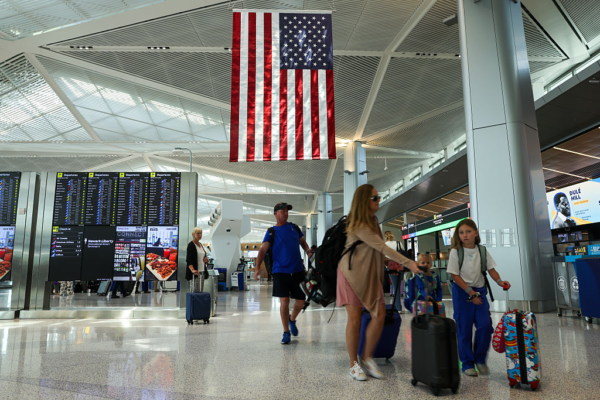
The Transportation Security Administration (TSA) will no longer provide non-essential courtesies and will allocate all personnel to security screening. Customs and Border Protection (CBP) has ceased expedited clearance services through the Global Entry program, requiring all inbound travelers to go through standard channels.
Effective as of 6:00 AM on February 22, TSA has suspended providing courtesy escorts and family escorts for individuals, including members of Congress, and terminated CBP’s Global Entry program services.
TSA and CBP officials will prioritize facilitating clearance for “regular passengers” at airports and entry ports, focusing on necessary security actions to identify and address threats.
The statement emphasized that, “Providing escort services for members of Congress would put additional pressure on our security personnel, who must be able to prioritize the crucial task of passenger screening.”
However, the TSA PreCheck service will continue to operate normally without impacting travelers. TSA will assess and adjust operations based on specific circumstances as personnel availability changes.
The announcement stated, “Until funding is restored, all travelers should expect a process that does not compromise on safety.”
At the same time, the Customs and Border Protection Office of Field Operations has ceased participation in all Global Entry programs at airports. Officials responsible for the program will be reassigned to handle all other inbound travelers, and member passengers’ “fast entry lanes” have been canceled, requiring them to queue for clearance like regular passengers.