
During British Prime Minister Keir Starmer’s visit to Beijing, the Chinese Communist Party lifted sanctions previously imposed on multiple British lawmakers and nobles. One of the sanctioned Labour Party members described the CCP’s decision to lift sanctions as “insignificant” and expressed hopes for the release of Jimmy Lai.
Starmer arrived in Beijing on January 28 for a three-day official visit, marking the first visit to China by a British Prime Minister since 2018, aimed at easing relations.
After meeting with CCP leader Xi Jinping on Friday, January 30, Starmer announced that Beijing had agreed to lift sanctions on five members of the British House of Commons and two members of the House of Lords. These lawmakers were sanctioned by China in 2021 for criticizing human rights violations against the Uyghurs by the Chinese government, leading to their entry bans.
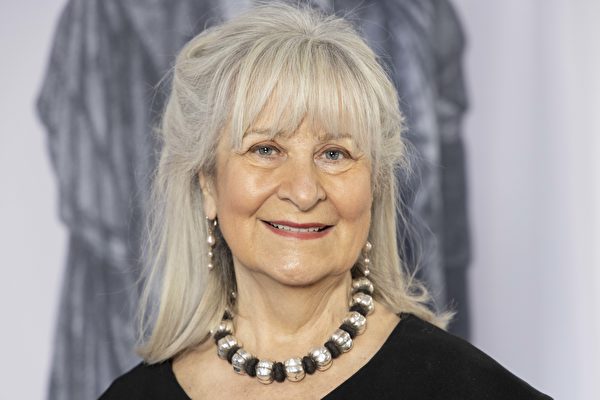
Baroness Helena Kennedy KC, a member of the House of Lords and Queen’s Counsel, was one of the seven lawmakers sanctioned by China.
According to a BBC report on Friday, Kennedy, often described as one of “Britain’s most distinguished lawyers” and a human rights advocate, in an interview with the BBC’s “World Tonight” program, emphasized that the issue of Hong Kong democracy activist Jimmy Lai was more important than the lifting of sanctions.
Jimmy Lai is a Hong Kong democracy activist, media tycoon, and British citizen who was previously sentenced to prison by Beijing authorities for controversial charges under the National Security Law, including collusion with foreign forces.
Kennedy stated, “Although they have gone in (to Beijing) and have at least got something out of it, I am not going to hang out the bunting and put up the balloons to show celebration because I think that’s insignificant, I’d much rather see Jimmy Lai released.”
She also added that she was not aware of specific details regarding the Jimmy Lai case discussions, but she hoped to hear positive news. The Prime Minister confirmed to the BBC that he had raised the issue of Jimmy Lai and the treatment of Uighurs with CCP leader Xi Jinping as expected.
The initial seven individuals sanctioned were active critics of China through the Inter-Parliamentary Alliance on China, including former Conservative Party member Tim Loughton (who retired at the last election), Baroness Kennedy (a former colleague of Prime Minister Starmer in the legal profession), cross-party nobleman Lord Alton, and four current Conservative Party members: Sir Iain Duncan Smith, Nusrat Ghani, Tom Tugendhat, and Neil O’Brien.
These lawmakers criticized China for “selective lifting of sanctions,” stating that they are not reassured by Beijing’s decision to lift sanctions while Jimmy Lai remains imprisoned and the Uighurs continue to suffer. They emphasized that they will not remain silent.
They called on the UK government to explicitly ensure sanctions against four Chinese officials responsible for implementing genocide policies, and pointed out that only lifting sanctions on current members was a mistake, as Parliament should equally represent the British people.
Starmer stated that China’s partial lifting of sanctions “validates” his diplomatic approach. He also invited Xi Jinping to visit the UK during the 2027 G20 Summit hosted by Britain.
While Downing Street viewed Beijing’s lifting of sanctions on British lawmakers as a “clear victory” of the visit, opinions in the UK are divided.
Former Security Minister Tugendhat stated on BBC’s Channel 4 program “World at One” that the deal with China was “frankly, extraordinary and incredibly bad, not just for this diplomatic visit, but also damaging to the UK’s international standing.”
He further criticized the UK government for “kowtowing” before the visit to China, allowing the construction of a giant embassy by China without demanding the release of Jimmy Lai, who has been detained in a Hong Kong prison for over a thousand days as a British citizen.
Liberal Democratic Party member Wera Hobhouse also criticized the so-called British-Chinese diplomatic reset touted by Downing Street, stating that it is “far from being a reset” as it ignores the existence of China’s “secret injunction.”
When visiting Hong Kong last year to see her grandchildren, Hobhouse was arbitrarily denied entry by the Chinese authorities. She believes that Beijing’s actions were aimed at silencing her from openly criticizing the CCP. She demanded assurances from the Prime Minister that all lawmakers can criticize the Chinese Communist Party without fear of reprisal.