
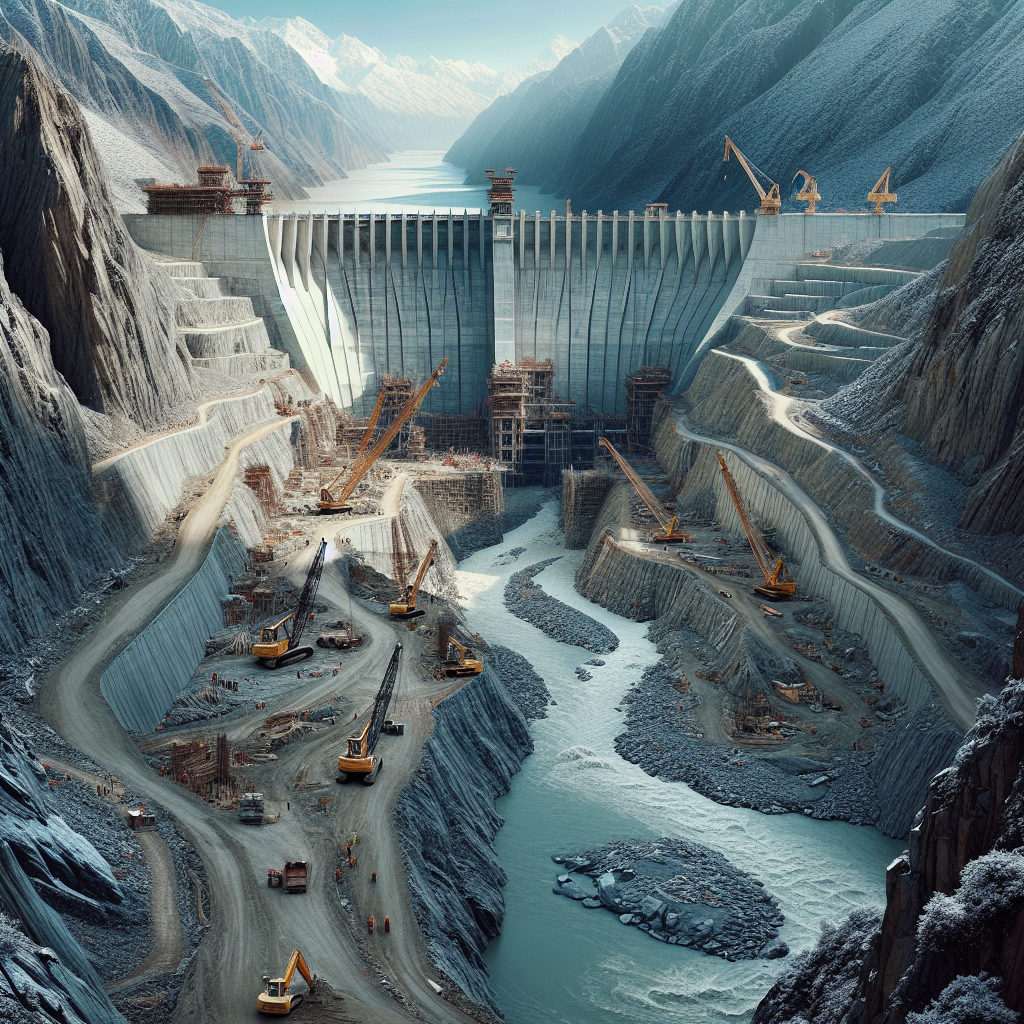
Due to its treacherous terrain, the Yarlung Tsangpo River is sometimes referred to as the “Mount Everest of rivers.” On December 25, 2024, state media Xinhua reported that Beijing has approved the construction of the world’s largest hydroelectric dam project on the lower reaches of the Yarlung Tsangpo River, sparking concerns from India and controversy. The project, known as the Great Bend super dam, is located on a disputed border between China and India, escalating tensions between the two countries and angering other South Asian nations. This move further demonstrates China’s long-standing efforts to control the water resources of the Tibetan Plateau, which provides water to over two billion people.
The construction of this massive dam is projected to endanger the ecological environment of China and its southern neighboring countries, bolster the economic plans of the Chinese Communist Party’s leadership by relying on industrial production for growth, thus compromising local and global environments. It will also disrupt investments in human resources, as Beijing diverts funds towards infrastructure development rather than education, healthcare, and other social services. This industry-centered growth model has faced challenges and sparked public dissatisfaction with the Communist regime.
The project is reminiscent of the Three Gorges Dam, which led to the displacement of over 1.3 million people. It remains uncertain how many individuals will be affected by this new dam in Motuo County, Tibet. Tibetans are no strangers to dams, as several dams have been constructed in the region, often provoking anger among locals who feel exploited by the government.
In February 2024, authorities arrested hundreds protesting against another dam project that threatened villages and monasteries with submersion. Similar concerns and worries about the impact on the local ecosystem have been raised regarding the Motuo new dam project.
Theoretically, the new dam is expected to reduce coal usage and provide cleaner energy. However, it comes at a significant cost to the ecology and water resources of China and South Asia. The project will grant excessive control to China over the waters and livelihoods of South Asia.
The Yarlung Tsangpo River flows from Tibet into India and Bangladesh. Known as the Brahmaputra River in India and the Jamuna River in Bangladesh, it serves as a vital water source for the people of both countries. With no water-sharing agreements in place between China, India, and Bangladesh, the dam could exacerbate concerns over China’s control of the Brahmaputra River, especially in water-scarce India.
The news has raised alarms in India. On January 3, a spokesperson for the Indian Ministry of External Affairs stated: “We have urged China to ensure that downstream countries of the Brahmaputra River are not harmed by activities upstream. We will continue to monitor and take necessary steps to protect our interests.”
Furthermore, the dam will be situated at a sharp bend in the river with a drop of about 6,500 feet. The undertaking involves drilling four to six 12-mile tunnels through solid rock mountains to divert half of the river’s flow, over 70,000 cubic feet per second, to generate the expected power output. Such massive destruction in fragile mountain landscapes prone to earthquakes has never been attempted before and could pose a severe threat to local infrastructure and downstream valleys and residents.
The Tibet hydroelectric dam project will allow China to control the timing and volume of water flow towards South Asia, greatly impacting agriculture and freshwater supply in the region. China’s dam-building practices on the Mekong River have already damaged the environment, harmed downstream fishermen and farmers, and disrupted the agricultural cycle in this densely populated area.
U.S. National Security Advisor Jake Sullivan is set to visit India on January 5-6 to discuss the impact of Chinese dams with Indian officials. A senior U.S. official stated before Sullivan’s trip, “In many parts of the Indo-Pacific, we are seeing China’s construction of dams upstream, including on the Mekong River, which could have devastating environmental and climate impacts on downstream countries.”
The article exposes the ambitions behind the Chinese Communist Party’s construction of this dam and disregards the well-being of the Chinese people. Firstly, the party aims to establish a “Central Kingdom” where its economic needs take priority over fair resource sharing with neighboring countries, thus ignoring the impacts on the Chinese people, neighboring nations, and the environment.
Secondly, the exorbitant infrastructure costs of the project – 137 billion dollars, three times the cost of the Three Gorges project – represent a part of the party’s reliance on infrastructure development as the primary means of economic growth. However, investments in these areas come at the expense of neglecting education, pensions, healthcare, and other social services. Xi Jinping’s obsession with industrial and infrastructure development at the cost of human development lies at the root of the slowing economic growth and weakening confidence in Xi’s leadership.
While Xi Jinping touts the environmental benefits of this new project, the potential negative impacts, such as seismic risks, disputes over water resources with other countries, humanitarian issues, and China’s continued overreliance on heavy industry for economic growth, far outweigh the claimed benefits.
The article concludes by urging the incoming Trump administration to pay attention to the environmental damage caused by the Chinese plan and work with South Asian countries to limit the extent of China’s harm to humanity.