
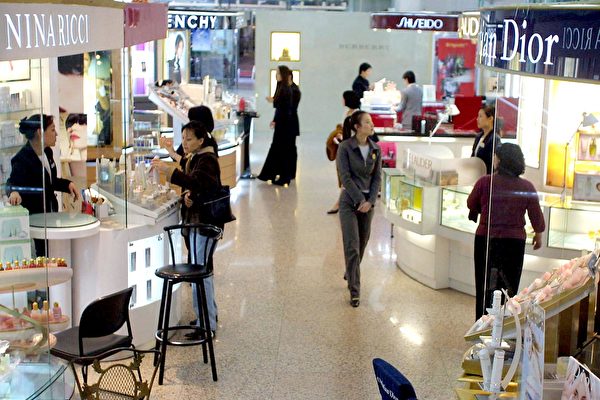
In recent news from December 25, 2024, it has been reported that consumer downgrading in China has impacted the once relatively robust cosmetics consumption. According to data released by the National Bureau of Statistics of the Chinese Communist Party, cosmetics consumption in November this year decreased by 26% compared to the previous year. Chinese female consumers now show a preference for affordable domestic products over high-end foreign makeup brands.
Over the past few years, although there has been a cooling down in overall Chinese consumer spending, female consumers have shown relatively strong purchasing power, especially in the cosmetics sector which had been experiencing rapid growth. However, the latest consumption data from the National Bureau of Statistics of China indicates a significant 26% drop in cosmetics spending in November this year.
The report cites past data stating that in 2019, the total retail sales of consumer goods increased by 8%, with the cosmetics category showing a growth rate of 13%, outperforming general consumer goods. Even in the year of the outbreak in 2020, despite an overall decrease in retail sales growth by 4%, cosmetics still maintained a growth rate of around 10%.
However, starting from 2022, there has been a noticeable slowdown in cosmetics consumption. In 2022, retail sales growth decreased by 0.2%, with cosmetics consumption dropping by 4.5%. In 2023, retail sales growth was 7.2%, while cosmetics consumption growth was only 5.1%. By November of this year, retail sales grew by 3%, while cosmetics consumption decreased by 26.4% compared to the same period last year, indicating an accelerating decline in female cosmetics spending.
The report highlights a sharp drop in cosmetics consumption in China, indicating a trend of women downgrading their preferences in cosmetics, known as the “replacement of luxury with affordability” trend in the female cosmetics market. Previously, Chinese women predominantly purchased foreign high-end makeup brands, but now they are shifting towards more budget-friendly domestic brands. As sales of expensive foreign cosmetics decline, the total amount spent on cosmetics in China is rapidly decreasing.
Looking at the import data of cosmetics in China, in 2018, imports of cosmetics had a rapid growth of 81%; however, it saw a decline for the first time in 2022, dropping by 10% annually. This decline continued in 2023 with a significant 15% drop, marking a 10-year low. Meanwhile, in 2023, domestic beauty product sales increased by 21%, with a market share reaching 50.4%, surpassing overseas cosmetics brands for the first time.
During a visit to a department store near the Shanghai Bund, the report observed that the overseas cosmetics counter on the first floor was quiet, while the Chinese affordable beauty brands on the basement level attracted a crowd. Comparing lipstick prices, an overseas brand costs 200 yuan per unit, while a Chinese affordable brand costs 70 yuan per unit, with additional promotional offers like buy 2 get 1 free.
The report suggests that women have traditionally shown strong shopping interests and willingness to consume, serving as a barometer for market trends. With Chinese women also beginning to downgrade their consumption habits, it reflects the current overall trend in society.
In recent years, as the trend of consumer downgrading grows, the discussion of replacing high-end makeup brands with more affordable alternatives has become a popular topic among mainland Chinese women.
Many beauty influencers have taken to social media to share videos emphasizing the importance of seeking the best value for money and closest results to high-end products. They have also shared lists of affordable alternatives to luxury makeup products they have compiled.
One female blogger mentioned that when faced with limited budgets and financial constraints, some affordable products have ingredients and quality comparable to high-end brands, but at more affordable prices, making these luxury substitutions a good choice.