
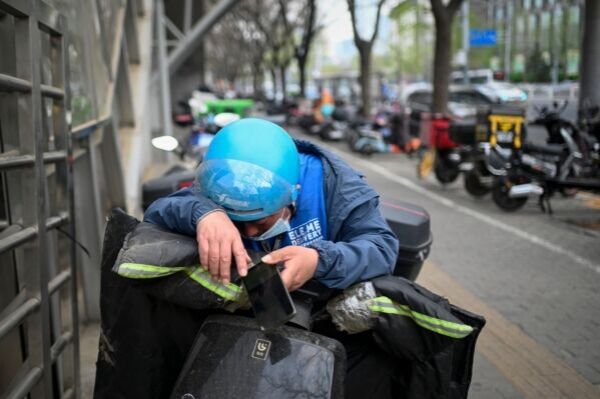
Recently, the prices of electric bicycles in China have increased by an average of nearly 1,000 Chinese Yuan. The price hikes have directly led to a decline in sales, with a 37.9% year-on-year decrease in February.
According to a report by “Tech Planet”, a subsidiary of Beijing Xinghuo Zhiyuan Technology Co., Ltd., sales personnel at a Xiaoni electric bicycle store in Beijing revealed that last June, with government subsidies included, customers could buy a model originally priced at 4,599 Yuan for 3,100 Yuan. However, currently, similar models have increased by nearly 1,000 Yuan, with prices generally going back up to over 4,000 Yuan.
Starting from April 1st this year, major electric bicycle brands such as Yadea, Aima, Tailg, and Jiuhao collectively increased their retail prices by 200-300 Yuan. Yadea, in particular, raised its factory prices by over 300 Yuan across its entire product line.
The reasons for the price hikes are believed to be the cancellation of subsidies for purchasing electric bicycles by the authorities and the increase in raw material prices, prompting corresponding adjustments by the manufacturers.
The combination of subsidy cancellations and price increases has directly cooled down the electric bicycle market, reducing consumers’ willingness to buy. According to statistics from Aoweiyun Network, in January this year, China’s electric two-wheeler sales reached 3.457 million vehicles, a year-on-year decrease of 3.6%. In February, sales fell to 2.988 million units, with a year-on-year decline of 37.9%, showing a continued downward trend.
Several dealers admitted to “Tech Planet” that business is notably worse now. An owner of a storefront mentioned that during good times, they could sell hundreds of vehicles in a month. However, since the end of last year, foot traffic has decreased by about 60%, leading to a significant drop in sales.
A Beijing consumer who had planned to buy a new electric bicycle last year stated that he had wanted to upgrade his bike last year but decided to wait as the current one was still usable. He was taken aback to find out that not only were the subsidies gone this year, but the price of the same model had also increased by nearly 1,000 Yuan. The consumer mentioned that he would continue using his current bike for a while longer to see if the prices would drop later on.
With the market cooling down, dealers have halted inventory purchases and even begun to adjust their business strategies. A Beijing dealer mentioned that the electric bicycle industry itself has low profitability, and with sales continuing to decline, further purchases may not cover costs, prompting thoughts of withdrawing from business operations. Some dealers have already started selling three-wheeled electric bikes. A dealer from Hebei Province mentioned that multiple electric bicycle storefronts in the region had already closed down, exiting the market. Additionally, “many small and medium brands with poor risk resistance are struggling to sustain themselves.”
As consumers observe from the sidelines and circulation remains weak, the double pressure is gradually transferring to the entire vehicle enterprises, making it challenging to avoid a decline in growth for electric bicycle manufacturers.