
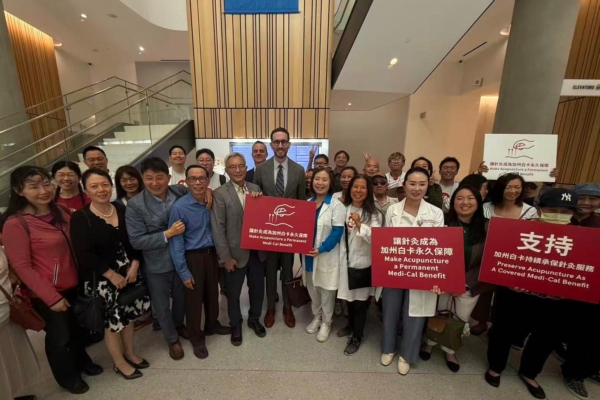
Recently, the AB2497 bill under consideration by the California legislature has sparked high concern within the acupuncture profession. The bill proposes to authorize physical therapists to perform invasive procedures such as “dry needling” without having received full acupuncture education and clinical training. Concerns have been raised by related groups that this could potentially impact medical safety and professional division of labor.
Dry needling therapy, originating from Western medicine, aims to relieve pain and improve function by targeting specific muscle trigger points. According to the content of the bill, the scope of practice for physical therapists will expand to include “tissue penetration for the assessment and treatment of the neuromuscular system.”
The acupuncture community points out that such procedures are fundamentally similar to acupuncture and should be performed by licensed acupuncturists who have undergone comprehensive training. California currently has stringent training requirements for acupuncturists, including a minimum of over four years of professional education, with over 2,000 hours of theoretical courses and nearly 1,000 hours of clinical internship to ensure patient safety.
Industry professionals have expressed concerns that AB2497 may establish a “low-threshold parallel system,” weakening the existing medical regulatory framework and increasing medical risks such as pneumothorax, nerve damage, and infections. Simultaneously, it may also confuse the public’s understanding of the acupuncture profession and impact the industry’s long-term development.
Acupuncture groups further point out that California already has over 10,000 licensed acupuncturists, with sufficient overall medical resources and no shortage of services. Relaxing the threshold for invasive medical procedures may unnecessarily place public safety at risk.
To make their stance clear, several acupuncture professional organizations urge colleagues and the public to pay attention to this matter. They suggest contacting district state legislators, participating in legislative actions, and community outreach to explain the differences and potential risks between dry needling and acupuncture.
It is reported that the hearing for AB2497 will take place on April 21st at 9 a.m. in Sacramento before the Business and Professions Committee. The acupuncture community plans to mobilize practitioners and supporters to attend and express their opinions and simultaneously engage in lobbying activities to convey industry demands to legislators.
The organizers emphasize that this hearing is a crucial point in the bill’s deliberation process and urge more acupuncturists, students, and individuals concerned about medical safety to participate in order to uphold professional standards and public health.
Dr. Yu Jiashan, a traditional Chinese medicine practitioner who has been practicing in Los Angeles for many years, believes that this is not simply a battle of technical practice rights but is deeply rooted in the cultural context of the Asian community and defense against “cultural appropriation.” He emphasizes the need to protect the integrity and professional independence of Chinese medicine acupuncture through institutional design and advocates for traditional medicine to proactively establish a system that combines cultural narrative with scientific data within the modern healthcare system to uphold the dignity and subjectivity of its system. ◇