
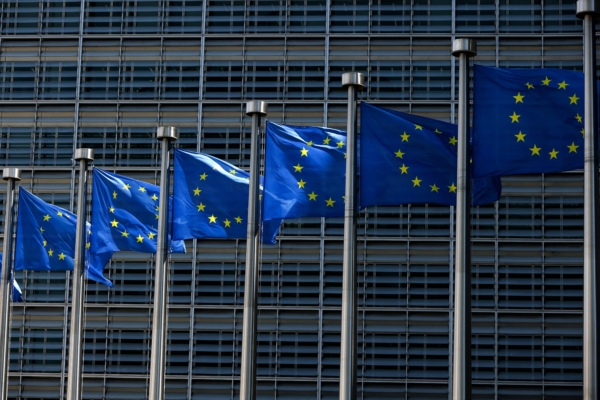
The European Union launched its “EU Energy and Raw Materials Platform” on April 13 (Monday), activating the “Raw Materials Mechanism” to enhance economic security amid increasing geopolitical risks. Currently, out of the 34 key raw materials listed by the EU, approximately 20 are dominated by China in the global supply chain.
The “EU Energy and Raw Materials Platform,” officially launched on July 2, 2025, is a crucial strategic tool aimed at addressing energy security challenges, boosting industrial competitiveness, and accelerating transformation. Its core function lies in integrating supply and demand in key areas, providing aggregation and matchmaking services to assist EU businesses in efficiently acquiring energy products and strategic raw materials. It operates through three key mechanisms: the Raw Materials Mechanism, the Hydrogen Mechanism, and the Gas Mechanism.
On April 13, 2026, within the framework of the Raw Materials Mechanism, the EU initiated its first call for proposals to bring together buyers and suppliers. Through this platform, buyers of key raw materials will be able to aggregate demand and establish connections with suppliers, financial institutions, and warehousing service providers.
The Raw Materials Mechanism is part of the EU’s efforts to diversify the supply of key raw materials and is based on the “EU Energy and Raw Materials Platform.” Given the EU industry’s high reliance on a few third-country suppliers, this initiative aims to reduce vulnerability and enhance economic security by increasing the visibility of alternative sources in the face of escalating geopolitical risks. This will enable enterprises, especially small-scale ones, to establish partnerships beyond their existing networks.
This voluntary and market-based mechanism, focusing on strategic areas such as rare earths, defense, and battery materials, can complement existing commercial relationships without the need for intervention in negotiations. Enterprises interested in participating in the initial round of the program are encouraged to complete registration by the end of April.
The EU’s Raw Materials Mechanism is a legal and policy framework established by the EU to ensure secure key mineral supplies necessary for its industrial transformation. It is based on the Critical Raw Materials Act (CRMA) that officially came into effect in 2024. The core objective of the act is to reduce reliance and promote diversification, aiming for by 2030, 10% of the EU’s annual demand for critical raw materials to be met through domestic mining, 40% through domestic processing, and no single strategic raw material should be more than 65% reliant on a single country.
The CRMA list covers 34 critical minerals specified by the EU, with approximately 20 of them having their global supply chains dominated by China. This concentration poses systematic risks as demonstrated by China’s export restrictions on certain materials in previous years, causing immediate supply disruptions to European industries.
In response to China’s export controls on rare earths and related products, the EU has intensified efforts to diversify supply chains away from China and establish the Raw Materials Platform. The need for such actions was recognized by the EU back in March 2024 when CRMA was introduced.
The EU acknowledged the risks of relying on Chinese supply chains. The introduction of CRMA was seen as a shift from market dependency to a structured regulatory framework, setting binding standards for domestic production capacity and supply chain diversification.
(Reference: EU intensifies efforts to break away from reliance on China amidst rare earth control)