
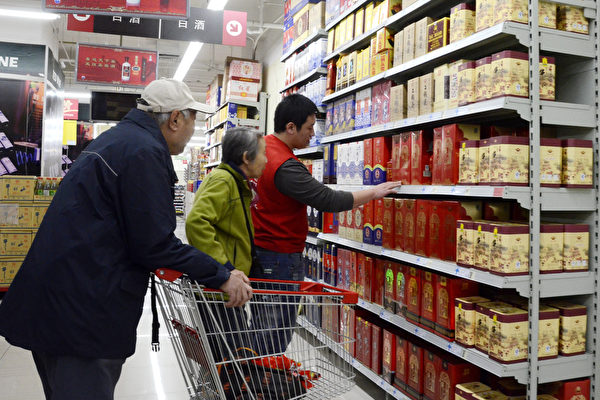
In 2024, Luzhou Laojiao’s stock fell by 26.03%, and its market value plummeted by over 200 billion yuan from the previous year’s peak. Some industry insiders suggested that Luzhou Laojiao is facing challenges potentially more impactful than just an explosion.
According to mainland media reports on January 7th, the Chinese liquor brand Luzhou Laojiao saw a bigger drop in its stock price in 2024 compared to Maotai, Wuliangye, Yanghe, and Fenjiu. Luzhou Laojiao became the leading liquor company with the largest decline in share value for the year. Its market capitalization also decreased from its peak of 400 billion yuan to 169.9 billion yuan as of November 8 (A-share midday closing), evaporating over two hundred billion from its peak.
However, despite the stock decline, Luzhou Laojiao’s performance has been on the rise. In 2024, its revenue for the first three quarters increased by 10.76% compared to the previous year, reaching 24.304 billion yuan, and its profit rose by 9.72% to 11.593 billion yuan, reaching historic highs.
The reason for the record revenue and profit, but investor neglect, is believed to be linked to Luzhou Laojiao’s excessive inventory and severe price inversion. Due to saturation in the liquor market, some companies have faced difficulties with product sales, resulting in high inventory levels. To clear stock, companies push distributors to meet targets, leading to forced discounts, ultimately causing retail prices to drop below factory prices, creating a price inversion in the market.
In recent years, high inventory levels and price inversion have become ticking time bombs for liquor companies, posing challenges for performance. Companies like Jiugui Liquor and Shede have faced similar issues. Without addressing high inventory and price inversion, capital markets won’t value liquor companies highly.
Luzhou Laojiao’s inventory has been steadily increasing over the years. In 2020, the company’s inventory was 4.696 billion yuan, which rose to 11.622 billion yuan in 2023, and further climbed to 12.3 billion yuan by the end of the third quarter of 2024. The growth in inventory for Luzhou Laojiao has far outpaced its revenue growth. From 2020 to 2023, while the company’s revenue increased by 81.55%, inventory surged by 147.49% during the same period. Additionally, Luzhou Laojiao’s inventory turnover days reached 1148.94 days in the third quarter of the previous year, far surpassing its industry counterparts.
On one hand, as inventory levels climb, Luzhou Laojiao has repeatedly raised prices in an attempt to compete at the high end. Since 2017, the company has implemented price hikes 14 times, but the market has not responded positively, leading to significant price inversion.
Furthermore, there has been a slowdown in Luzhou Laojiao’s distributor payment speed. Before the Mid-Autumn Festival in 2024, the collection rate for Luzhou Laojiao was only 70%, compared to 90% during the same period the previous year.
Secondly, Luzhou Laojiao is facing financial uncertainties with a “high inventory, high loans” model. As of the first three quarters of 2024, the company’s cash and cash equivalents balance stood at a high of 30.148 billion yuan. However, Luzhou Laojiao has maintained long-term loans of around 10 billion yuan, which does not align with typical business logic. Having to pay substantial financial expenses while holding a significant cash reserve contradicts conventional practices. Investors have continually raised questions about Luzhou Laojiao’s financial anomalies, with inadequate responses, leading them to shy away from risks, contributing to the continued pressure on the company’s market value.
Luzhou Laojiao originated in Luzhou City, Sichuan Province, known as the birthplace of strong aroma liquor and a revered figure in the liquor industry in China.